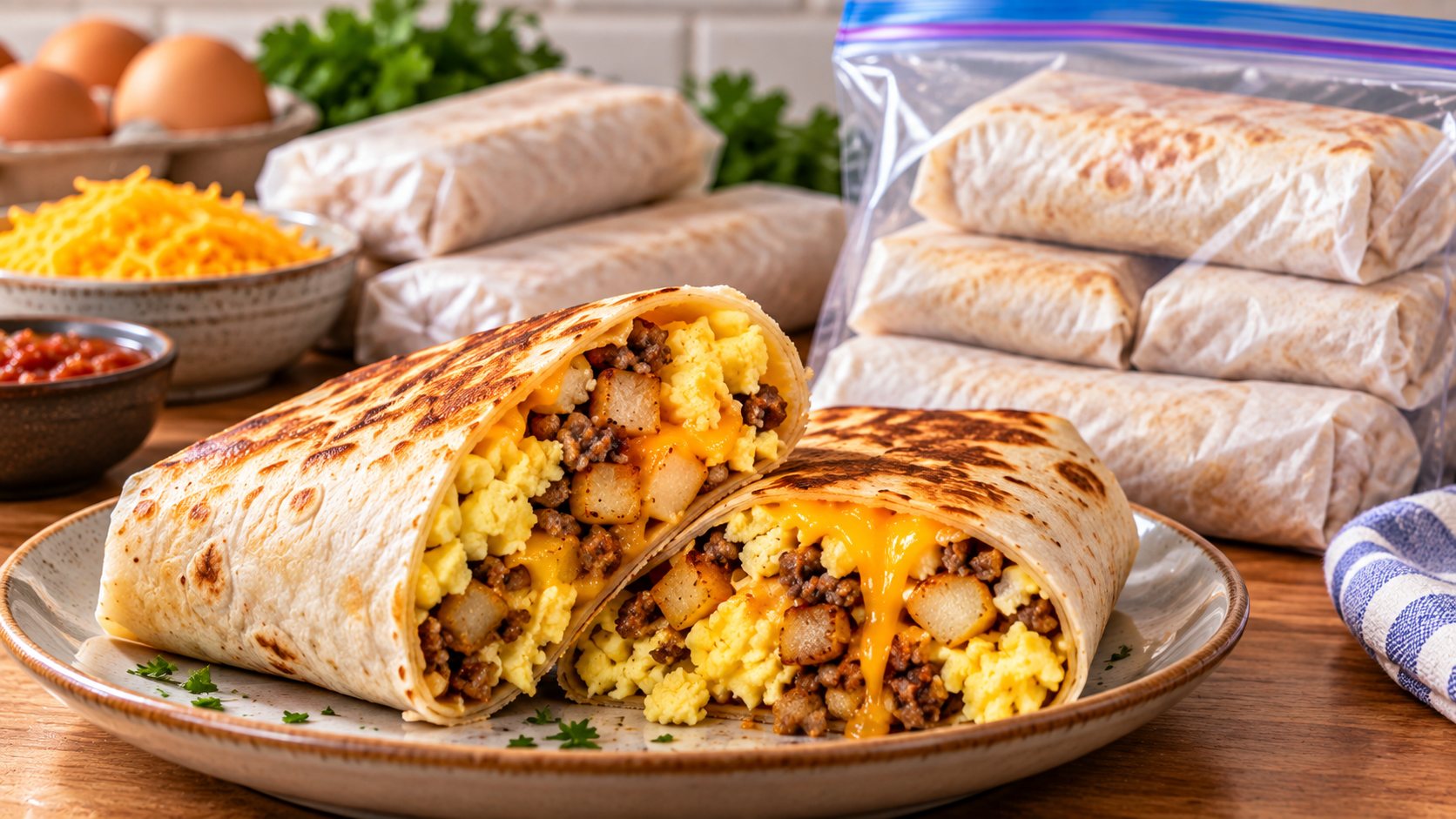


A freezer full of breakfast burritos can turn a rushed morning into a two-minute meal.
The basic idea is simple: cook eggs, meat and potatoes, roll them inside tortillas and freeze them. But the difference between a good freezer burrito and a soggy one comes down to how the filling is cooked, cooled and wrapped.
Done correctly, eggs, sausage, potatoes and cheese hold up well in the freezer. A batch of 12 also costs about $1 per burrito using current value-brand grocery prices, and the homemade version can be considerably larger than many packaged frozen burritos.
The key is controlling moisture from the start.
Fast Take-A-Way About Frozen Breakfast Burritos
To make frozen breakfast burritos, cook and cool the eggs, meat and potatoes before assembling. Fill large flour tortillas, roll tightly, wrap each burrito individually and place them in a freezer bag. Freeze for up to three months for best quality. Reheat until the center reaches 165 degrees.
Lets Make Some Frozen Breakfast Burritos
Frozen Breakfast Burritos Recipe for 12

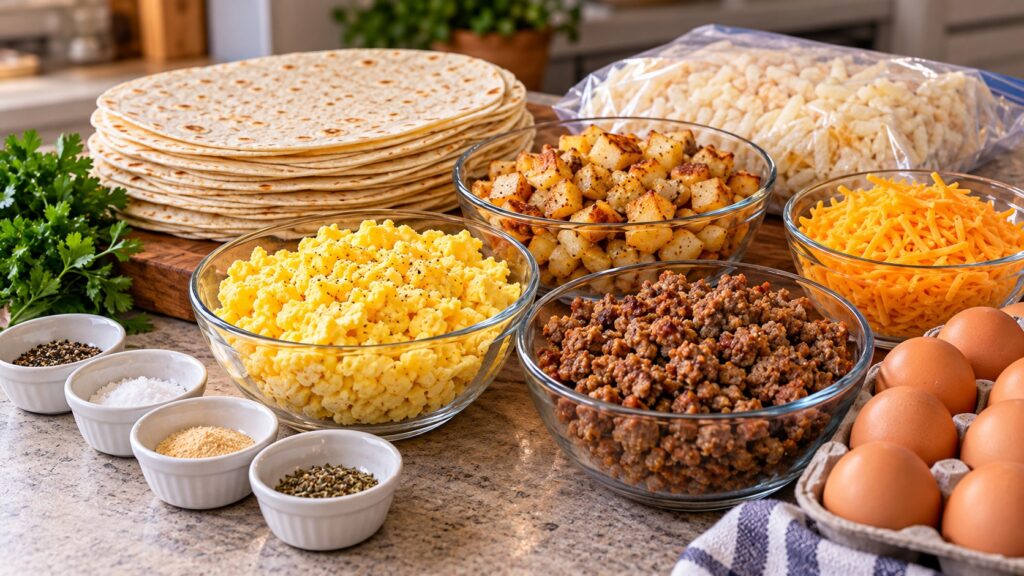
Use 10-inch flour tortillas. Smaller tortillas are harder to close once you add a substantial breakfast filling.
| Ingredient | Amount |
|---|---|
| Large flour burrito tortillas | 12 |
| Breakfast sausage | 1 pound |
| Large eggs | 12 |
| Frozen diced hash brown potatoes | 20 ounces |
| Shredded cheddar cheese | 8 ounces |
| Vegetable oil or butter | 1 tablespoon |
| Salt | 1/2 teaspoon, or to taste |
| Black pepper | 1/2 teaspoon |
| Garlic powder | 1/2 teaspoon |
| Onion powder | 1/2 teaspoon |
The potatoes can be reduced if you want more egg in each burrito. The cheese can also be increased, although too much can make the finished burrito greasy after reheating.
There is no real advantage to adding milk or cream to these scrambled eggs. For freezer burritos, the extra liquid simply gives you more moisture to manage.
How to Make Frozen Breakfast Burritos Step by Step
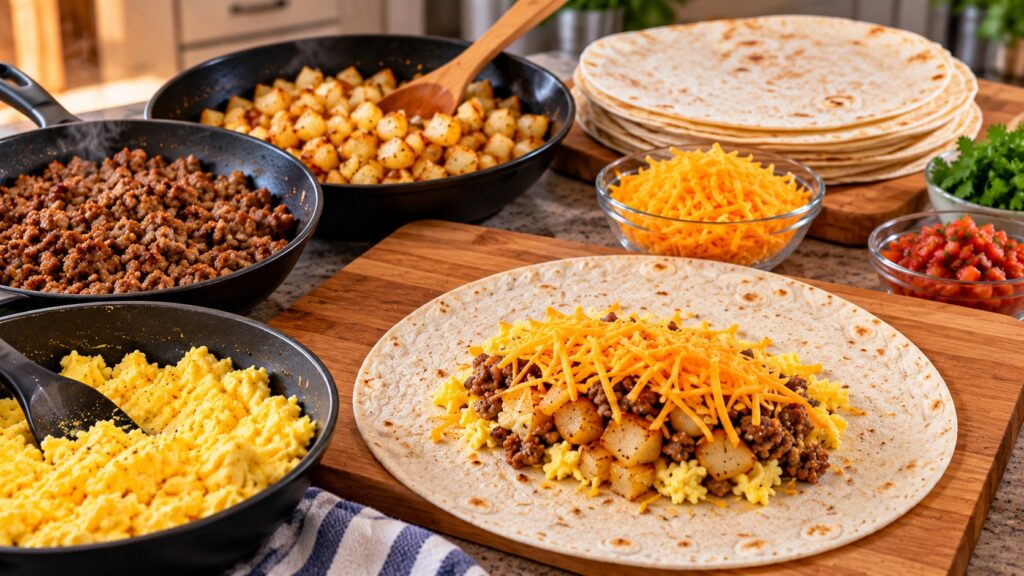
- Cook the sausage first. Brown the breakfast sausage over medium heat and break it into small pieces as it cooks. Once it is thoroughly cooked, drain away the excess fat and move the sausage to a bowl.
- Cook the potatoes until they are dry on the surface. Add the hash browns to the skillet, using a small amount of oil if necessary. Let them brown lightly and continue cooking until visible moisture has cooked away. Damp potatoes can soften the tortilla later.
- Scramble the eggs gently. Beat the eggs with the salt, pepper, onion powder and garlic powder. Cook over medium-low heat, stirring until they are fully set but still tender. USDA guidance says egg dishes should reach 160 degrees.
- Chill the cooked ingredients before assembly. Spread the eggs, potatoes and sausage in shallow containers or on separate pans and place them in the refrigerator. Do not leave cooked meat and eggs sitting at room temperature for several hours. USDA guidance says perishable foods should be refrigerated or frozen within two hours. (fsis.usda.gov)
- Soften the tortillas. Heat several tortillas beneath a slightly damp paper towel in the microwave for about 15 to 20 seconds. They should be flexible enough to roll without cracking.
- Divide the filling. Put roughly one-twelfth of the sausage, egg and potato mixture below the center of each tortilla. Sprinkle about 2 tablespoons of shredded cheese over the filling. Leave about 2 inches clear around the edges.
- Fold and roll. Bring the two sides inward. Fold the bottom edge over the filling, tuck it underneath and roll the tortilla tightly toward the opposite edge. Set it seam-side down.
- Package the burritos. Once assembled, wrap each burrito separately, place the wrapped burritos in a freezer bag, remove as much air as practical and mark the package with the filling and date. Freeze them flat until firm.
Why Breakfast Burritos Get Soggy in the Freezer
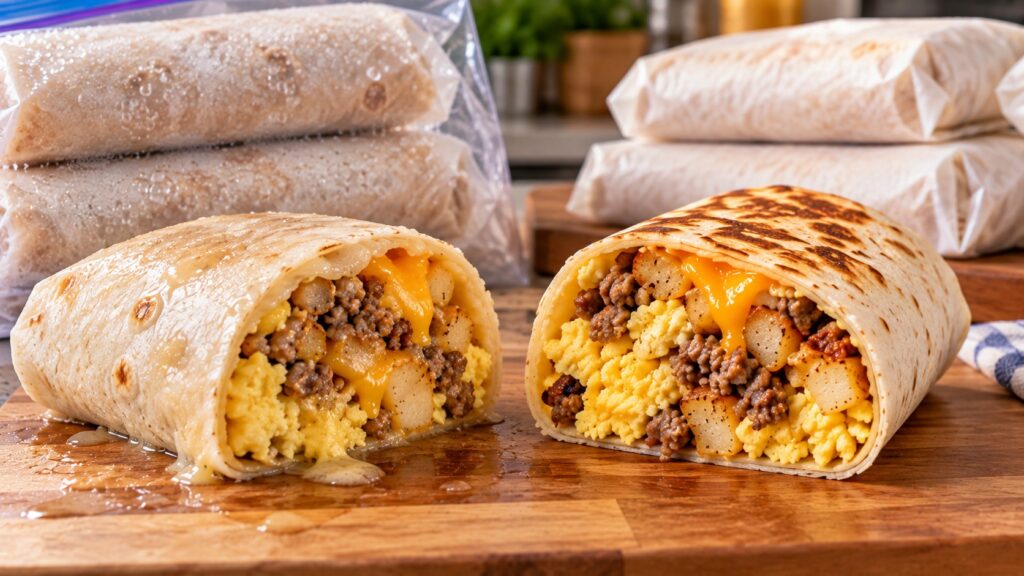
A hot filling creates steam inside the tortilla.
Once the burrito is wrapped, that steam becomes trapped. As it cools, the moisture settles into the tortilla. Freezing then locks that moisture in place.
The result can be a gummy tortilla surrounding a center that still takes too long to heat.
The better approach is to cool the ingredients rapidly before rolling the burritos. USDA says hot food can go directly into the refrigerator and recommends shallow containers because they allow food to cool more quickly.
Best Way to Wrap and Freeze Breakfast Burritos
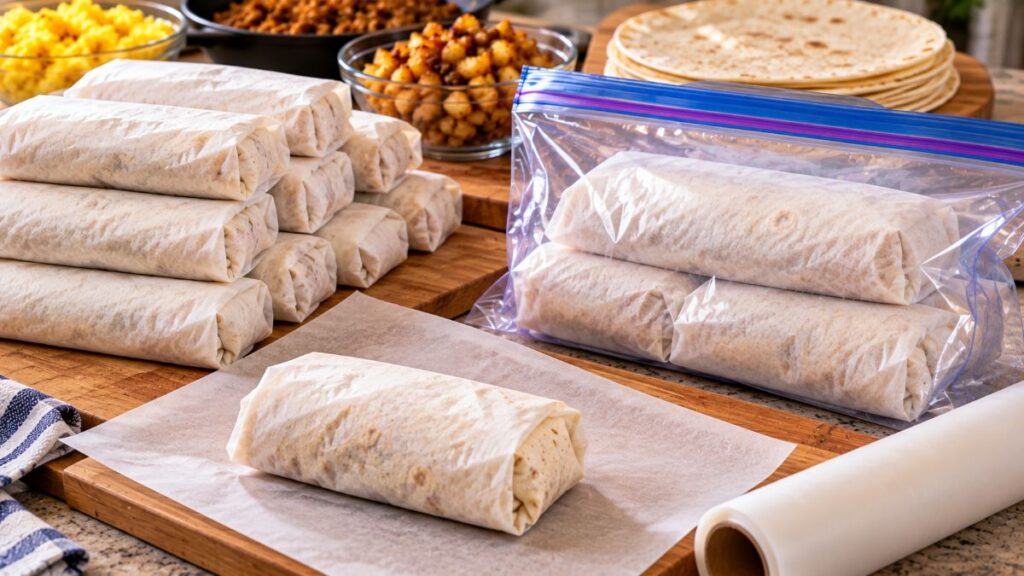
For most home freezers, use two layers.
Wrap every burrito snugly in parchment paper or freezer paper. Then place several of those wrapped burritos in a heavy-duty freezer bag and press out excess air before sealing it.
That gives each burrito its own protective wrapper while the outer bag provides another barrier against freezer air.
Aluminum foil is another good choice if you expect to reheat the burritos in a conventional oven. Foil must be removed before microwave reheating.
A vacuum sealer can also work well for longer storage. Freeze the burritos until firm before vacuum-sealing them so the machine does not flatten the tortilla or force the filling toward the ends.
Label the packages with both the date and variety. That becomes important once sausage, bacon, ham and vegetable burritos begin to look identical in the freezer.
How Long Do Frozen Breakfast Burritos Last?
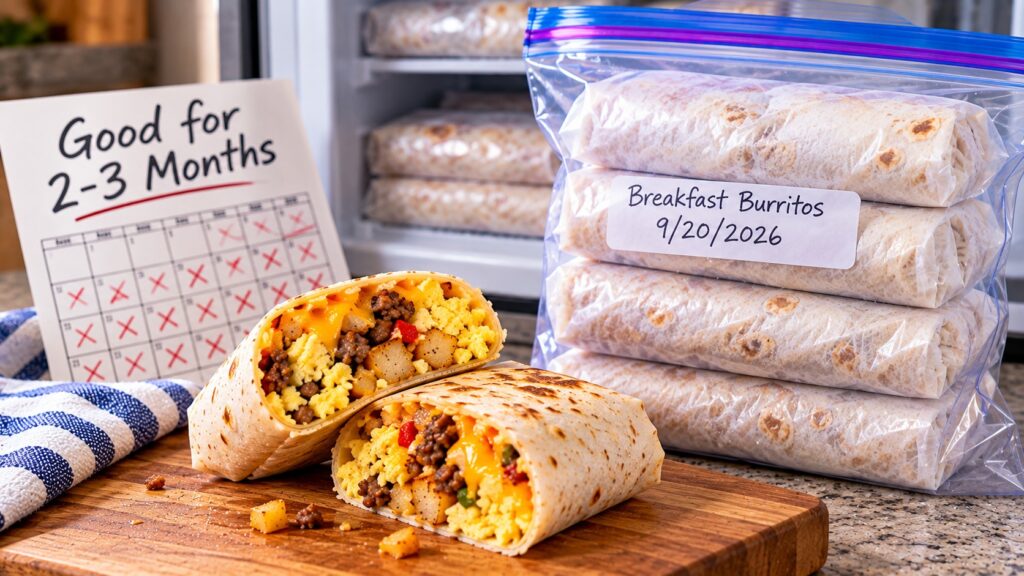
For the best flavor and tortilla texture, plan to use them within two to three months.
USDA says properly frozen leftovers generally maintain quality for about three to four months, although food kept continuously frozen at 0 degrees remains safe much longer. Over time, the main issue becomes declining flavor and moisture.
In a breakfast burrito, the tortilla is often the first component to show freezer damage. Tight wrapping helps reduce that problem.
How to Reheat a Frozen Breakfast Burrito
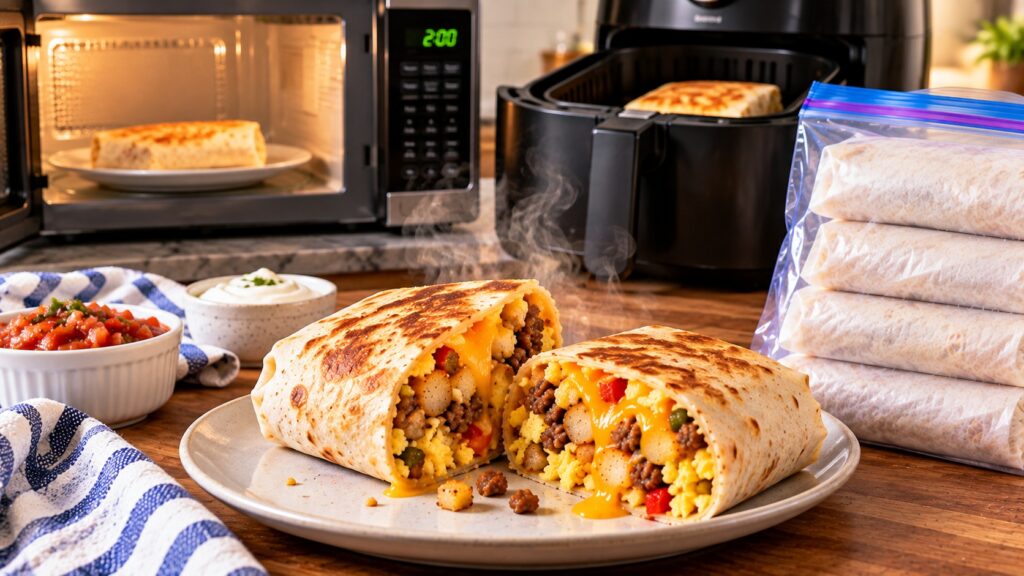
The microwave is the quickest option.
Take off any foil or plastic wrapper and place the frozen burrito on a microwave-safe plate. Cover it loosely with a damp paper towel. Heat it at about 50% power for two minutes, turn it over and continue at full power in 30- to 60-second intervals until hot.
Because microwave power and burrito size vary, do not rely only on time. USDA recommends reheating leftovers to 165 degrees throughout. (ask.fsis.usda.gov)
For a better tortilla, microwave the burrito first and then finish it in a dry skillet for a minute or two per side. The skillet firms the outside and gives it more texture than microwave heating alone.
You can also reheat a frozen burrito in a 375-degree oven for about 35 to 45 minutes. Keep it in foil for most of that time, then open the foil during the final few minutes if you want the outside crisper.
6 Frozen Breakfast Burrito Recipes to Try
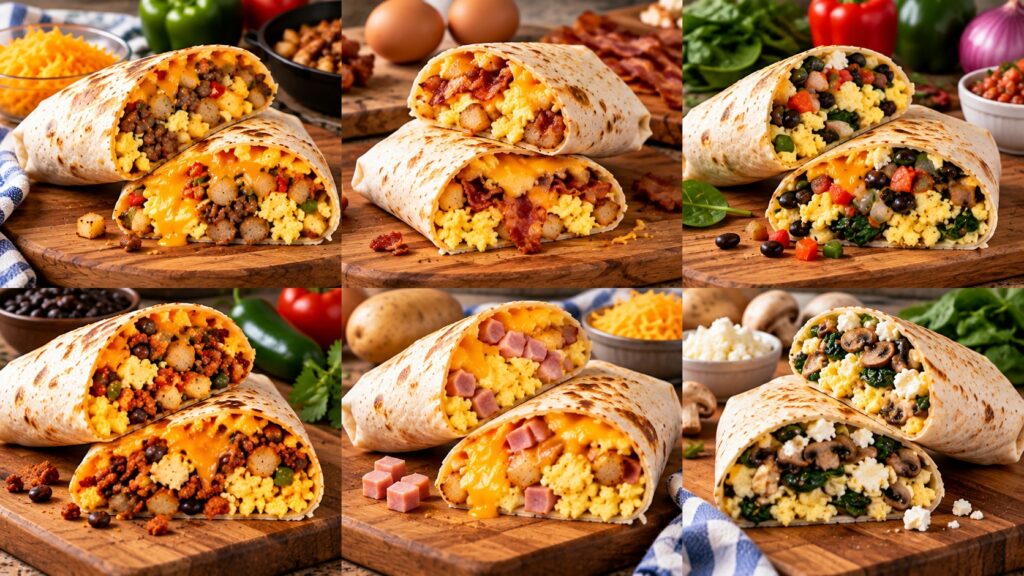
Sausage, Egg, Potato and Cheddar
The master recipe is the most straightforward version.
Breakfast sausage supplies much of the seasoning, while potatoes add bulk and cheddar ties everything together. Sharp cheddar works especially well because it brings more flavor without requiring more cheese.
Serve salsa or hot sauce after reheating rather than freezing a large amount of sauce inside the tortilla.
Bacon, Egg and Cheddar
Swap the sausage for about 12 ounces of cooked, crumbled bacon.
Cook the bacon until crisp and drain it carefully. Excess bacon fat can make the tortilla oily after freezing and reheating.
Keep the potatoes and eggs from the basic recipe and use sharp cheddar. Green onion also works, but cook it before adding it to the filling.
Ham, Egg and Swiss
Use about 12 ounces of diced cooked ham instead of sausage and switch the cheddar for Swiss.
Briefly browning the ham helps drive off some surface moisture. Sautéed onion also works with this combination.
This version is a practical way to use leftover holiday ham.
Chorizo and Pepper Jack
Replace the breakfast sausage with Mexican-style chorizo and use pepper jack cheese.
Add well-drained black beans and a small amount of roasted green chile. Reduce the amount of potato so the burritos do not become too full.
Drain the beans carefully and cook peppers before using them. Keep salsa on the side rather than freezing a generous amount inside.
Vegetable, Egg and Cheese
Meat is not required for a good freezer burrito.
Combine eggs with mushrooms, onions, bell peppers, spinach and cheddar or Monterey Jack. Cook the vegetables until most of their released liquid is gone.
Mushrooms and spinach contain considerable moisture, so putting them into the tortilla without cooking and draining them properly can quickly create a soggy burrito.
Black Bean, Potato and Egg
For a lower-cost meatless option, combine scrambled eggs, seasoned black beans, browned potatoes and cheddar.
Cumin, chili powder and garlic provide plenty of flavor without adding much cost. Canned beans should be rinsed, drained and briefly heated in the skillet before assembly.
This may be the least expensive version of the group.
Ingredients That Are Better Added After Reheating
Fresh tomatoes, raw peppers and large amounts of salsa can release too much water during freezing and reheating.
Sour cream may separate after freezing. Avocado can also change in texture and flavor.
Those ingredients work better as toppings after the burrito is heated.
Cooked peppers and onions are different. Once they have been sautéed until much of their water is gone, they freeze well.
What Does a Homemade Dozen Cost?
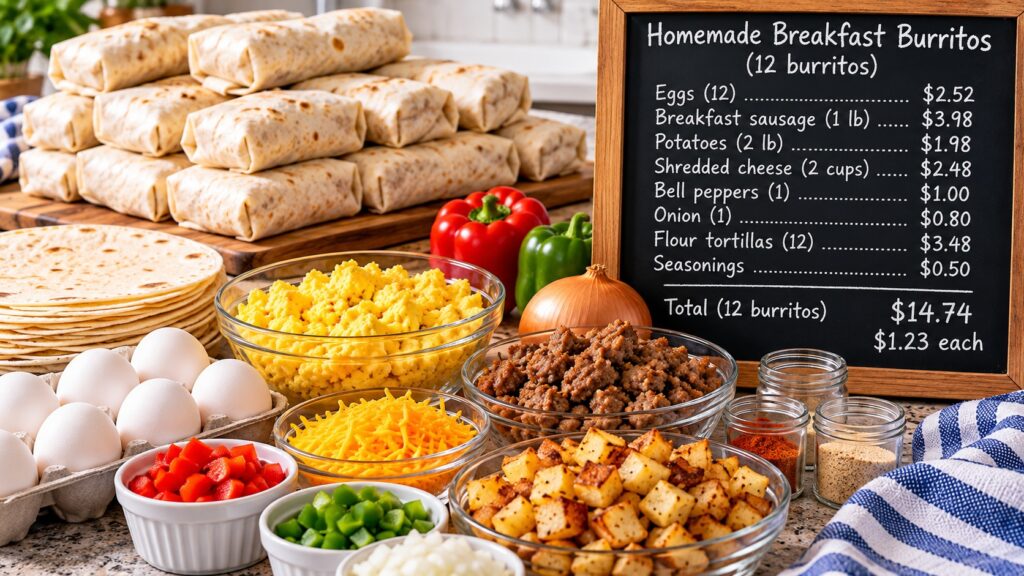
For the sausage, egg, potato and cheese version, I priced value-brand ingredients using current Walmart online prices. Prices were checked Sept. 20, 2026, and will vary by location.
| Ingredient | Reference price | Amount used | Cost in 12 burritos |
|---|---|---|---|
| Burrito tortillas | $2.12 for 8 | 12 | $3.18 |
| Large eggs | $1.64 per dozen | 12 | $1.64 |
| Breakfast sausage | $2.94 per pound | 1 pound | $2.94 |
| Frozen hash browns | $3.42 for 32 ounces | 20 ounces | $2.14 |
| Shredded cheddar | $3.48 for 16 ounces | 8 ounces | $1.74 |
| Oil and seasonings | Estimated | — | $0.40 |
| Total | $12.04 | ||
| Cost per burrito | About $1.00 |
The reference prices included Great Value burrito tortillas at $2.12 for eight, eggs at $1.64 per dozen, breakfast sausage at about $2.94 per pound, 32 ounces of hash browns at $3.42 and 16 ounces of shredded cheddar at $3.48.
There is one important difference between ingredient cost and what you actually pay at checkout.
If every package has to be purchased from scratch, the register total is closer to $16.12 because you need two packs of tortillas plus full packages of cheese and potatoes. You are not using all of that food in the first dozen, however.
After making the burritos, you still have four tortillas, about 12 ounces of hash browns and roughly 8 ounces of cheese remaining. The amount of food actually consumed in the 12 burritos comes to about $12.
Homemade Burritos Compared With Frozen Store Brands
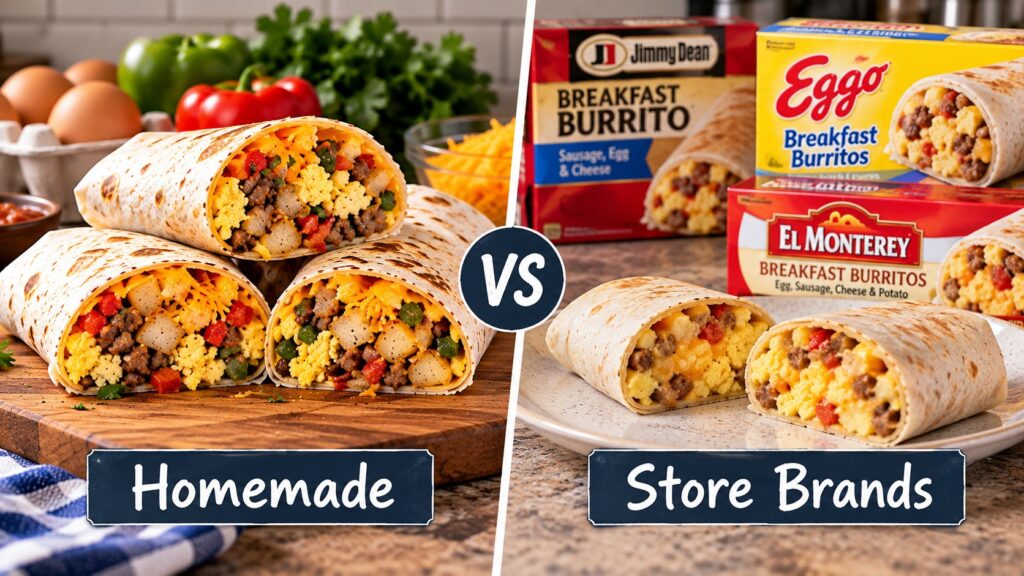
An eight-count package of El Monterey egg, sausage, cheese and potato breakfast burritos was listed at $10.64, or about $1.33 per burrito. The equivalent cost for 12 would be about $15.96. (walmart.com)
Compared with that 12-burrito equivalent, the homemade batch uses about $3.92 less in ingredients.
The price gap becomes larger with a more expensive brand. Target listed four Jimmy Dean Meat Lovers breakfast burritos at $6.99, which works out to roughly $1.75 each. Twelve at that rate would cost about $20.97. (target.com)
| Breakfast option | Approximate cost for 12 | Cost each |
|---|---|---|
| Homemade sausage burritos | $12.04 | $1.00 |
| El Monterey equivalent | $15.96 | $1.33 |
| Jimmy Dean equivalent | $20.97 | $1.75 |
The products are not identical, so this is not a perfect comparison. Regional pricing, sales, brands and burrito sizes vary.
Size matters in particular. The El Monterey eight-pack weighs 36 ounces, which works out to about 4.5 ounces per burrito.
A burrito made from the homemade recipe is likely to be considerably larger, although its final weight will vary depending on how much moisture and fat are lost during cooking.
That means a simple per-burrito price does not capture the whole value difference.
Why Batch Cooking Makes the Idea Work
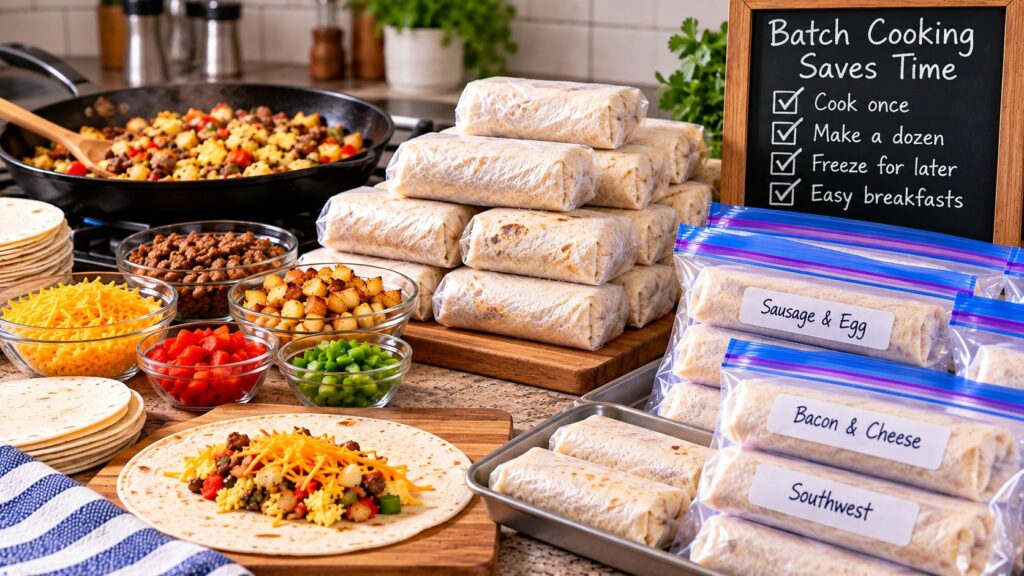
Making a single breakfast burrito from scratch every morning would not save much time.
Making 12 at once is different.
One skillet handles the sausage. One batch takes care of the potatoes. One dozen eggs can be scrambled together. After cooling, the rest of the work becomes an assembly line.
The homemade approach also lets you change the proportions. More egg, less potato, different cheese, spicy sausage or no meat at all are easy adjustments.
You can even divide one batch among several fillings and mark each wrapper before freezing.
A Practical Way to Stock the Freezer
After you have made a dozen successfully, producing 24 does not require twice as much effort.
Two filling combinations help keep the freezer from becoming repetitive. Wrap every burrito individually and organize the different varieties in labeled freezer bags.
Keep wetter toppings such as salsa, sour cream and avocado in the refrigerator rather than inside the frozen burrito. Heat the burrito first, then add them at the table.
That system turns one batch-cooking session into a supply of breakfasts that can be heated while the morning coffee is still brewing.