
 by
by Buying Michigan-grown black beans, cooking a tender batch, and putting them to work in soups, salads, tacos, and weeknight meals.
Michigan black beans can earn their place in the kitchen long before anyone mentions nutrition. Cook a pot of soup, spoon it into tacos, or toss it with sweet corn and lime. Their appeal is practical: one ingredient can anchor several very different meals.
The Michigan part deserves attention, too. The Michigan Bean Commission identifies the state as a major supplier of dry edible beans, with farmers producing eight varieties. Buying beans with a confirmed Michigan origin connects an ordinary pantry purchase to that agricultural business.
Start by checking where the beans were grown, then choose the preparation that fits your schedule. Dried beans give you control over seasoning and texture. Canned beans get dinner moving when there is no time for a long simmer.
How to Buy Michigan Black Beans

Look for an explicit statement that the beans were grown in Michigan. A Michigan business address identifies the seller or packer, but it does not indicate where a particular crop was grown. If the label leaves that unclear, ask the company before paying extra for a local connection.
The Michigan Bean Commission provides grower information and a supplier directory through its website. Treat those listings as leads, then ask whether the business sells household quantities and can confirm Michigan origin. A supplier serving food manufacturers may have different minimum orders than a grocery store.
At a farm market, ask who grew the beans and whether the seller knows the harvest year. Online, check the package size, shipping charge, and origin statement before comparing prices. A large bag only makes sense if you expect to use it.
Buying locally does not require turning dinner into a purity test. If the store has no confirmed Michigan-grown option, ordinary black beans still work in the meal ideas below. Keep the origin claim tied to the product you actually bought.
Dried or Canned: Which Belongs in Your Pantry?
Choose dried beans when you want to build flavor as they cook. Choose canned beans when the rest of dinner is nearly ready. Keeping both on hand gives you room to plan without making every meal depend on yesterday’s preparation.
| Choice | Best use | What to check |
|---|---|---|
| Dried black beans | A pot of beans for several meals | Growing origin, package condition and available cooking time |
| Canned black beans | Quick tacos, salads and weeknight bowls | Added salt, seasoning and drained quantity |
| Previously cooked, frozen beans | A shortcut for soups and stews | Portion size and the date you froze them |
The Bean Institute’s comparison of dried and canned beans emphasizes cost, convenience and control. Canned beans are already cooked, while dried beans require preparation. Draining and rinsing plain canned beans can also reduce sodium.
How to Cook Dried Michigan Black Beans
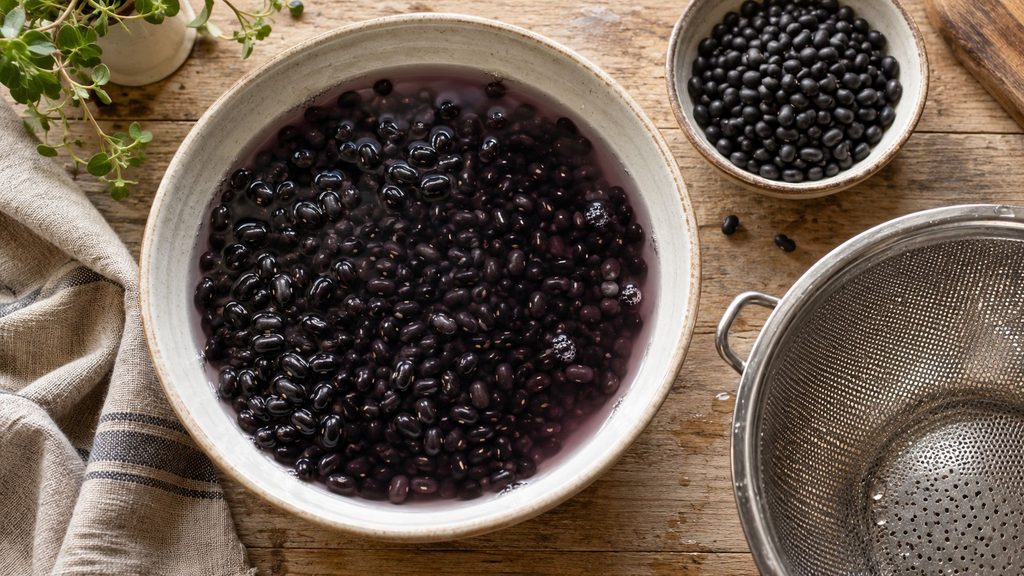
Use this basic stovetop method for plain beans you can season for different meals. You need 2 cups of dried black beans, water, a large pot and a strainer. Keep optional seasonings simple until you decide how to serve the finished batch.
- Sort and rinse. Remove stones, debris and damaged beans. Rinse under running water.
- Quick-soak. Add the beans and 6 cups of water to a large pot. Boil for 2 to 3 minutes, turn off the heat, cover and leave for one hour.
- Drain. Discard the soaking water and rinse the beans.
- Cook in fresh water. Cover the beans with fresh water and bring to a gentle simmer. Add water as needed to keep them submerged, stirring occasionally.
- Check tenderness. Black beans commonly need 60 to 90 minutes of cooking after soaking. Continue until the centers mash easily without a hard core.
- Finish. Season to taste. Add tomatoes, vinegar or citrus after the beans become tender.
The preparation follows the Bean Institute’s four-step method. The black bean cooking range comes from North Dakota State University Extension. Timing is a guide, so check the beans before serving.
Why the Beans May Still Be Firm
Old beans, hard water and acidic ingredients can delay softening. Keep the beans submerged and continue cooking, checking periodically. If this happens often, try a newer bag and water with fewer minerals.
A vigorous boil can damage the skins before you get the texture you want. Aim for a gentle simmer instead. These troubleshooting points follow the Bean Institute’s cooking guidance.
Five Ways to Serve Michigan Black Beans

1. Make a Bowl of Beans Worth Sitting Down For
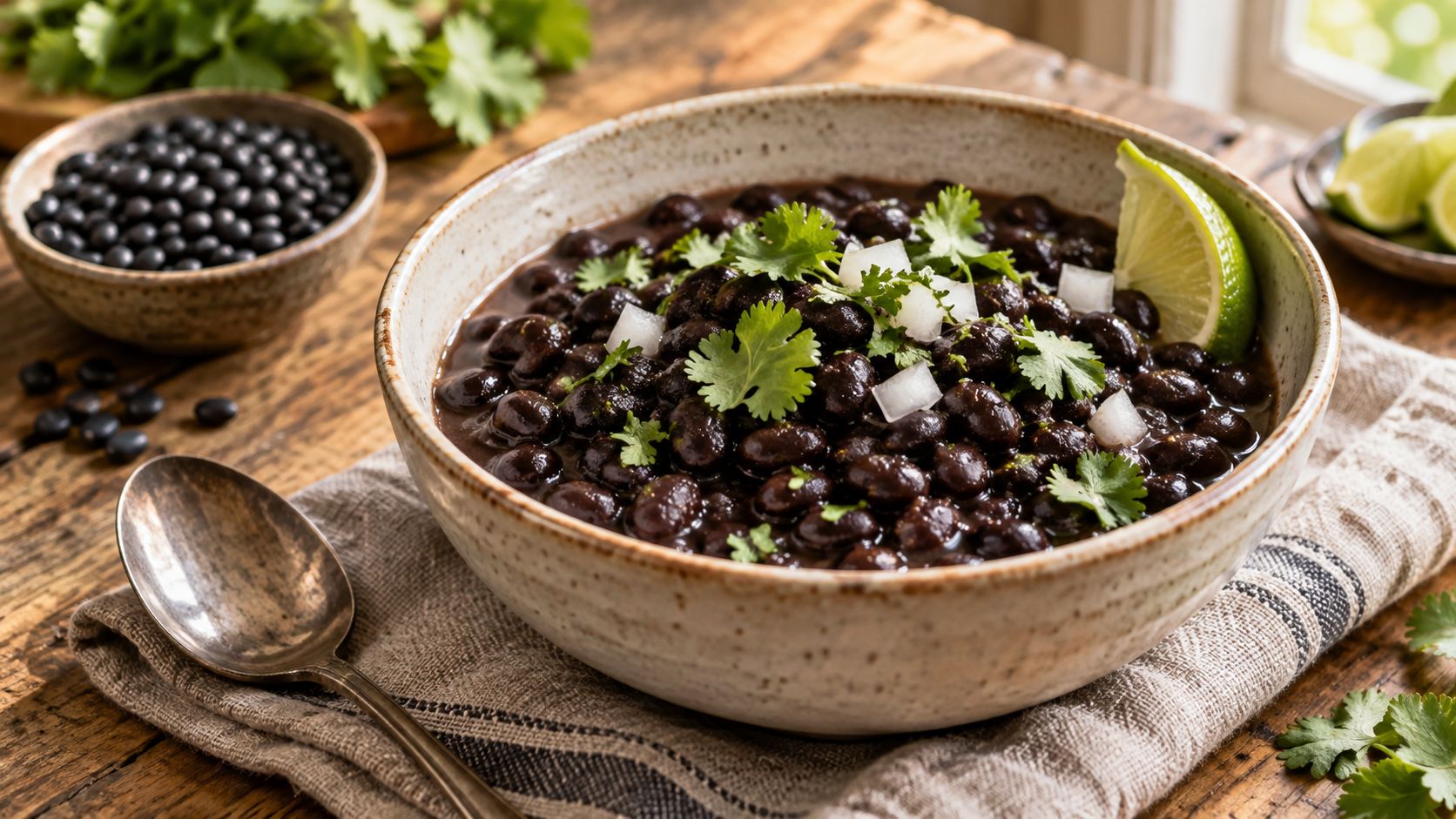
Spoon warm beans into a shallow bowl and add chopped onion, cilantro and a squeeze of lime. Serve rice or warm tortillas on the side, then let people choose their own toppings. Keep the garnish light enough that the beans remain the main attraction.
2. Pair Them With Sweet Corn
Toss cooled, cooked beans with corn, diced tomato, avocado, and lime dressing. Keep the pieces small enough to get several ingredients on the same fork. Serve the salad beside Southwestern shrimp skewers for a meal with some colour and contrast.
3. Build a More Interesting Pot of Soup
Use cooked beans as the base for a soup with onion, garlic, and broth. Mash part of the beans if you want a thicker texture, leaving the rest whole. Finish individual bowls with a little lime or hot sauce so everyone can adjust the sharpness and heat.
4. Give Taco Night Another Filling
Warm cooked beans with cumin and a little broth, then mash them lightly. Spoon them into tortillas with shredded cabbage and salsa. The cabbage supplies crunch, while the beans keep the filling substantial without requiring a second pan of meat.
5. Add Them to a Chili That Welcomes Beans
Black beans work well in a vegetable chili with peppers, tomatoes, and corn. Use them where their color and texture suit the dish you want to make. Our guide to regional chili recipes explains why different American styles take different approaches to beans.
What About Nutrition and Gas?
A half-cup of cooked, unsalted black beans supplies about 7.6 grams of protein and 7.5 grams of fibre, according to NDSU Extension. Those figures describe the plain beans. Cheese, bacon, salty broth, and other additions change the finished dish.
If beans cause discomfort, start with small portions and increase gradually. Soaking and discarding the soaking water may help, but individual responses vary. NDSU Extension’s bean guide provides further preparation and digestion advice.
Best Tips for Dealing With Gas
Beans can cause flatulence due to natural compounds called oligosaccharides. These are sugar molecules with a molecular structure that can make them difficult to digest at times. They are transported to the lower intestine without being broken down, causing painful gas. Fortunately, the gas-producing effects of beans may be reduced by following a few easy steps:
- Invest in the most recent crop of dry beans. The fresher the bean, the less likely you will have stomach issues.
- Always soak and drain your beans before cooking. The more oligosaccharides are released into the soaking water, the longer the beans are soaked. Before cooking, drain and rinse the beans, reserving the soaking water.
- Beano, a commercial natural enzyme product, breaks down the complex carbohydrates in beans, making them simpler to digest.
Cool and Store the Leftovers Promptly
Divide cooked beans into shallow containers and refrigerate promptly. Perishable food should be refrigerated within two hours, or within one hour above 90 degrees Fahrenheit. Keep the refrigerator at 40 degrees or below, following FoodSafety.gov’s handling guidance.
Label the containers with the cooking date and meal you have in mind. Freeze portions you do not expect to use soon. For black bean soups and stews, federal storage guidance recommends refrigerating for three to four days and freezing for two to three months for best quality.
A Local Ingredient With an Everyday Job
Michigan black beans do not need an elaborate recipe to justify a place in the cupboard. Buy a bag with a clear origin, cook it until tender and give the finished beans a useful job. A bowl tonight, tacos tomorrow and soup later offer plenty of reason to make another pot.
For another Michigan food tradition, read our guide to Yooper pickled eggs. Have a favorite Michigan bean grower or a family way of serving black beans? Share the name or idea in the comments.
Works Cited
- The Bean Institute. “Dry vs Canned.” Northarvest Bean Growers Association. Accessed 15 Sept. 2026.
- The Bean Institute. “Four Step Method.” Northarvest Bean Growers Association. Accessed 15 Sept. 2026.
- FoodSafety.gov. “4 Steps to Food Safety.” 18 Sept. 2023. Accessed 15 Sept. 2026.
- FoodSafety.gov. “Cold Food Storage Chart.” 19 Sept. 2023. Accessed 15 Sept. 2026.
- Garden-Robinson, Julie, and Krystle McNeal. “All About Beans Nutrition, Health Benefits, Preparation and Use in Menus.” North Dakota State University Extension, Feb. 2024. Accessed 15 Sept. 2026.
- Michigan Bean Commission. Michigan Bean Commission. Accessed 15 Sept. 2026.
Related Reading For Michigan Cooking

Tips and Tricks for Cooking Mussels and Other Seafood to Perfection
College Budget Cooking – 4 Delicious Recipes for Hungry Minds
Master Hot Dog Grilling Techniques at Home
Beef Jerky Varieties: Discover 7 Amazing Types for Your Palate
Master the Grill: 7 Essential Hot Dog Grilling Tips for the Perfect BBQ