
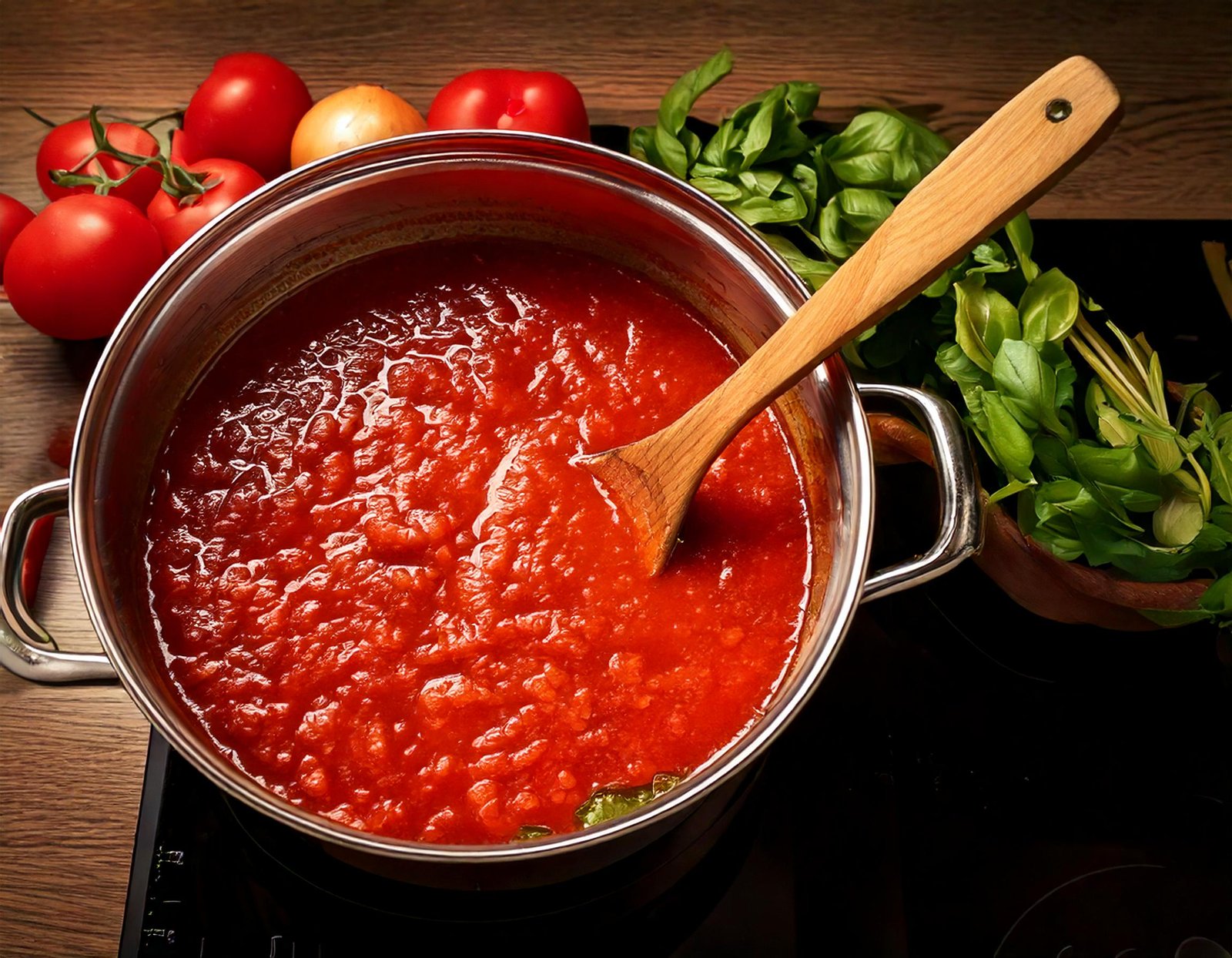


Master the simplicity of sugo, Italy’s classic tomato sauce, and bring bold, authentic flavors to your home-cooked meals.
Table of Contents – Traditional Italian Sugo Sauce Recipe
What Exactly is Sugo?

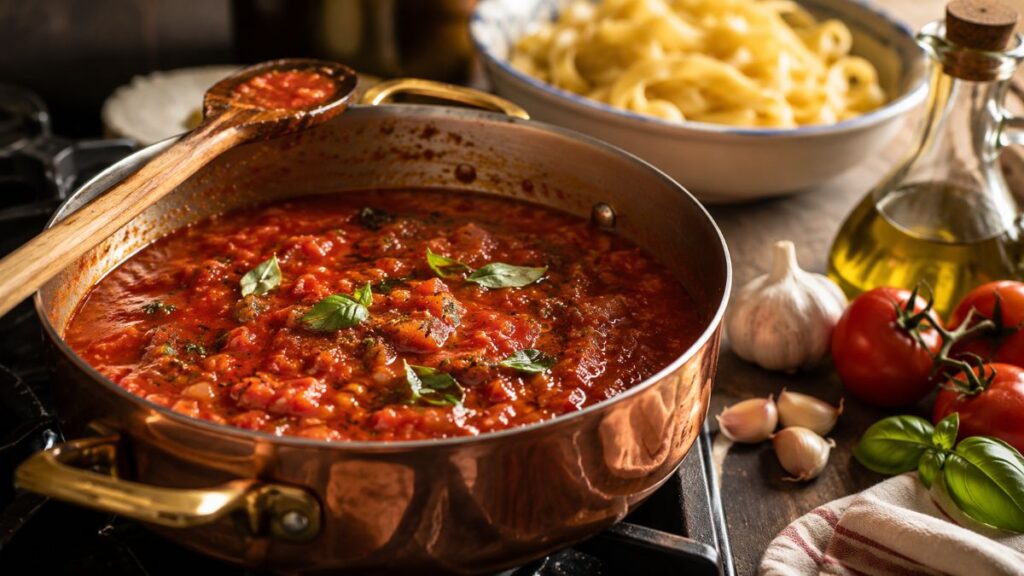
Sugo is the Italian word for sauce. In everyday cooking, it often refers to a simple tomato sauce made with tomatoes, olive oil, onion, garlic, and fresh herbs. The exact recipe varies by region and family, so there is no single version that every Italian cook follows.
A basic sugo is usually simmered until the tomatoes break down and the sauce thickens. It may be served with pasta, meatballs, baked eggplant, chicken, or other dishes. Some versions include carrots, celery, red wine or red pepper flakes, while others rely on little more than tomatoes, olive oil and basil.
Sugo is not always the same as marinara or ragù. Marinara is generally a quicker tomato sauce, while ragù usually contains meat and takes longer to cook. The term sugo is broader and can refer to several types of cooked sauce. For this recipe, it means a traditional Italian-style tomato sauce made with a short list of ingredients.
Traditional Italian Sugo Sauce Recipe Ingredients

A traditional sugo relies on a short list of ingredients. The quality of the tomatoes, olive oil and aromatics matters more than adding a long list of seasonings. Each ingredient should support the tomato flavor rather than cover it.
Tomatoes
Tomatoes form the base of the sauce. Canned whole peeled tomatoes are often the best choice because they are picked and packed at peak ripeness. Crush them by hand or break them apart with a spoon as they cook.
San Marzano tomatoes are a popular option, but they are not required. Any good-quality canned plum tomato can produce a rich, balanced sugo. Avoid heavily seasoned canned sauces because they make it harder to control the final flavor.
Extra-Virgin Olive Oil
Olive oil carries the flavors of the onion, garlic and herbs. Use enough to coat the bottom of the pan and soften the aromatics without frying them.
A good extra-virgin olive oil adds body and a mild fruitiness. Save a small drizzle for the finished sauce when a fresher olive flavor is desired.
Onion
Finely chopped onion gives sugo sweetness and depth. Yellow onion is the most practical choice, though white onion also works.
Cook the onion slowly until soft and translucent. Browning it too quickly can give the sauce a harsher flavor.
Garlic
Garlic adds warmth and a savory edge. Slice or mince it, then cook it briefly after the onion has softened.
Do not let the garlic burn. Burned garlic turns bitter and can affect the entire pot of sauce.
Basil
Fresh basil gives the sauce a clean herbal note. Add some during cooking and reserve a few leaves for the end.
Tearing the leaves by hand helps prevent bruising. Dried basil can be used when fresh is unavailable, but use it sparingly because its flavor is more concentrated.
Salt and Black Pepper
Salt sharpens the tomato flavor and balances acidity. Add it in stages, then taste again after the sauce has simmered.
Black pepper is optional but useful in small amounts. It should remain in the background rather than dominate the sauce.
Optional Ingredients
Some cooks add carrots or celery for sweetness and body. A pinch of red pepper flakes can provide mild heat, while a splash of red wine may add depth.
Sugar is usually unnecessary when the tomatoes are good. When the sauce tastes too sharp, longer cooking often works better than sweetening it.
Traditional Italian Sugo – A Recipe that Honors Tradition with Every Stir and Simmer
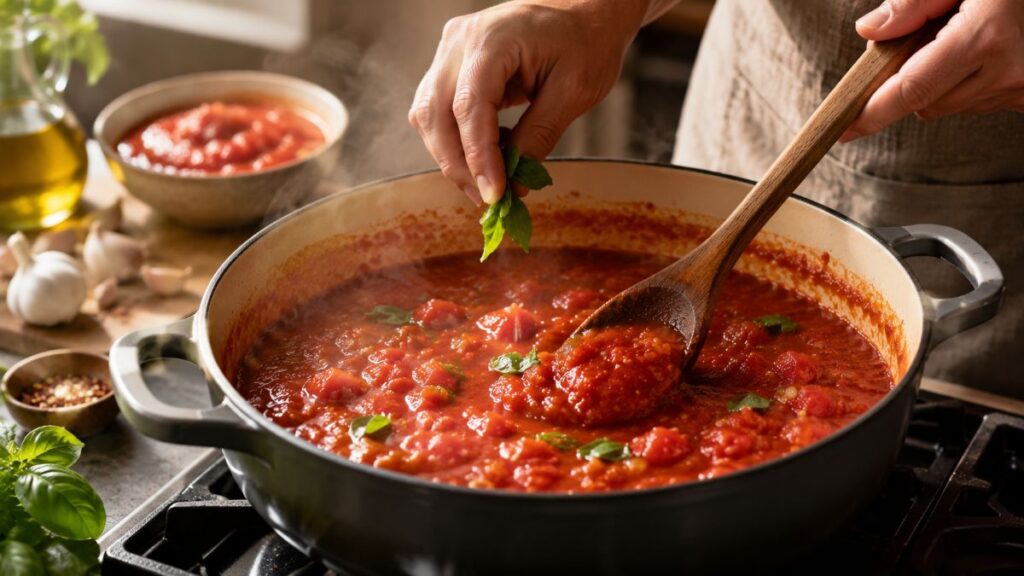
The beauty of sugo lies in its simplicity. To make your own, start by warming two tablespoons of extra-virgin olive oil in a saucepan. The scent of finely chopped onions and minced garlic as they sauté will transport you straight to a bustling Italian kitchen. Once they’ve turned translucent and aromatic, add the crushed San Marzano tomatoes. This prized variety, known for its rich, slightly sweet flavor, is crucial to a sugo that truly delivers.
How to Make Traditional Italian Sugo
Traditional sugo is built in stages. Start by softening the onion, briefly add the garlic, then let the tomatoes simmer until the sauce thickens and the flavors settle. The process recipe Italian homemade tomato sauce is simple, but rushing the aromatics or cooking the sauce over high heat can produce a bitter or uneven result.
Use a heavy saucepan or Dutch oven with enough room for the sauce to simmer without splashing. Stir occasionally and keep the heat low once the tomatoes are added.


Traditional Italian Sugo Recipe
Prep time: 15 minutes
Cook time: 45 minutes
Total time: 1 hour
Yield: About 6 cups
Servings: 6
Cuisine: Italian
Category: Sauce
Method: Stovetop
Ingredients
- 2 tablespoons extra-virgin olive oil
- 1 medium yellow onion, finely chopped
- 3 garlic cloves, minced or thinly sliced
- 2 cans whole peeled tomatoes, 28 ounces each
- 1 teaspoon kosher salt, plus more to taste
- ¼ teaspoon freshly ground black pepper
- ¼ teaspoon red pepper flakes, optional
- 8 to 10 fresh basil leaves
- 1 small carrot, finely diced, optional
- 1 celery stalk, finely diced, optional
- ¼ cup dry red wine, optional
Instructions
- Prepare the tomatoes.
Pour the canned tomatoes into a large bowl. Crush them by hand or break them apart with a spoon. Set aside. - Cook the onion.
Heat the olive oil in a heavy saucepan over medium-low heat. Add the onion and cook for 8 to 10 minutes, stirring often, until soft and translucent. - Add optional vegetables.
When using carrot or celery, add them with the onion and cook until softened. Do not let the vegetables brown heavily. - Add the garlic.
Stir in the garlic and red pepper flakes. Cook for about 30 seconds, just until fragrant. Do not let the garlic burn. - Deglaze with wine.
When using red wine, pour it into the pan and scrape up any browned bits from the bottom. Simmer for 2 to 3 minutes, until the wine reduces slightly. - Add the tomatoes.
Stir in the crushed tomatoes, salt and black pepper. Bring the sauce to a gentle simmer. - Simmer slowly.
Reduce the heat to low and cook uncovered for 35 to 45 minutes. Stir every few minutes to prevent sticking. The sauce is ready when it has thickened and no longer looks watery. - Add the basil.
Tear the basil leaves and stir them into the sauce during the final 5 minutes of cooking. - Taste and adjust.
Taste the sugo and add more salt or pepper as needed. When the sauce tastes too sharp, continue simmering for another 10 minutes before adding sugar. - Serve.
Toss the sugo with hot pasta, spoon it over meatballs or use it as a base for baked Italian dishes.
Recipe Notes
- Canned whole peeled tomatoes usually produce a better texture than pre-crushed tomatoes.
- San Marzano tomatoes are a good option, but any high-quality canned plum tomato will work.
- For a smoother sauce, use an immersion blender after cooking.
- For a chunkier sugo, leave the tomatoes roughly crushed.
- Add a spoonful of pasta water when tossing the sauce with pasta. The starch helps the sugo cling to the noodles.
- A small amount of butter or olive oil can be stirred in before serving for a richer finish.
Estimated Nutrition Per Serving
- Calories: 145
- Fat: 6 grams
- Saturated fat: 1 gram
- Carbohydrates: 19 grams
- Fiber: 5 grams
- Sugar: 11 grams
- Protein: 4 grams
- Sodium: 520 milligrams
Nutrition values are estimates and will vary by brand, serving size and optional ingredients.
Traditional Italian Sugo Sauce vs. Marinara
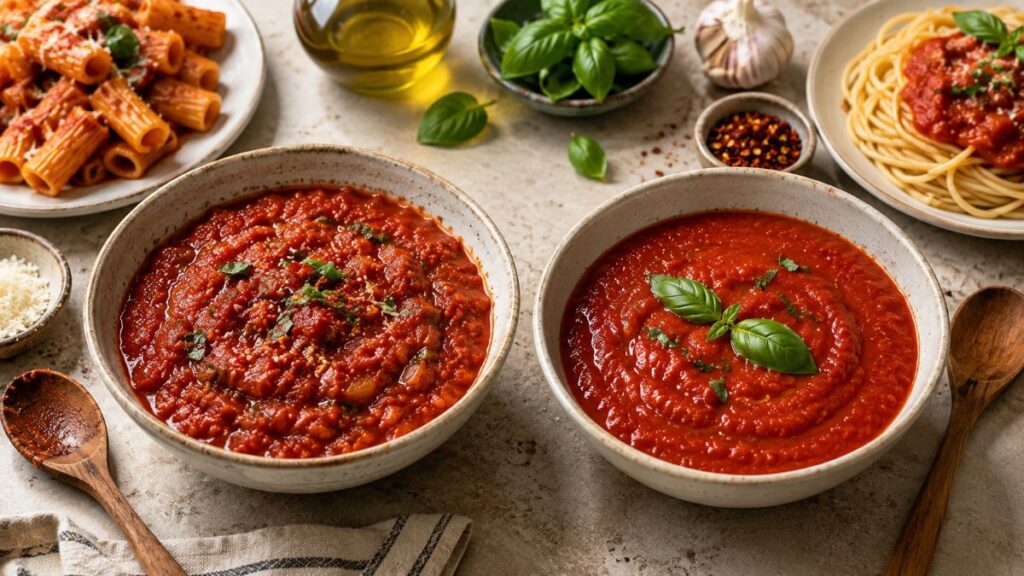
Sugo and marinara are both Italian tomato sauce recipes, but the terms are not used the same way in every region, household, or restaurant. In some kitchens, the words may describe nearly identical sauces. In others, they refer to different cooking methods or ingredients.
The word sugo simply means “sauce” in Italian. It can refer to a basic tomato sauce, a meat sauce, or another cooked sauce served with pasta. A tomato-based sugo often includes onion, garlic, olive oil, and herbs, and is then simmered long enough to develop a thicker texture and deeper flavor.
Marinara usually refers to a quick tomato sauce made with tomatoes, garlic, olive oil, and herbs. It often cooks for less time and may have a brighter, fresher tomato flavor. Many marinara recipes do not include onion, although that is not a firm rule.
The distinction becomes less clear in Italian American cooking, where recipe names often reflect family tradition rather than a strict definition. One cook’s marinara may closely resemble another cook’s sugo.
For this recipe, sugo means a slowly simmered tomato sauce with onion, garlic, olive oil and basil. The longer cooking time gives it more body than a typical quick marinara.
| Sugo | Marinara |
|---|---|
| A broad Italian term for sauce | Usually a tomato-based sauce |
| May include onion, meat or vegetables | Often made with tomatoes, garlic and herbs |
| Can simmer for 40 minutes or longer | Commonly prepared in 20 to 30 minutes |
| Usually thicker and more developed | Often lighter and brighter |
| Meaning varies by region and family | The recipe also varies by cook and region |
Traditional Italian Sugo Sauce vs. Ragù

Sugo and ragù are both Italian sauces, but the difference is usually clearer than the distinction between sugo and marinara.
The word sugo is a broad term that means sauce. It may describe a simple tomato sauce, a vegetable sauce or a meat-based sauce. In this recipe, sugo refers to a tomato sauce made with olive oil, onion, garlic and basil.
Ragù is more specific. It usually contains meat and cooks slowly for a longer period. Beef, pork, veal, sausage or a combination of meats may be used. The sauce often includes onion, carrot, celery, wine and a small amount of tomato.
A traditional ragù is not always a heavy tomato sauce. In some regional recipes, meat is the main ingredient and tomato plays a supporting role. Ragù alla Bolognese is a well-known example.
Sugo is generally quicker and lighter. Ragù is usually richer, thicker and more filling because of the meat and longer cooking time.
| Sugo | Ragù |
|---|---|
| Broad Italian term for sauce | A specific type of slow-cooked meat sauce |
| May be made without meat | Usually includes beef, pork, veal or sausage |
| Often tomato-forward | Often meat-forward |
| Commonly cooks for 40 to 60 minutes | Often cooks for two hours or longer |
| Works well with many pasta shapes | Often paired with sturdy pasta or used in lasagna |
What Pasta Goes With Traditional Italian Sugo?

Sugo works with many pasta shapes, but the best choice depends on the sauce’s thickness and texture. A smooth tomato sugo coats long noodles well, while a thicker sauce with onion, vegetables or meat clings better to ridged or tube-shaped pasta.
Spaghetti
Spaghetti is a classic choice for a smooth or lightly textured sugo. The long strands carry the sauce evenly without making the dish feel too heavy.
Toss the cooked spaghetti directly in the pan with the sugo for a minute or two before serving. Add a small amount of pasta water when needed to help the sauce coat the noodles.
Rigatoni
Rigatoni is well suited to a thicker sugo. Its wide tubes and ridged surface hold chunks of tomato, onion and other ingredients.
It also works well when the sauce is baked with cheese or served with sausage, meatballs or braised meat.
Penne
Penne is a practical choice for weeknight meals because it mixes easily with sugo and holds sauce inside each tube. Ridged penne, often labeled penne rigate, grips the sauce better than smooth penne.
Penne also reheats well, making it useful for leftovers and baked pasta dishes.
Polpette With Pasta
Polpette are Italian meatballs, and they pair naturally with sugo and pasta. Spaghetti is the best-known pairing in Italian American cooking, but rigatoni and penne also work well because they can stand up to the weight of the meatballs.
For the best texture, cook the polpette separately until browned, then finish them gently in the sugo. Serve the meatballs over or beside the pasta rather than stirring them too aggressively into the pot.
Other Good Choices
Sugo also works with:
- Bucatini
- Ziti
- Fusilli
- Paccheri
- Gnocchi
- Fresh tagliatelle
As a general rule, use long pasta for smoother sugo and sturdy, ridged pasta for thicker sauce. Regardless of the shape, finish the pasta in the sauce instead of spooning sugo over plain noodles at the table.
How to Store and Freeze Sugo

Sugo recipe Italian homemade tomato sauce stores well, making it useful for meal preparation and quick weeknight dinners. Cool and package the sauce promptly to protect its flavor and reduce food-safety risks.
Refrigerating Sugo
Transfer leftover sugo to shallow, airtight containers and refrigerate it within two hours of cooking. Shallow containers allow the sauce to cool faster than a large, deep container.
Keep refrigerated sugo at 40 degrees Fahrenheit or colder and use it within three to four days. Label the container with the date so there is no uncertainty about how long it has been stored.
Do not leave sugo at room temperature for more than two hours. That limit drops to one hour when the surrounding temperature is above 90 degrees.
Freezing Sugo
Let the sauce cool briefly, then divide it into meal-size portions. Freeze the sugo in airtight freezer containers, heavy-duty freezer bags or wide-mouth freezer-safe jars.
Leave some empty space at the top because the sauce will expand as it freezes. When using freezer bags, press out excess air and lay the bags flat until frozen. Flat packages thaw faster and take up less room.
For the best flavor and texture, use frozen sugo within three to four months. Food kept continuously frozen at 0 degrees or colder remains safe longer, but its quality may decline.
How to Thaw Frozen Sugo
The safest method is to thaw the sauce overnight in the refrigerator. It may also be reheated from frozen in a covered saucepan over low heat. Stir frequently as the edges soften.
A microwave can be used for faster thawing. Transfer the sauce to a microwave-safe container, loosen the lid and stir at intervals so it heats evenly.
Do not thaw sugo on the kitchen counter.
Reheating Sugo
Reheat the sauce in a saucepan over medium-low heat until it reaches a full simmer. Stir often to prevent scorching. USDA guidance calls for reheating leftovers to 165 degrees Fahrenheit, while sauces should be brought to a boil.
If the sauce thickens during storage, add a small amount of water, broth or pasta water while reheating.
Can Sugo Be Refrozen?
Sugo thawed safely in the refrigerator may be refrozen, although repeated freezing can reduce its texture and flavor. Sauce thawed in a microwave or by direct heating should be reheated before it is frozen again.
Discard sugo that has developed mold, an unusual odor or visible signs of spoilage. Never taste questionable sauce to decide whether it is safe.
Certain links and images on this page may contain affiliate links in which we may receive a commission. See our affiliate disclosure for details.
From Your Stove to Your Table: Making Sugo Your Own
By mastering this sauce, you’re not just following a recipe; you’re embracing a tradition, connecting to Italy’s culinary heritage with every bite. So next time you reach for a jar of store-bought sauce, consider crafting your own sugo instead—you may just find that it becomes a tradition worth savoring.