
 by
by American food makes more sense when you stop treating it as one cuisine.
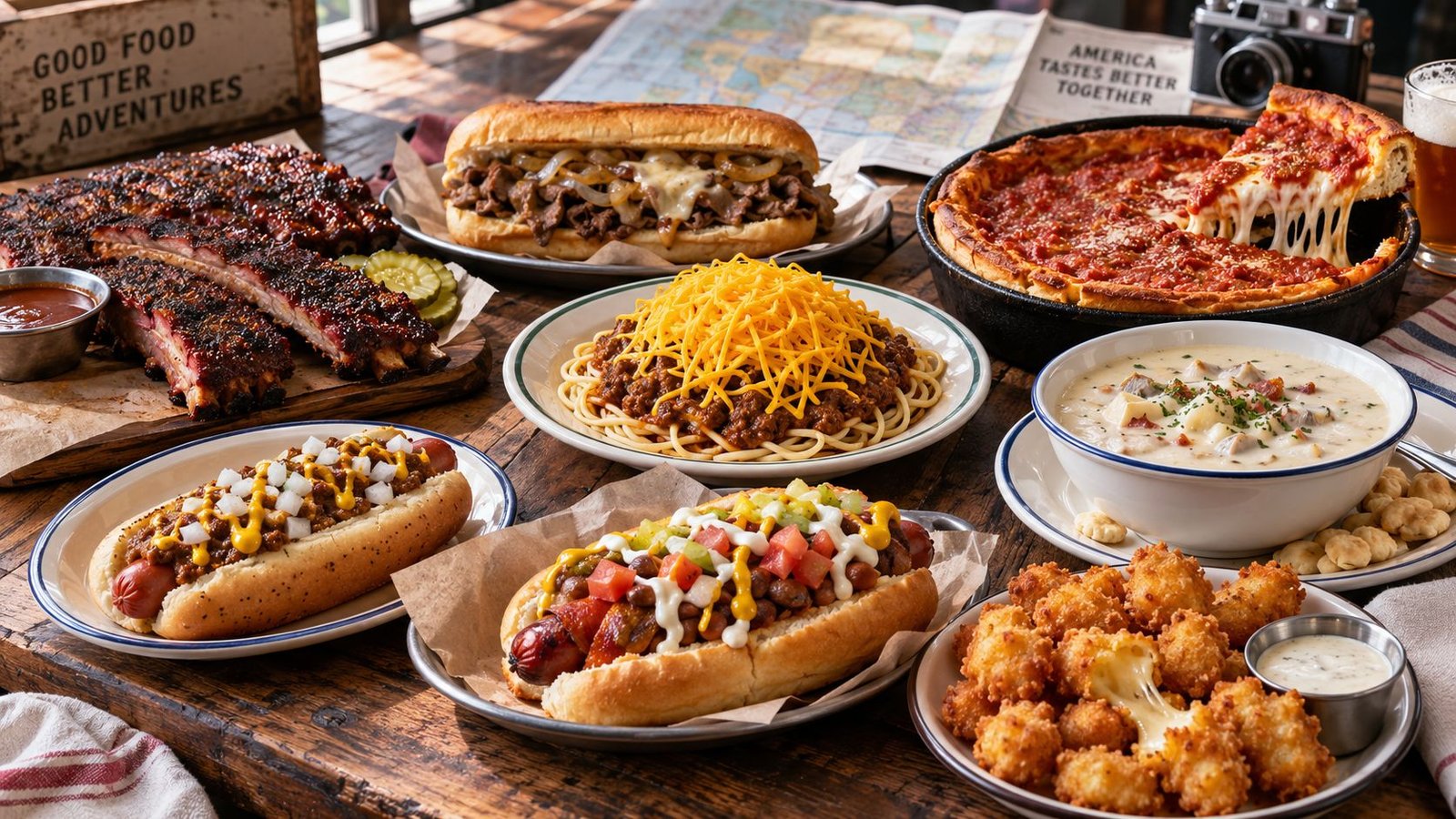
Travel a few hundred miles, and the rules change. Barbecue shifts from pork ribs to brisket. Chili lands on spaghetti. A hot dog gets buried under beans, bacon, and salsa. Pizza becomes thick enough to require a fork.
This regional American food guide maps some of the country’s most recognizable dishes to the cities that helped define them. It is not a claim that every dish sprang fully formed from one restaurant or one cook. Food history is rarely that cooperative. Instead, these are foods that became inseparable from particular places through immigration, agriculture, industry, neighborhood traditions and generations of local appetite.
For travelers, that makes them more useful than another list of “must-eat foods.” Each dish offers a quick lesson in how its city became the place it is.
Key Points In Our Regional American Food Guide
- America’s regional dishes often reflect immigration, local agriculture and working-class food traditions more than formal restaurant cuisine.
- Memphis and Kansas City demonstrate how dramatically barbecue can change from one city to another.
- Philadelphia, Pittsburgh, Cincinnati and Detroit turned inexpensive, practical foods into civic symbols.
- Border cities and immigrant communities continue to shape American regional cuisine, from Tucson’s Sonoran dogs to Seattle-style teriyaki.
- Many famous origin stories are disputed, so it is more useful to understand how a dish became locally important than to obsess over who made the first one.
Table of Contents
Memphis, Tennessee: Memphis-Style Barbecue
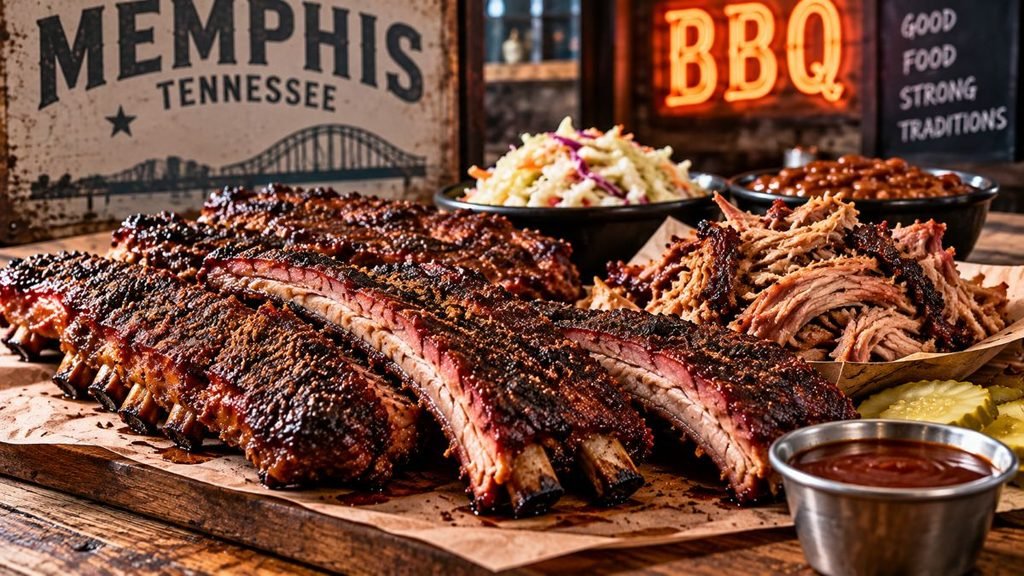
What to eat: Pork ribs and pulled pork
What makes it different: Dry rubs, smoked pork and the eternal wet-versus-dry debate
Memphis barbecue starts with pork. Ribs and pork shoulder dominate, usually cooked slowly over hardwood and seasoned aggressively.
The city’s best-known distinction is between “dry” and “wet” ribs. Dry ribs rely heavily on a spice rub, while wet ribs are basted or finished with sauce. Memphis Travel traces the city’s barbecue identity to its Mississippi River location, African American pit traditions and access to spices and trade goods.
That river-city history matters. Memphis was connected to the Mississippi Delta, agricultural markets and trade routes that brought people, cooking methods and ingredients together.
How to order: If a restaurant offers both wet and dry ribs, try some of each before declaring allegiance. Barbecue arguments rarely require additional encouragement.
Kansas City, Missouri: Burnt Ends and Kansas City Barbecue
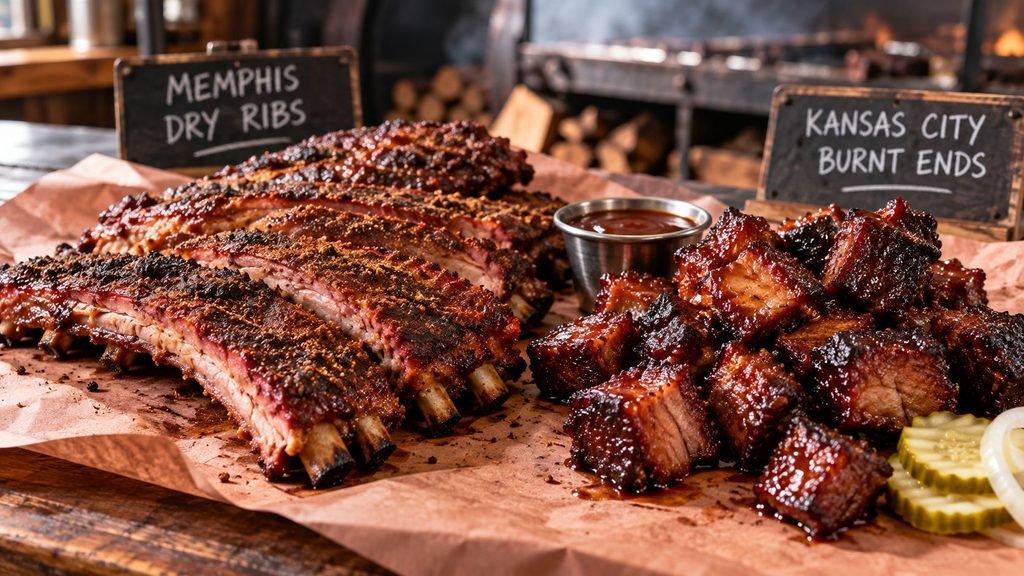
What to eat: Burnt ends
What makes it different: Multiple meats, smoke, and usually a thick, sweet-savory sauce
Kansas City barbecue is difficult to reduce to one meat because variety is part of its identity. Beef, pork, chicken and other meats all appear on local menus.
The city’s barbecue history is commonly traced to pitmaster Henry Perry, who sold smoked meat in Kansas City in the early 20th century. Later pitmasters and restaurant families, including the Bryants and Gateses, helped establish the city’s barbecue culture.
Burnt ends became the great Kansas City specialty: smoky pieces from the brisket point with substantial bark, fat and concentrated beef flavor. Visit KC notes that they became closely associated with Arthur Bryant’s and eventually developed from an offcut into a destination dish of their own.
How to order: Get burnt ends plus one other smoked meat. That tells you more about a pitmaster than trying to judge an entire barbecue tradition from a single sandwich.
Nashville, Tennessee: Hot Chicken
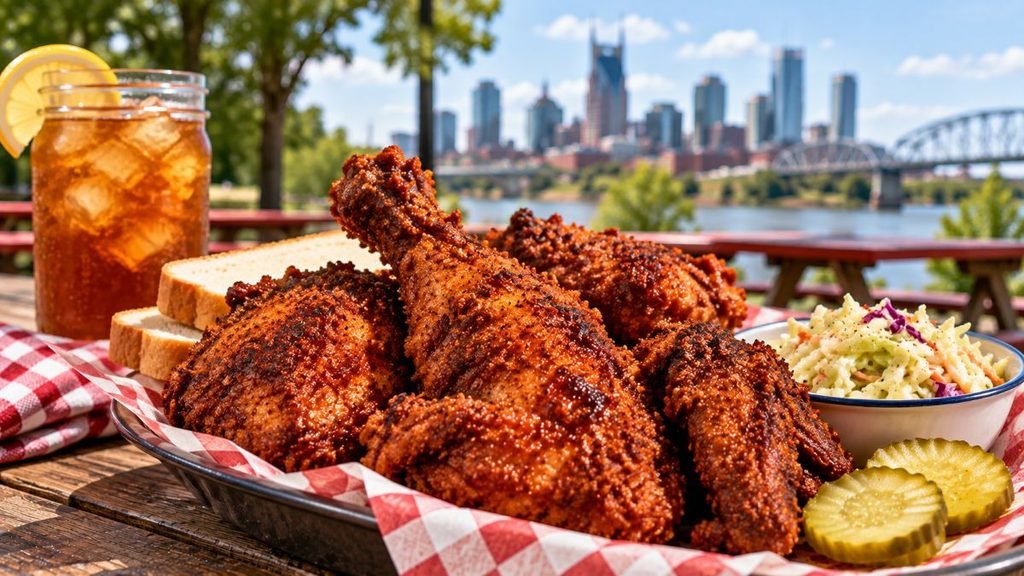
What to eat: Nashville hot chicken
What makes it different: Fried chicken finished with a potent cayenne-heavy seasoning
Hot chicken is not merely fried chicken with bottled hot sauce dumped over it.
Traditional Nashville versions build heat into a spicy finishing mixture applied to freshly fried chicken, then commonly serve the bird on white bread with pickles.
Prince’s Hot Chicken is widely associated with the birth of the style. Nashville’s official tourism organization repeats the famous family story that a woman tried to punish Thornton Prince for his wandering eye by making his fried chicken painfully spicy. Prince supposedly loved it and eventually built a business around it. The revenge story is local lore rather than independently documented fact, but the Prince family is central to hot chicken’s history.
How to order: Do not start with the restaurant’s highest heat level simply because you have something to prove. The best hot chicken should still taste like well-seasoned fried chicken.
New Orleans, Louisiana: Gumbo
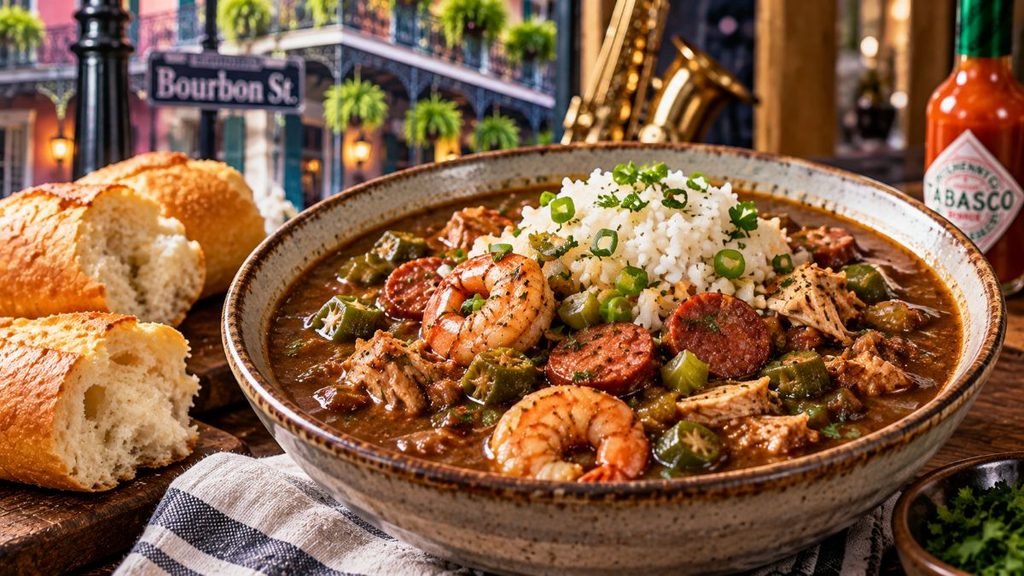
What to eat: Gumbo
What makes it different: A stew shaped by Louisiana’s overlapping African, Native American and European food traditions
Few dishes demonstrate America’s cultural mixing better than gumbo.
Recipes vary enormously. Seafood may appear in one pot and chicken with sausage in another. Roux, okra and filé powder can play thickening roles depending on the style and cook.
The exact ancestry of gumbo is complicated, which is precisely why simplistic origin stories should be avoided. The dish developed in Louisiana through the interaction of multiple culinary traditions and became deeply connected with both Creole and Cajun foodways. Smithsonian notes that even attempts to neatly categorize gumbo as one or the other quickly run into exceptions.
How to order: Ask what kind of gumbo the kitchen makes rather than assuming there is one “authentic” version.
Philadelphia, Pennsylvania: Cheesesteak
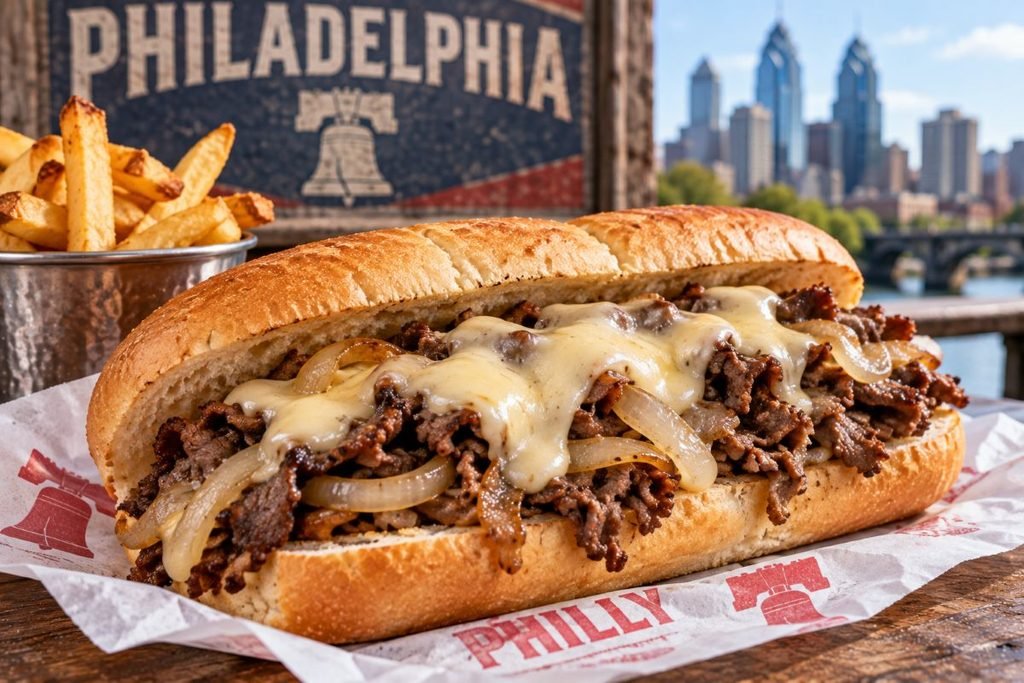
What to eat: Cheesesteak
What makes it different: Thin beef, melted cheese and a long roll
Philadelphia has plenty of foods worth discussing, but the cheesesteak has become shorthand for the city.
The generally accepted story begins around 1930 with Pat and Harry Olivieri, who sold steak sandwiches from their South Philadelphia food business. Cheese came later. Modern versions typically use thinly sliced or chopped beef with provolone, American cheese, or Cheez Whiz, with fried onions optional.
The sandwich also developed its own ordering vocabulary. “Wit” means onions; “witout” means no onions.
The more interesting lesson is that the cheesesteak grew out of neighborhood food culture, not fine dining. Like many great regional dishes, it is fast, filling, and engineered to be eaten without ceremony.
How to order: Choose the cheese, then decide on onions. You do not need to perform a Philadelphia accent.
Pittsburgh, Pennsylvania: The Primanti-Style Sandwich
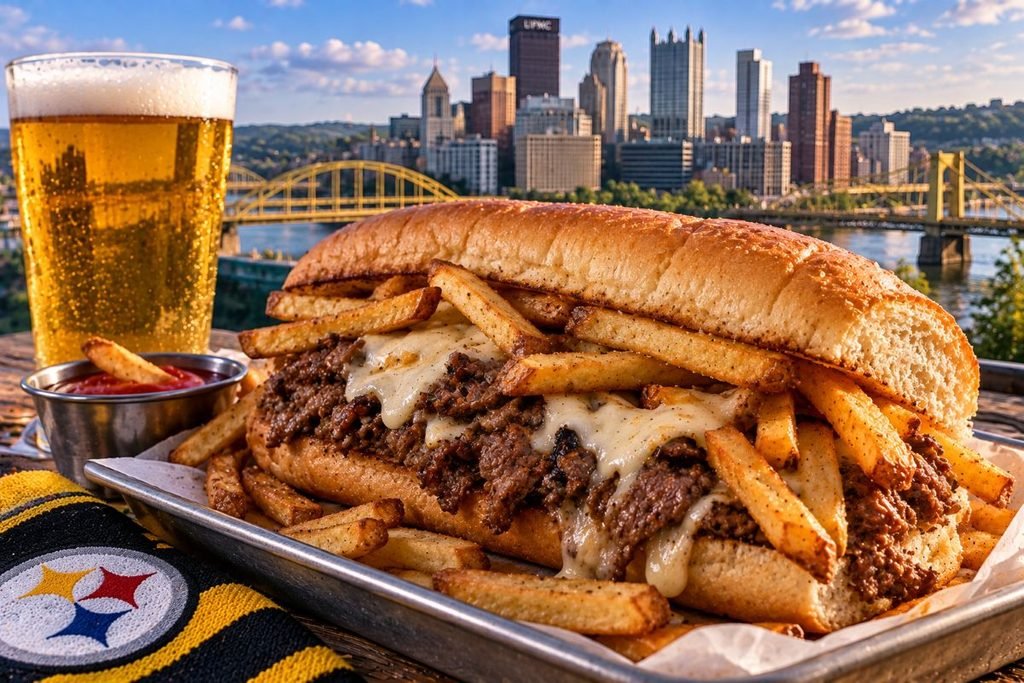
What to eat: A sandwich stacked with meat, French fries and coleslaw
What makes it different: The side dishes are inside the sandwich
Pittsburgh’s most recognizable sandwich looks as though someone ran out of plates.
Primanti Bros. traces its roots to Joe Primanti’s Depression-era sandwich business in the Strip District. The signature combination eventually placed French fries and coleslaw directly onto thick sandwiches, creating a compact meal well suited to laborers and truck drivers.
Whether every detail of the sandwich’s origin legend unfolded exactly as later retellings suggest is less important than what the food represents: an industrial city feeding people who needed inexpensive, substantial meals.
Spice2Vice has a deeper guide to the city’s sandwiches, sweets, and immigrant-influenced specialties in its guide, 10 Pittsburgh Iconic Foods The City Is Known for
Cincinnati, Ohio: Cincinnati Chili
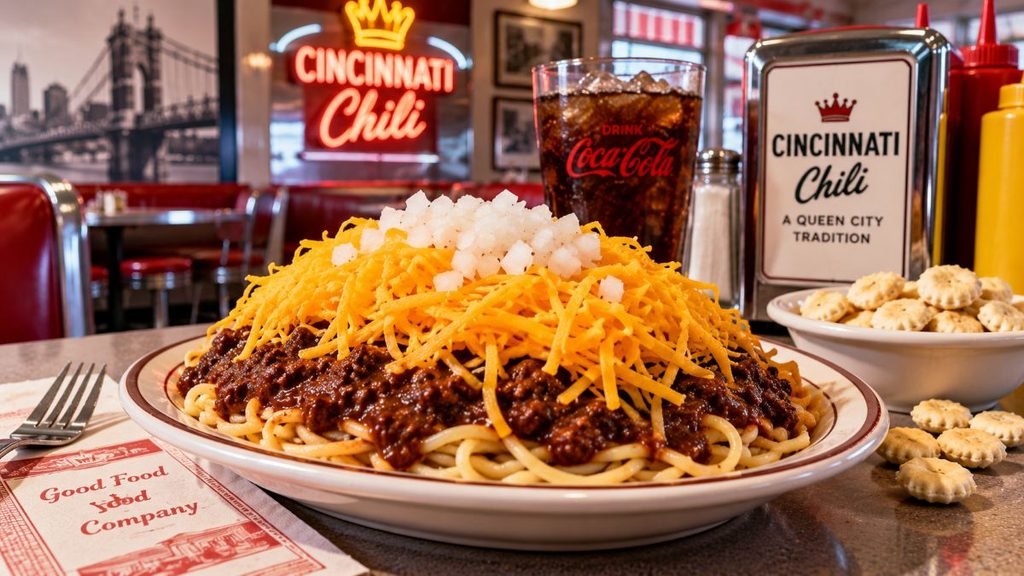
What to eat: A three-way or cheese coney
What makes it different: Mediterranean-spiced meat sauce served over spaghetti or hot dogs
Visitors expecting a bowl of Texas-style chili often spend their first meal in Cincinnati wondering whether someone brought the wrong order.
They did not.
Cincinnati chili is a thin, highly seasoned meat sauce whose flavor profile can include cinnamon, clove and allspice. It is most famously served over spaghetti or hot dogs and ordered using the city’s “way” system.
The style traces to Macedonian immigrant brothers Tom and John Kiradjieff, who opened Empress Chili Parlor in 1922. Cincinnati Museum Center describes the dish as one of the city’s immigrant success stories, while Visit Cincy connects its distinctive seasoning to Macedonian and Mediterranean traditions.
A three-way generally means spaghetti, chili, and shredded cheese. Additional toppings such as onions and beans create four- and five-way versions.
Spice2Vice also has a dedicated feature exploring the unusual sweet-spice character and history of Cincinnati’s signature meat sauce. Why Cocoa Sweet Cincinnati Chili Is America’s Best Kept Secret
Detroit, Michigan: Coney Dogs
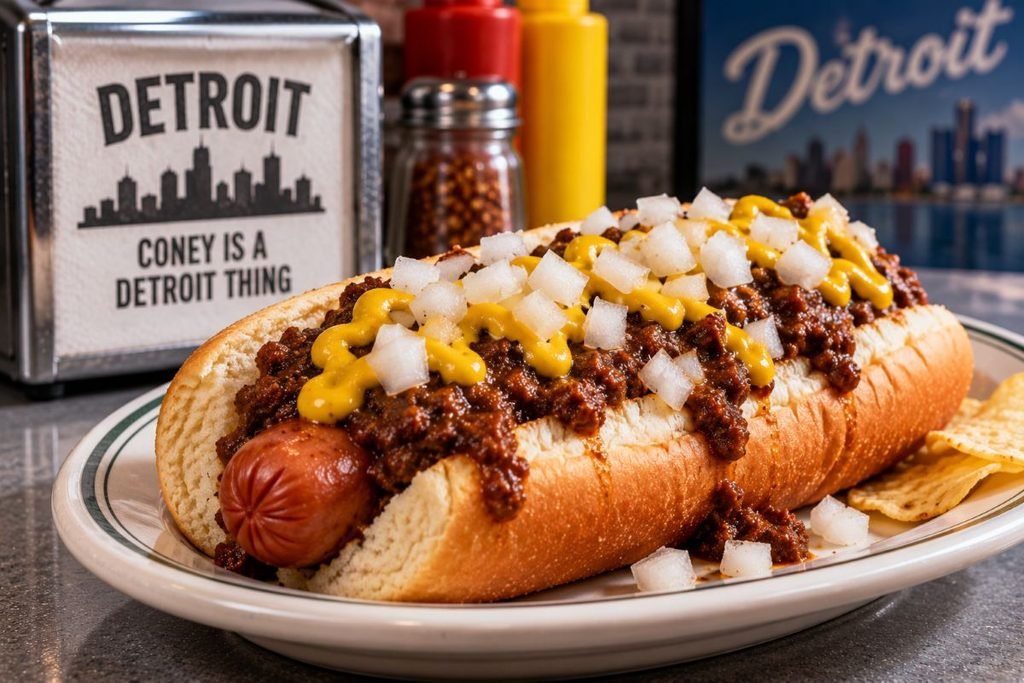
What to eat: Detroit-style Coney dog
What makes it different: A hot dog topped with beanless meat chili, mustard and diced onion
Despite the name, Detroit’s Coney dog did not simply arrive from Coney Island.
The Detroit version usually combines a natural-casing frankfurter with an all-meat chili sauce, yellow mustard and chopped white onion.
Greek immigrant restaurateurs played an important role in establishing Michigan’s Coney Island restaurant culture. Detroit’s American Coney Island opened in 1917, while neighboring Lafayette Coney Island followed several years later. Their rivalry became part of downtown food folklore.
Michigan has many Coney traditions beyond Detroit, so arguments over the “correct” chili, frankfurter and assembly are inevitable.
How to order: Start with the standard combination, then add extras. The appeal is the balance of salty frank, spiced meat sauce, sharp mustard, and raw onion.
Chicago, Illinois: Deep-Dish Pizza
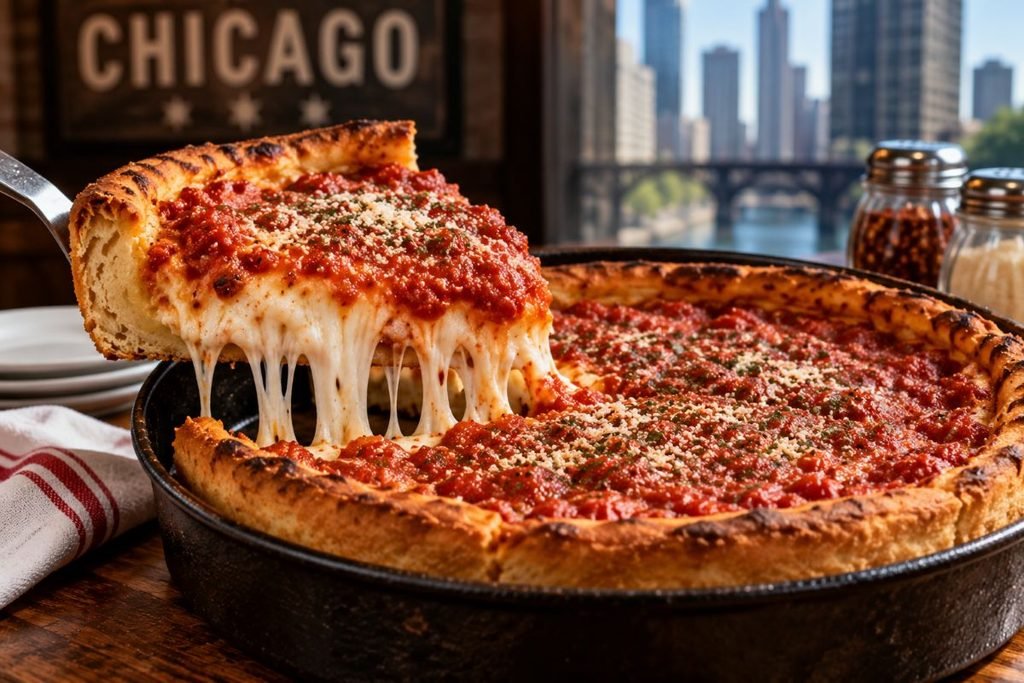
What to eat: Deep-dish pizza
What makes it different: A high-sided crust filled with cheese and toppings, with tomato sauce on top
Chicago’s pizza identity is larger than deep dish. Plenty of locals are equally devoted to thin, square-cut tavern-style pizza.
Still, deep dish remains the city’s most internationally recognizable contribution to pizza.
The style emerged in Chicago during the 1940s and is closely associated with Pizzeria Uno, which opened in 1943. The exact individual responsible for inventing it has been debated, so claims assigning sole credit deserve caution.
Deep dish reverses what many diners expect from pizza construction. Cheese and toppings sit inside a tall crust, with tomato sauce generally covering the top so the cheese does not burn during the longer baking time.
How to order: Share one. Deep dish has the structural density of a minor infrastructure project.
Tucson, Arizona: Sonoran Hot Dog
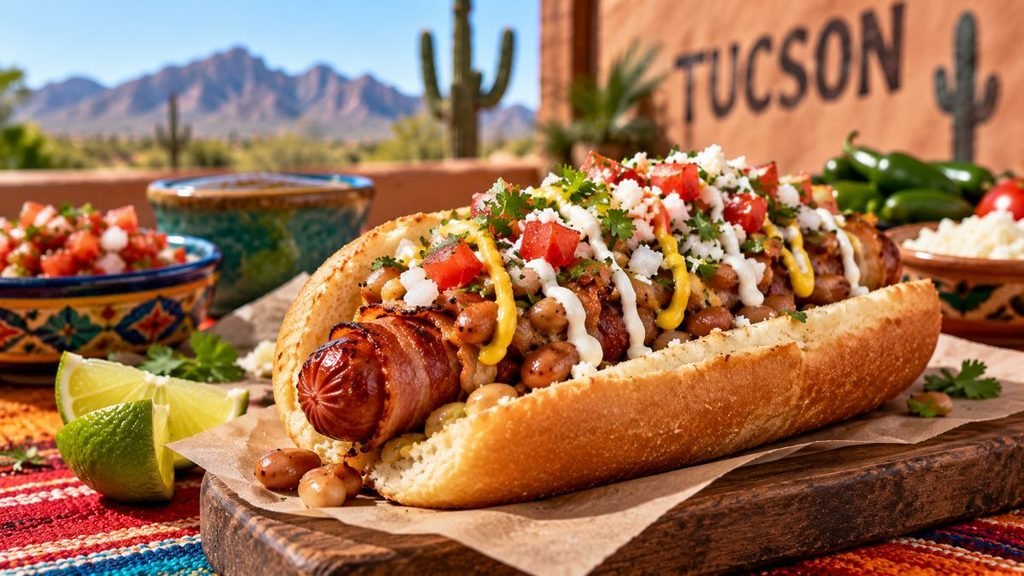
What to eat: Sonoran dog
What makes it different: Bacon-wrapped hot dog, bolillo-style bun, beans and a crowded field of toppings
The Sonoran hot dog is one of the clearest examples of regional American food crossing a national border in both directions.
The dish became popular in Sonora, Mexico, before becoming a defining street food in Tucson. A typical version wraps the hot dog in bacon, places it in a soft bolillo-style bun, then adds pinto beans, tomatoes, onions, mustard, mayonnaise, and chile or jalapeño sauce.
Its importance goes beyond novelty toppings. The Sonoran dog reflects the connected food culture of southern Arizona and northern Mexico, where the border does not function as a culinary wall.
Tucson even launched an official Sonoran Dog Trail in 2026, formalizing something local eaters had understood for years: this is one of the city’s defining foods.
Seattle, Washington: Seattle-Style Teriyaki
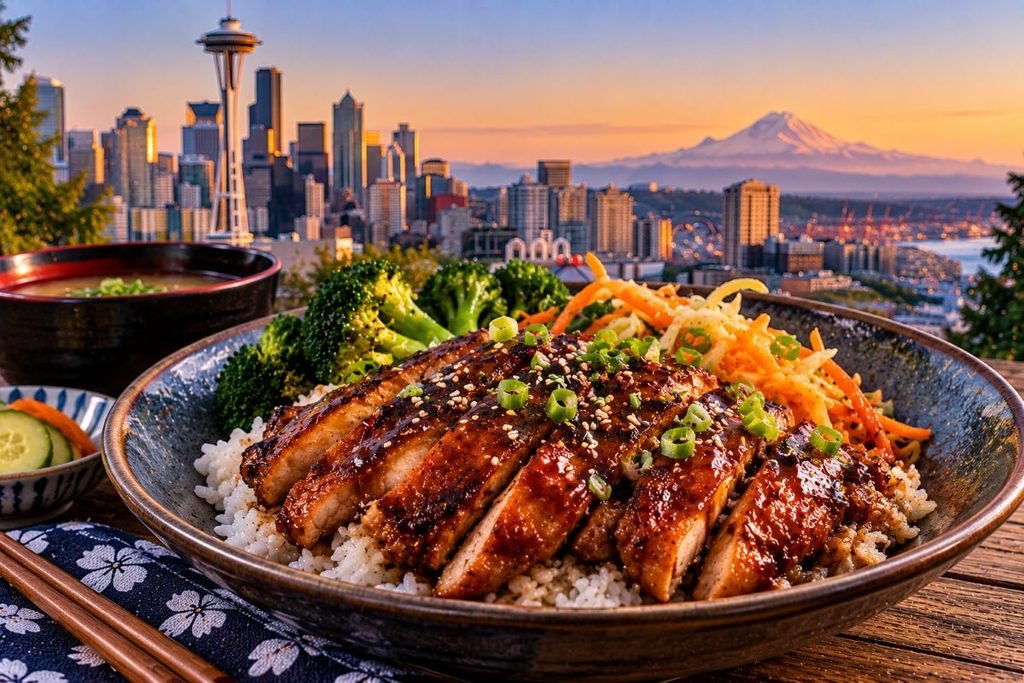
What to eat: Char-grilled teriyaki chicken with rice and salad
What makes it different: A Japanese-rooted dish transformed into an inexpensive Seattle restaurant staple
Seattle teriyaki is an excellent reminder that a regional American dish does not need to be old enough to appear in a sepia photograph.
Seattle’s style grew through Japanese and Korean immigrant entrepreneurship, particularly from the 1970s onward. Small teriyaki shops spread throughout the region, typically serving grilled meat glazed or sauced with a sweet-savory soy-based mixture alongside rice and salad.
HistoryLink notes that Japanese and Korean migration shaped the city’s teriyaki culture and that inexpensive neighborhood teriyaki became nearly ubiquitous from the 1980s into the 2010s.
That makes Seattle teriyaki regional American food in the fullest sense: an immigrant food tradition adapted to a particular city’s tastes, economics, and restaurant culture.
New England: Clam Chowder and the Problem With State Lines
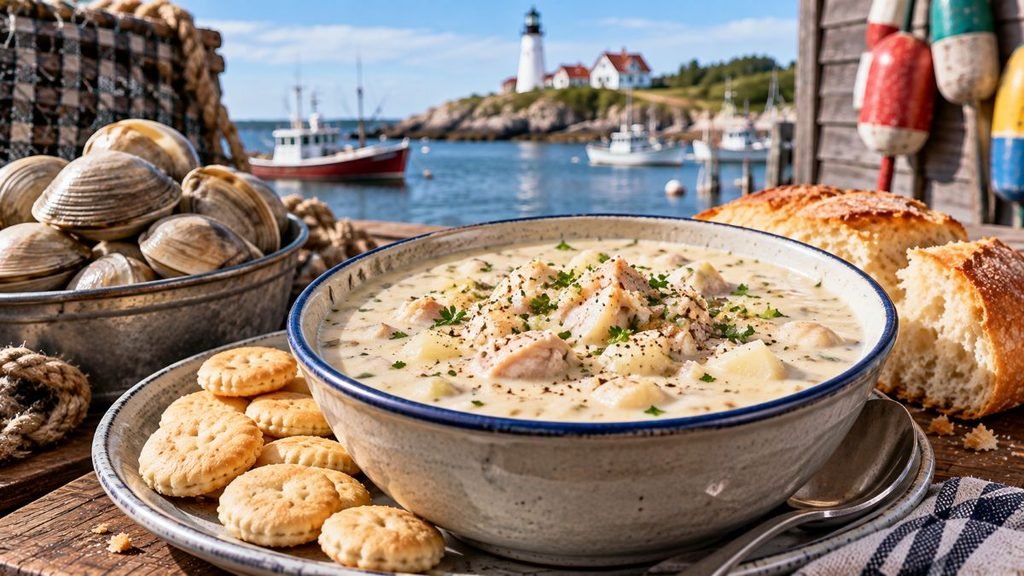
What to eat: New England clam chowder
Where it belongs: Boston and coastal New England
Not every regional dish cooperates with a city-by-city map.
New England clam chowder belongs to a broader coastal culture spanning several states. The creamy version familiar to most Americans typically combines clams, potatoes and dairy, often with salt pork or bacon playing a supporting role.
Chowder traditions in New England go back centuries. One of the earliest printed fish chowder recipes appeared in the Boston Evening Post in 1751, although historical chowders differed from the creamy restaurant versions common today.
Rhode Island and Connecticut also maintain clear-broth traditions, which serve as a useful warning against assuming that “New England chowder” has always meant a single standardized white soup.
How to order: In coastal New England, ask what style the restaurant makes. The regional differences are part of the point.
Maine: Lobster Roll
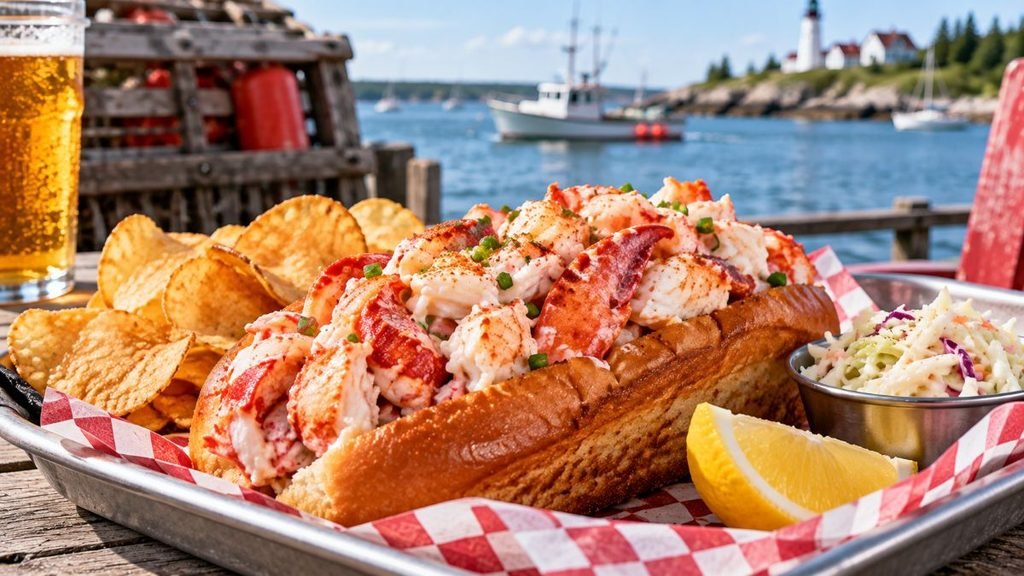
What to eat: Lobster roll
What makes it different: Lobster meat in a buttered, toasted split-top bun with minimal dressing
The lobster roll has disputed beginnings, with origin claims extending beyond Maine. Maine nevertheless became one of the sandwich’s strongest regional homes.
A classic Maine-style roll usually keeps the ingredient list deliberately short: lobster meat, a split-top New England bun, and restrained dressing, often mayonnaise. The bread’s flat sides allow it to be buttered and toasted on the griddle.
The restraint is the lesson. Lobster is expensive enough without disguising it under six sauces and a pile of microgreens.
Wisconsin: Fresh and Fried Cheese Curds
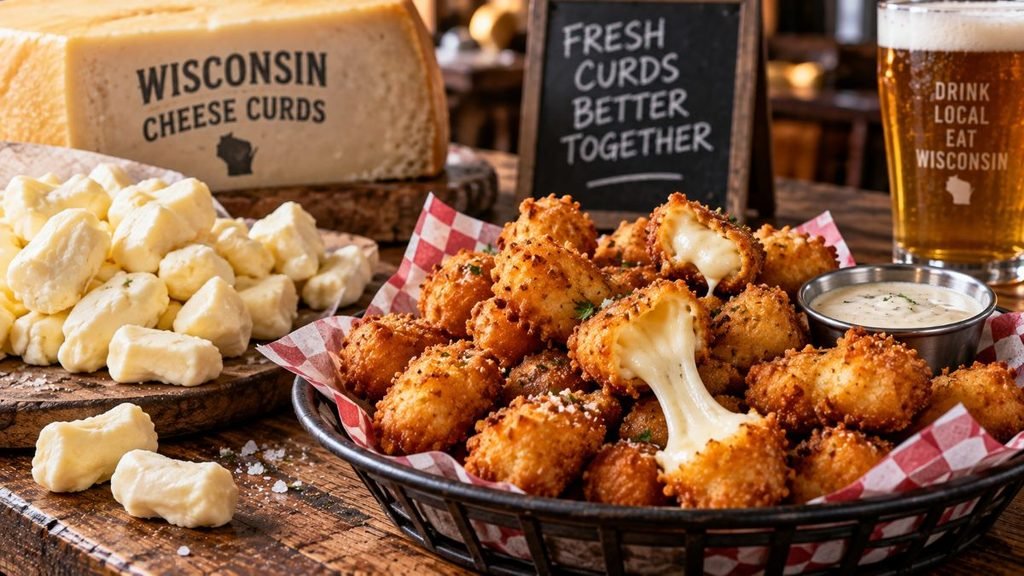
What to eat: Cheese curds
What makes them different: Fresh curds can squeak; taverns and festivals often fry them
Wisconsin’s regional food identity is closely linked to dairy, and few snacks express that connection as effectively as cheese curds.
Fresh curds are pieces of young cheese separated from the whey during cheesemaking. When very fresh, their protein structure can create the familiar squeak against the teeth.
Wisconsin also turned battered and fried cheese curds into a tavern, fair and festival fixture. Travel Wisconsin describes curds — fresh and fried — as one of the state’s defining food experiences.
For another Upper Midwest tradition, Spice2Vice covers Wisconsin booyah, the enormous community stew associated with church gatherings and festivals in northeastern Wisconsin and parts of Michigan’s Upper Peninsula.
Why Regional American Food Matters
The most interesting American foods are often the ones that could not have developed anywhere else in quite the same way.
A city’s industries determine when people eat and how portable their food needs to be. Immigration brings new spices, techniques and combinations. Agriculture determines which ingredients are cheap and plentiful. Restaurants, church suppers, taverns, street vendors and neighborhood lunch counters turn those ingredients into traditions.
That is why Cincinnati chili makes sense in Cincinnati, the Sonoran dog belongs in Tucson and a Coney dog feels different in Detroit.
Regional food is edible history, but it is also living culture. Recipes change. Communities change. New immigrant traditions become local traditions. Yesterday’s inexpensive working-class lunch becomes tomorrow’s culinary landmark.
The best way to use a regional American food guide, then, is not to collect dishes like souvenirs. Eat the famous thing, certainly. Then ask why people there kept making it.
That question usually leads to the better story.
FAQs – Regional American Food Guide
What is regional American food?
Regional American food refers to dishes, ingredients and cooking styles strongly associated with a particular U.S. city, state or geographic region. These traditions often developed through local agriculture, immigration, industry and community customs.
What are the major American barbecue regions?
Several regions have distinctive barbecue traditions, including Memphis, Kansas City, Central Texas and parts of the Carolinas. Differences include preferred meats, cooking techniques, sauces and seasoning styles.
Which U.S. city has the most distinctive regional food?
There is no objective winner. New Orleans has an unusually deep collection of locally rooted dishes, while cities such as Philadelphia, Chicago, Cincinnati, Detroit, Memphis and Tucson have foods that are strongly tied to civic identity.
Are iconic American foods always invented in the cities associated with them?
No. Origins are frequently disputed, and dishes often evolve gradually rather than appearing through one documented invention. A food can become regionally important even when its exact birthplace is uncertain.
Where can I find more guides to regional American food?
Spice2Vice’s Food section covers regional dishes, recipes and culinary history, including dedicated features on Pittsburgh foods, Cincinnati chili, Wisconsin booyah and Great Lakes cooking.
Sources
- Memphis Travel, guide to Memphis-style barbecue. Memphis-style BBQ history and traditions
- Visit KC, history and characteristics of Kansas City barbecue. History of Kansas City barbecue
- Detroit Historical Society, history of the Coney dog. Detroit Coney dog history
- Visit Philadelphia, cheesesteak history and traditions. Philadelphia cheesesteak guide
- HistoryLink, history of Seattle teriyaki. Seattle teriyaki history
- Visit Tucson, Sonoran Dog Trail and borderlands food history. Tucson Sonoran Dog Trail
- Choose Chicago, guide to Chicago’s pizza traditions. Chicago pizza guide
- Cincinnati Museum Center, Cincinnati food and heritage programming. Cincinnati Museum Center heritage programs



One thought on “Regional American Food Guide – 14 yummy foods to sample in our charming U.S. cities”
Comments are closed.