 by
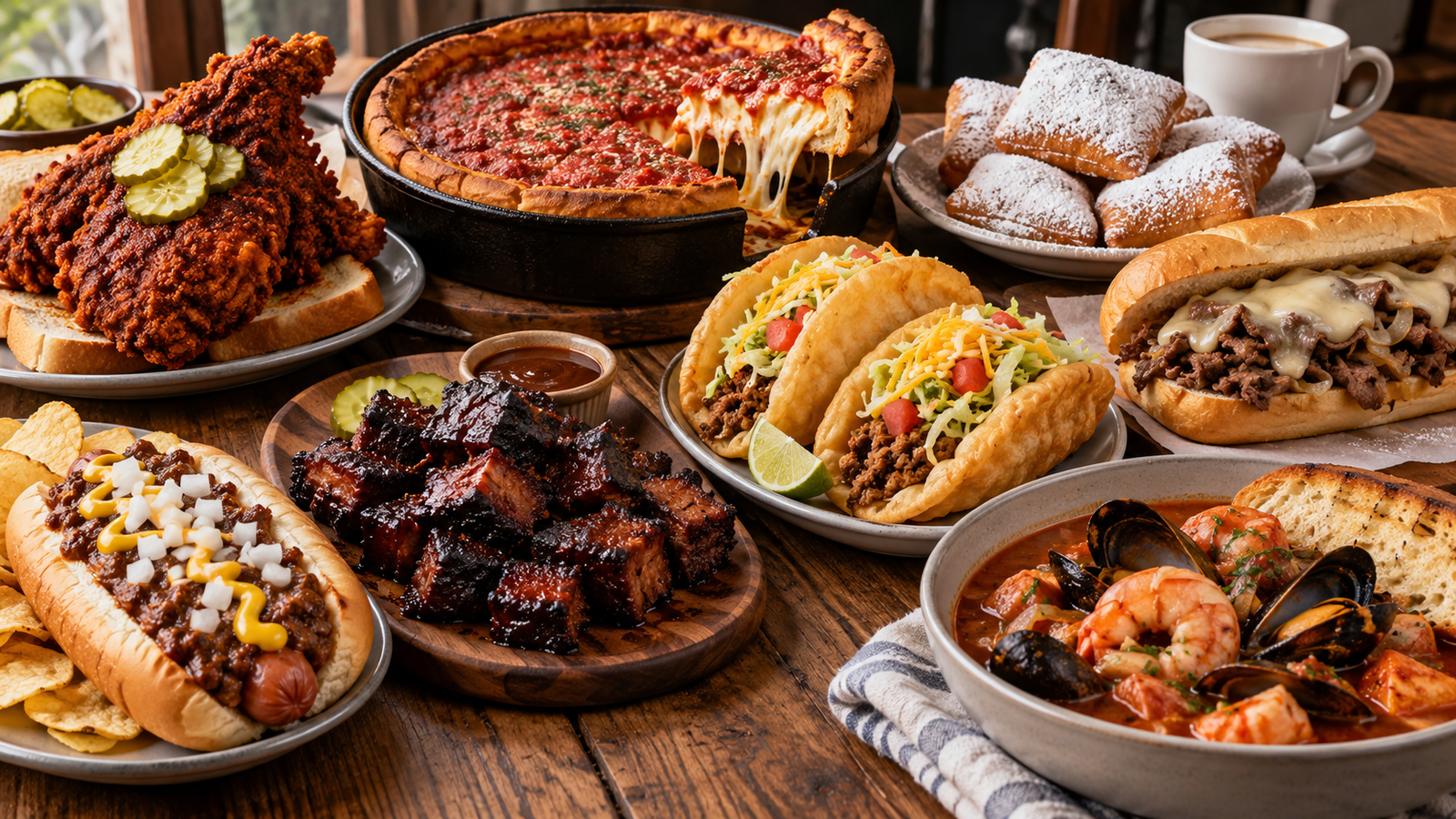
by America does not have one food culture. It has hundreds of them, stacked between bread, simmered in chili, buried under powdered sugar and occasionally fried for reasons that made perfect sense to somebody at 1 a.m.
For travelers, local foods by US city can be a more useful road map than another list of supposedly essential restaurants. Cities develop signature dishes because of immigration, local ingredients, working-class traditions, restaurant rivalries and sometimes sheer happy accident. The result is food that tells you something about where you are before you have finished the first bite.
This guide is not an attempt to crown one dish as the only food that matters in each city. That would start arguments from Buffalo to San Antonio before lunch. Instead, consider these the foods that provide a useful introduction to some of America’s strongest local eating traditions.
Table of Contents
Key Takeaways
- America’s most interesting local foods often grew from immigrant, working-class and neighborhood traditions.
- Chicago, Philadelphia, Nashville, Buffalo and Cincinnati have especially recognizable city-specific dishes.
- Some cities are better defined by a food culture — such as Portland’s food carts or Los Angeles’ taco scene — than by one recipe.
- The famous version is not always the only version. Chicago has tavern-style pizza, Philadelphia has roast pork and Baltimore has steamed crabs as well as their better-known counterparts.
- Treat this as a starting point for eating across America, not a checklist carved into stone.
Best Local Foods by US City at a Glance
| City | Local food to try |
|---|---|
| New York City | Bagel |
| Philadelphia | Cheesesteak |
| Baltimore | Crab cake |
| Washington, D.C. | Half-smoke |
| Miami | Cuban sandwich |
| Nashville | Hot chicken |
| Cincinnati | Cincinnati chili |
| Detroit | Coney dog |
| Chicago | Deep-dish pizza |
| St. Louis | Toasted ravioli |
| Kansas City | Burnt ends |
| Austin | Breakfast tacos |
| San Antonio | Puffy tacos |
| New Orleans | Beignets |
| Los Angeles | Tacos |
| San Francisco | Cioppino |
| Seattle | Teriyaki |
| Portland | Food-cart fare |
| Pittsburgh | Primanti-style sandwich |
Philadelphia: Cheesesteak
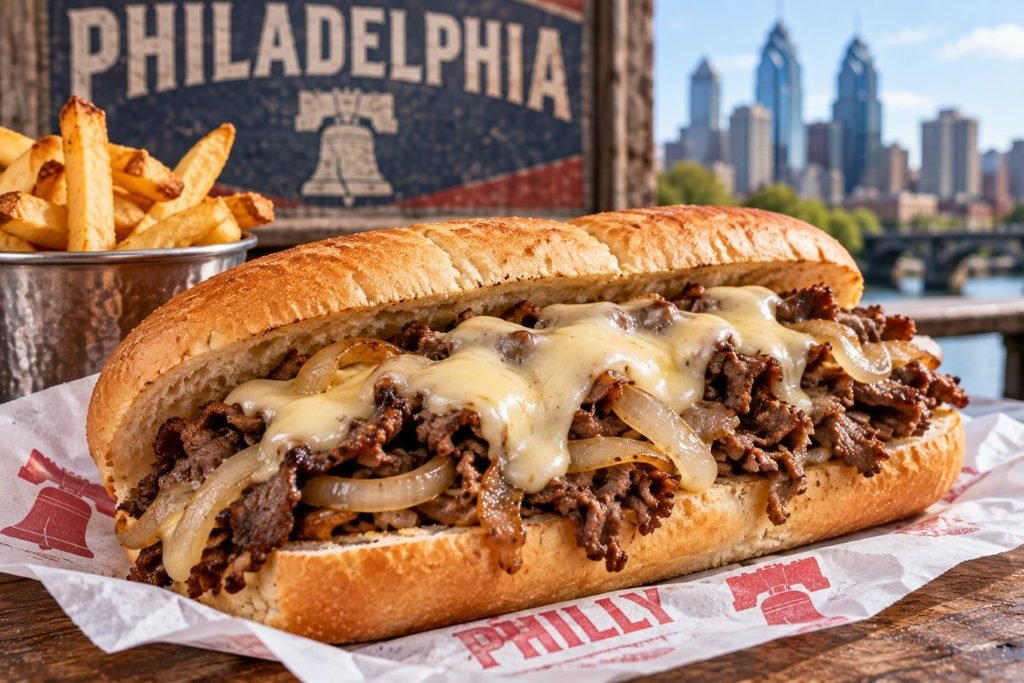
Philadelphia’s cheesesteak is simple enough to describe and difficult enough to reproduce well: thinly sliced or chopped beef, melted cheese and an optional pile of onions inside a long roll.
The city’s tourism office traces the sandwich to hot dog vendor Pat Olivieri in 1930. Cheese was added later, and today provolone, American and Cheez Whiz all have loyal constituencies.
Do not become so focused on performing the correct “wit” or “witout” ordering ritual that you forget lunch is supposed to be enjoyable. The bread, beef and proportion of cheese matter more than sounding like you have lived in South Philly since birth.
Baltimore: Crab Cake
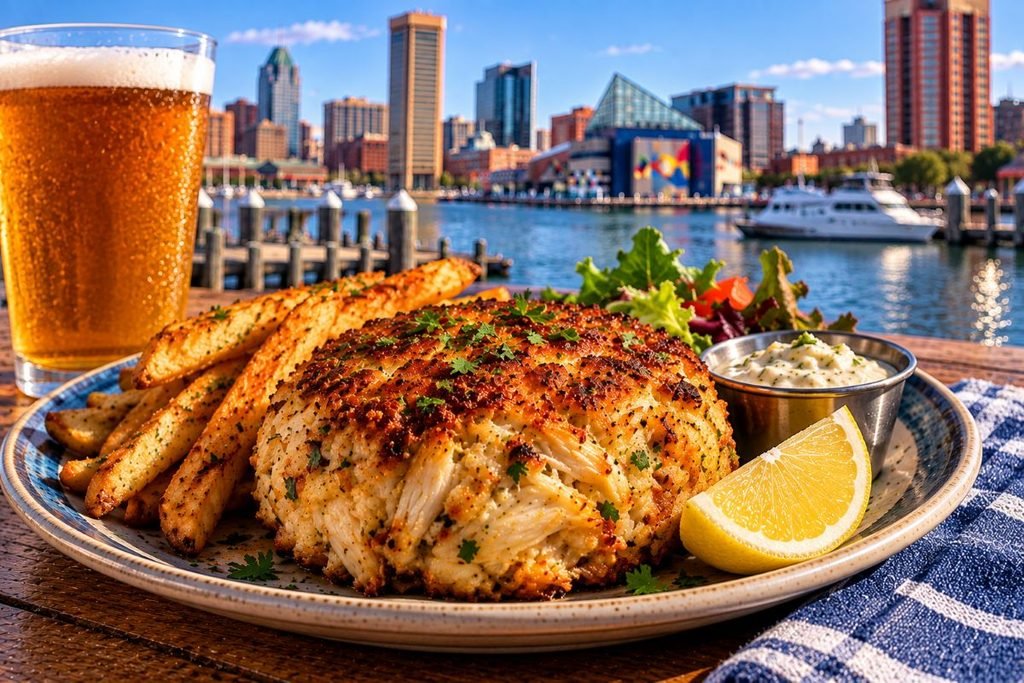
Baltimore’s signature crab cake is built around the Chesapeake region’s prized blue crab. The best versions generally use generous pieces of lump crab and just enough binder to keep the cake from becoming expensive seafood confetti.
Visit Baltimore recommends looking for cakes that go easy on filler, with longstanding seafood institutions serving everything from simply broiled cakes to versions seasoned with Old Bay.
This is a case where restraint matters. If breadcrumbs become the dominant flavor, somebody has missed the point.
Washington, D.C.: Half-Smoke
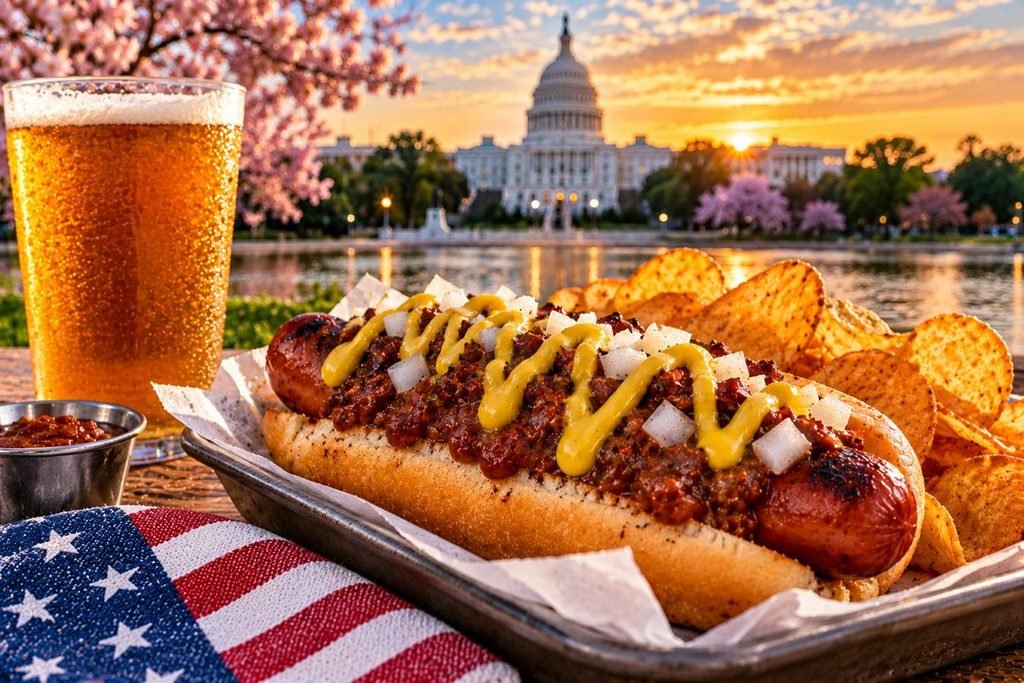
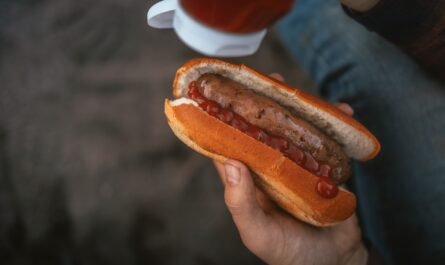
Washington has a sausage all its own. The half-smoke is generally a coarsely ground, smoky sausage served on a bun, often under chili, mustard and onions.
Ben’s Chili Bowl made the dish nationally famous, but Destination DC notes that half-smokes appear everywhere from street vendors to restaurants offering more elaborate versions.
Think of it as the capital’s messier, meatier answer to the hot dog.
Miami: Cuban Sandwich
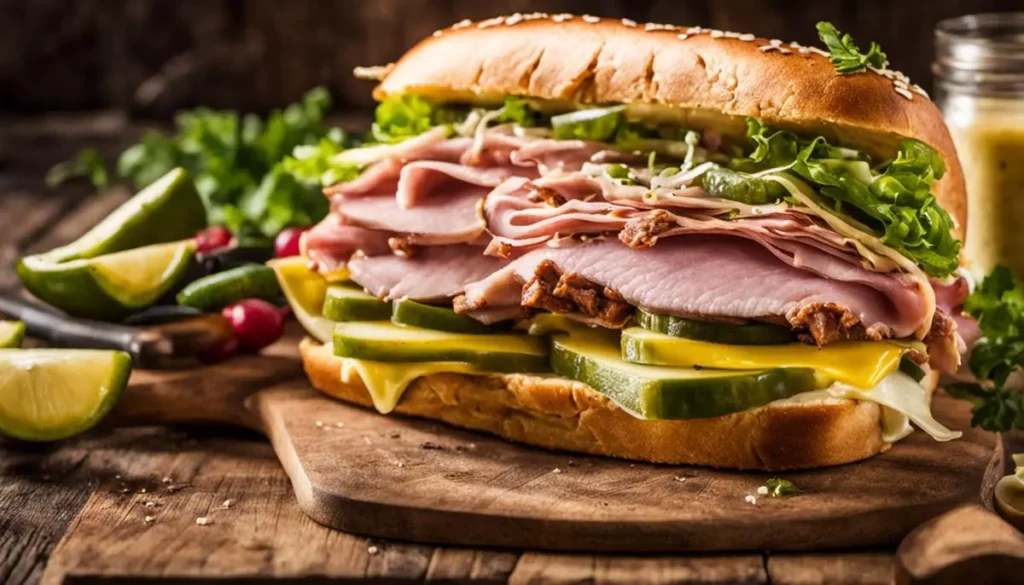
Miami’s Cuban sandwich reflects the Cuban community that has profoundly shaped South Florida’s food culture. A classic version combines roast pork, ham, Swiss cheese, pickles and mustard on Cuban bread before the whole thing is pressed until crisp.
Miami does not hold an uncontested claim to the sandwich’s history; Tampa has a serious Cuban sandwich tradition of its own. That debate is best treated as an excuse to eat both rather than a problem requiring congressional arbitration.
Nashville: Hot Chicken
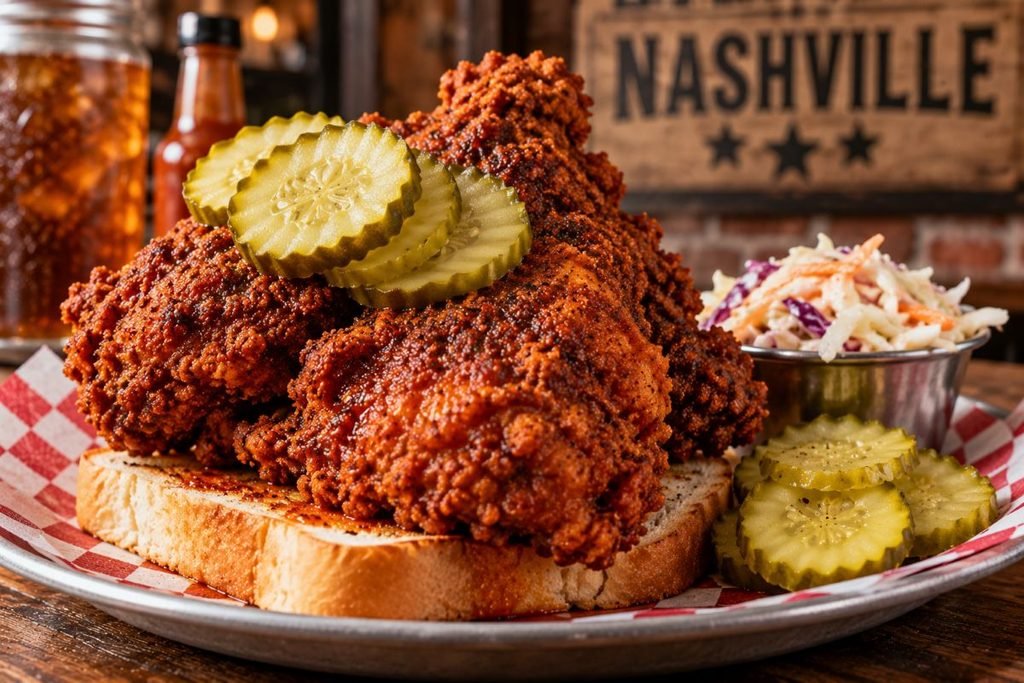
Nashville hot chicken is fried chicken taken several steps past polite. The bird is seasoned with a chile-heavy mixture that can range from pleasantly warm to an event requiring strategic planning.
The tradition is closely associated with Prince’s Hot Chicken. Nashville tourism recounts the famous local legend that Thornton Prince’s girlfriend made intensely spicy fried chicken as revenge for his wandering ways, only to discover that he liked it enough to build a business around it. The story is local lore rather than courtroom testimony, but Prince’s place in Nashville hot-chicken history is foundational.
First-timers should resist ordering the hottest level for sport. Flavor is the goal. Temporary loss of facial expression is not.
Cincinnati: Cincinnati Chili
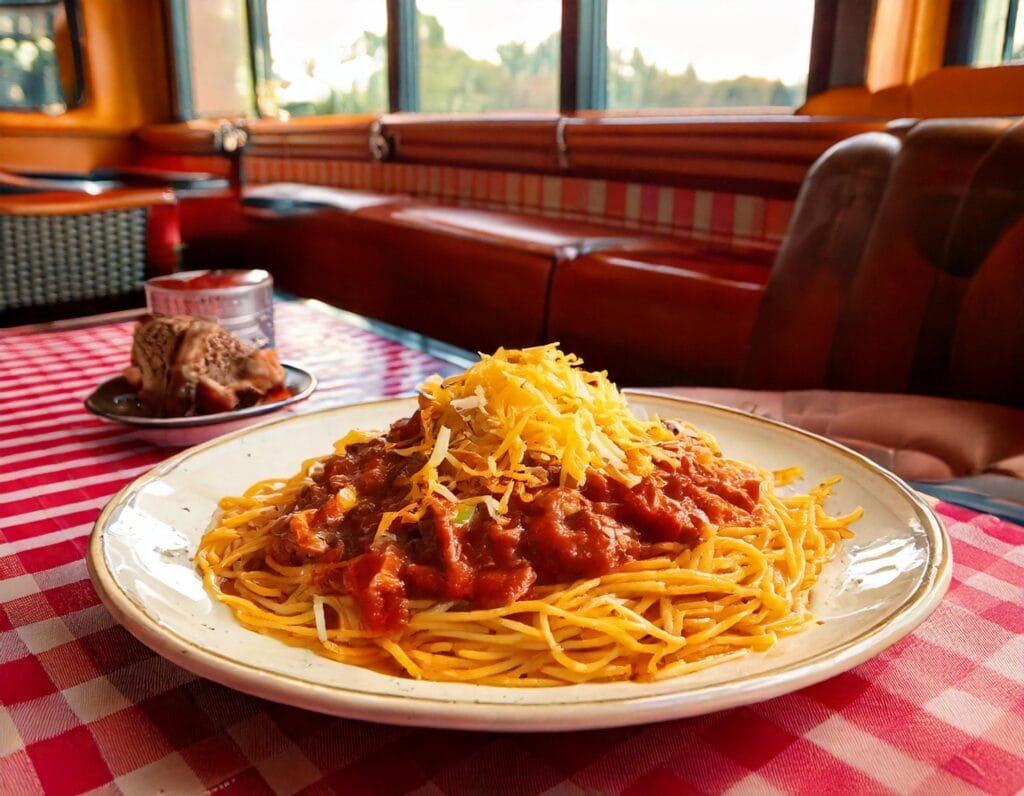
Cincinnati chili does not behave much like Texas chili, and judging it by Texas rules is the fastest route to misunderstanding the dish.
It is a thin, highly seasoned meat sauce influenced by Mediterranean flavors and commonly served over spaghetti or hot dogs. The “way” system adds ingredients such as shredded cheese, onions and beans in various combinations. Cincinnati-area chili parlors remain central to the city’s food identity.
Spice2Vice already has a deeper guide to the city’s unusual chili tradition, making Cincinnati an especially natural stop on this national tour.
Detroit: Coney Dog
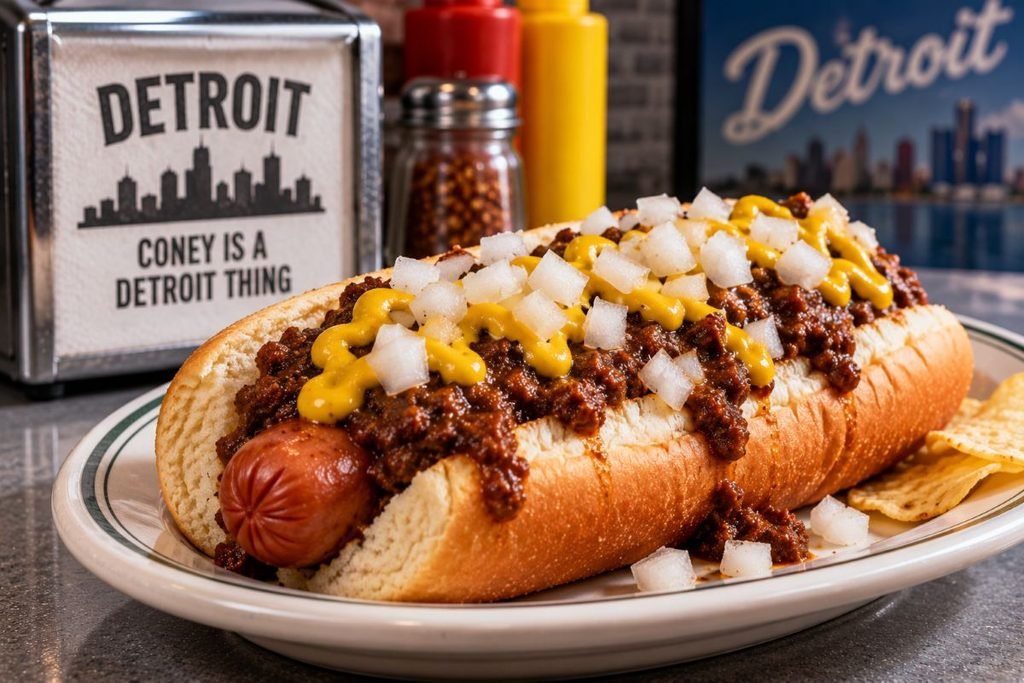
A Detroit Coney starts with a hot dog in a steamed bun, topped with beanless meat chili, chopped white onions, and yellow mustard. Visit Detroit traces American Coney Island to 1917, with neighboring Lafayette Coney Island later creating one of the city’s longest-running food rivalries.
The two restaurants sit next to each other downtown, making side-by-side research unusually convenient. This is the sort of academic fieldwork Spice2Vice can endorse.
Detroit is also the home of its own square, crisp-edged pizza tradition, so a coney should not be your last meal in town.
Chicago: Deep-Dish Pizza
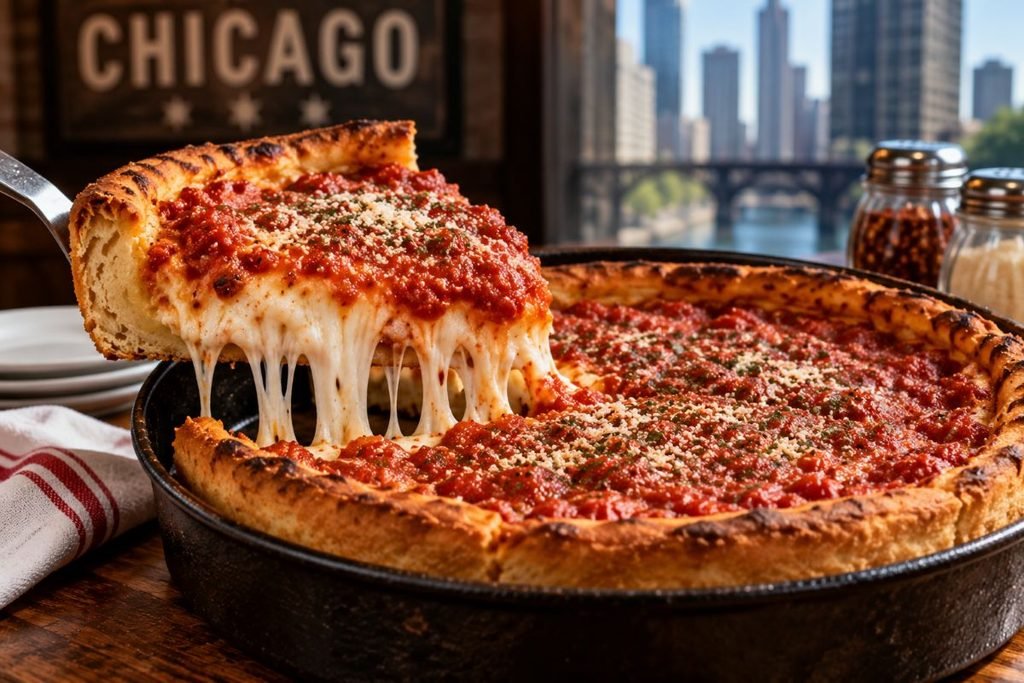
Chicago deep dish is built more like a savory construction project than a conventional pizza. A high-sided crust holds substantial layers of cheese and toppings, with tomato sauce spread over the top.
Choose Chicago dates the style to the 1940s and points to Pizzeria Uno as the restaurant most commonly associated with its beginning.
There is an important local footnote: Plenty of Chicagoans regularly eat thin, crisp tavern-style pizza cut into squares. Deep dish is unquestionably a Chicago icon; it is not the city’s only pizza language.
St. Louis: Toasted Ravioli
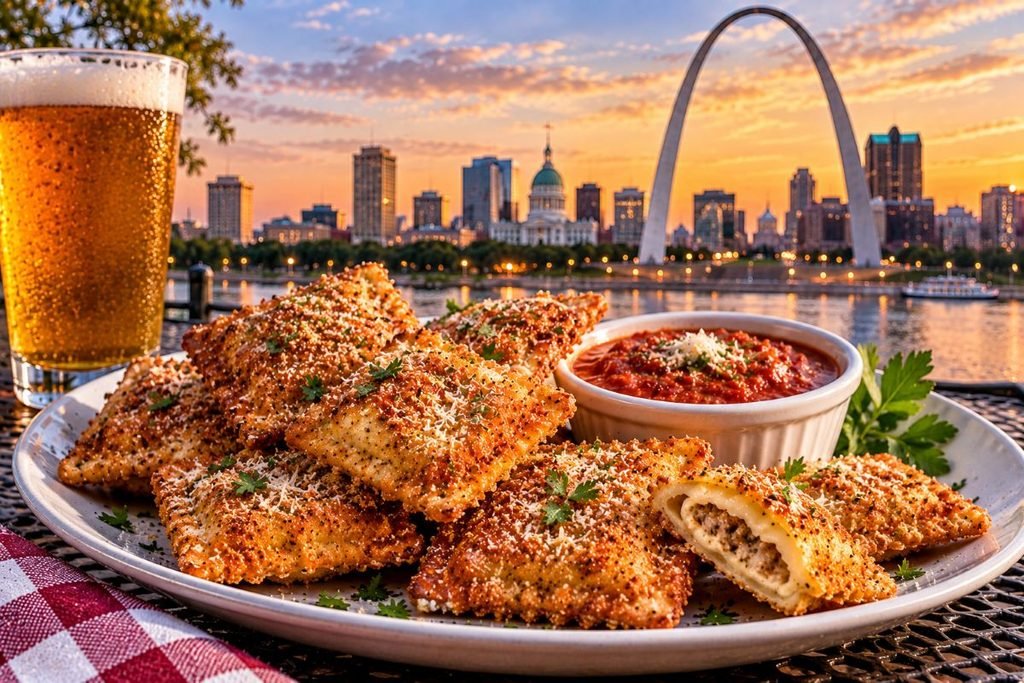
“Toasted” ravioli is actually breaded and fried, which is one of those bits of Midwestern culinary diplomacy best accepted without objection.
These meat-filled ravioli are typically served with tomato sauce and grated cheese. Several restaurants on The Hill claim a role in their creation, and the precise origin remains disputed. Explore St. Louis places the accidental birth of the dish in the 1950s.
Order them as an appetizer, although a plate has a mysterious habit of becoming dinner.
Kansas City: Burnt Ends
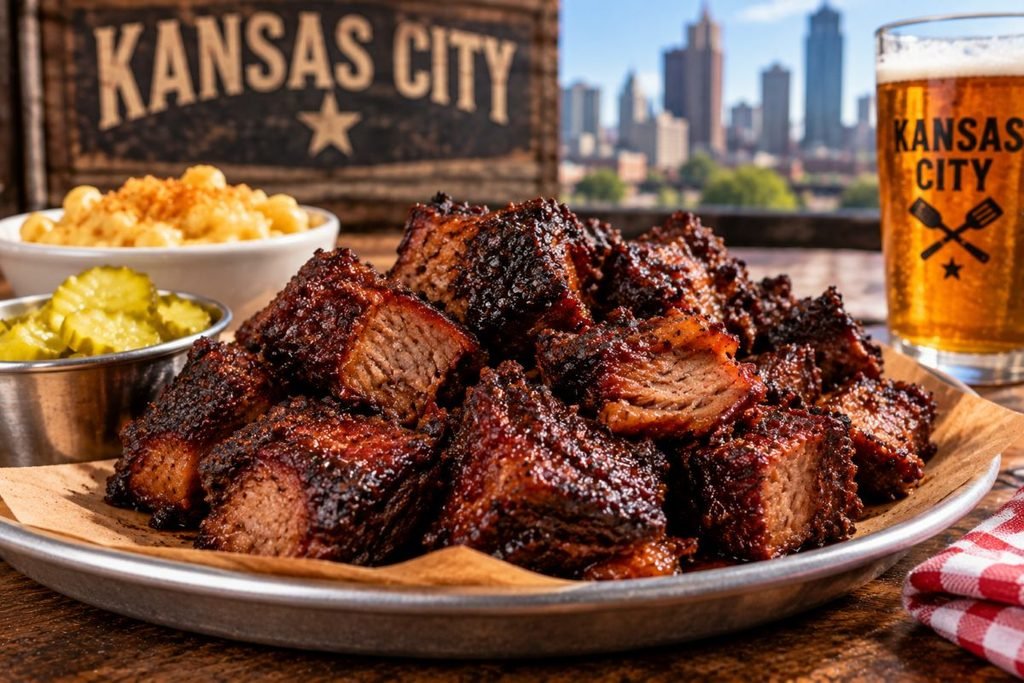
Kansas City barbecue welcomes pork, beef, sausage, ribs, chicken and nearly anything else a pitmaster can persuade into a smoker. If you need one bite to start with, however, make it burnt ends.
Traditionally cut from the richly marbled point of a smoked brisket, burnt ends are cubed pieces with abundant bark, smoke and rendered fat. Kansas City’s tourism office treats them as one of the city’s defining barbecue specialties.
They should be smoky and deeply beefy, not merely cubes swimming in sugary sauce.
Austin: Breakfast Tacos
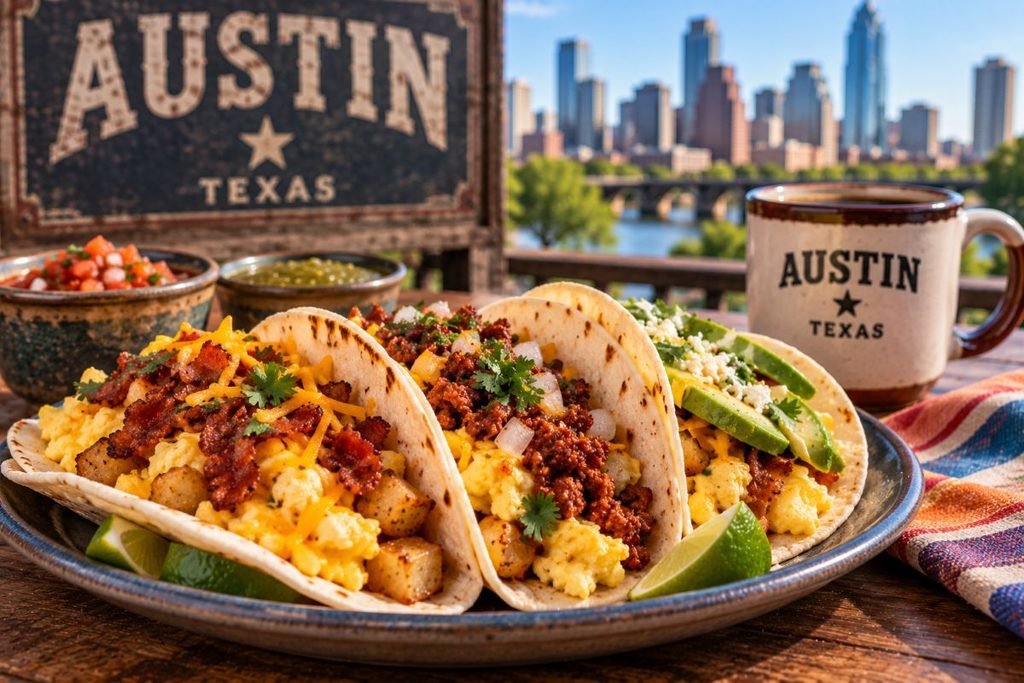
Austin’s breakfast taco is less a single recipe than a morning operating system.
Eggs can share a tortilla with bacon, chorizo, potatoes, beans, cheese, migas, avocado or several of the above. Visit Austin describes breakfast tacos as a city staple and points to long-running institutions as well as newer taco specialists.
The practical move is to order several different combinations and share. One taco is breakfast. Three tacos are research.
San Antonio: Puffy Taco
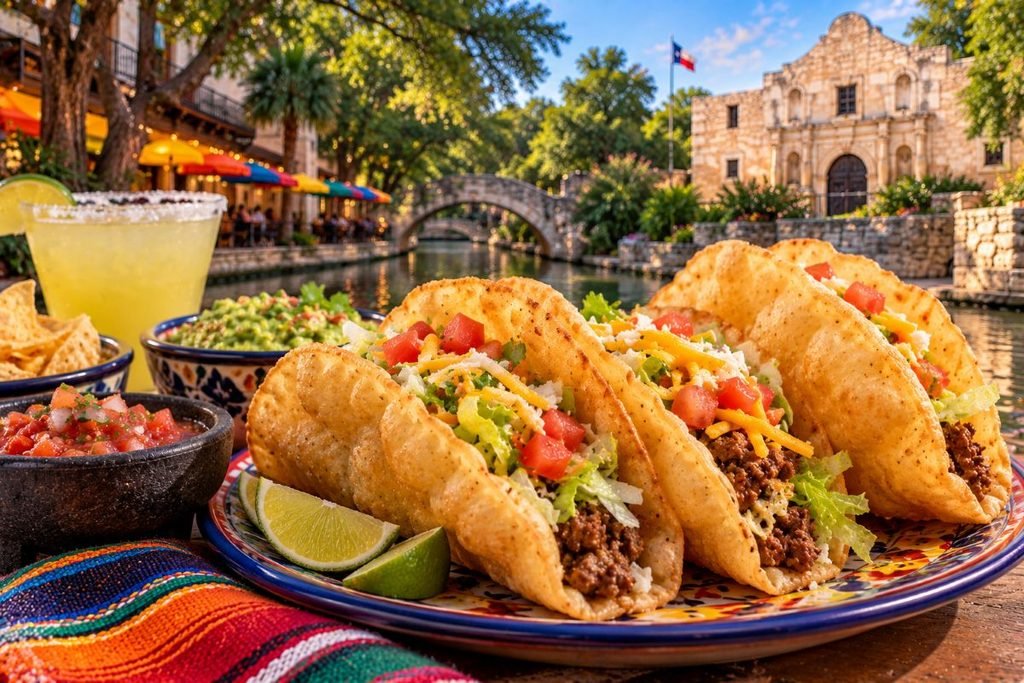
San Antonio’s puffy taco starts with fresh masa dough that puffs up when fried, producing a shell that is crisp at the edges but still tender inside.
The shell is then filled with seasoned meat and familiar taco toppings such as lettuce, tomato and cheese. Visit San Antonio calls the puffy taco one of the city’s signature foods.
Do not expect the brittle U-shaped shell from a boxed taco kit. The texture is entirely different — and that is the point.
New Orleans: Beignets
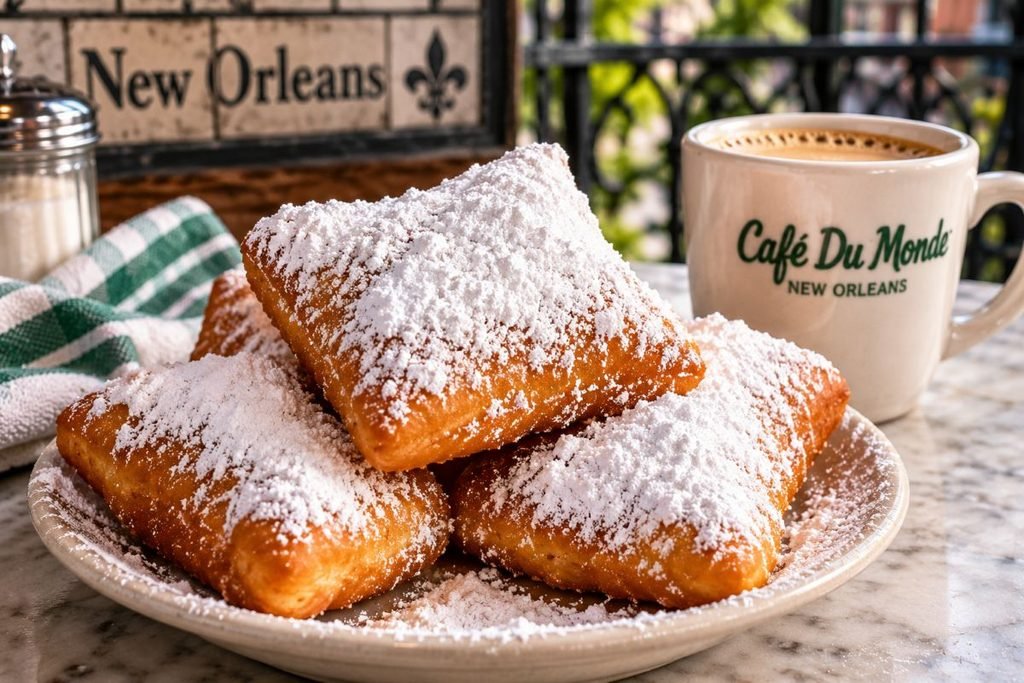
New Orleans could fill this entire guide by itself: gumbo, jambalaya, po’boys, muffulettas, red beans and rice and crawfish all deserve attention.
For a first bite, however, a hot beignet is hard to beat. These square pieces of fried dough arrive buried under powdered sugar and pair naturally with café au lait. Café du Monde has served beignets at the French Market since the 19th century and remains inseparable from their modern New Orleans identity.
Wear dark clothing only if you enjoy giving powdered sugar physical evidence of your itinerary.
Los Angeles: Tacos
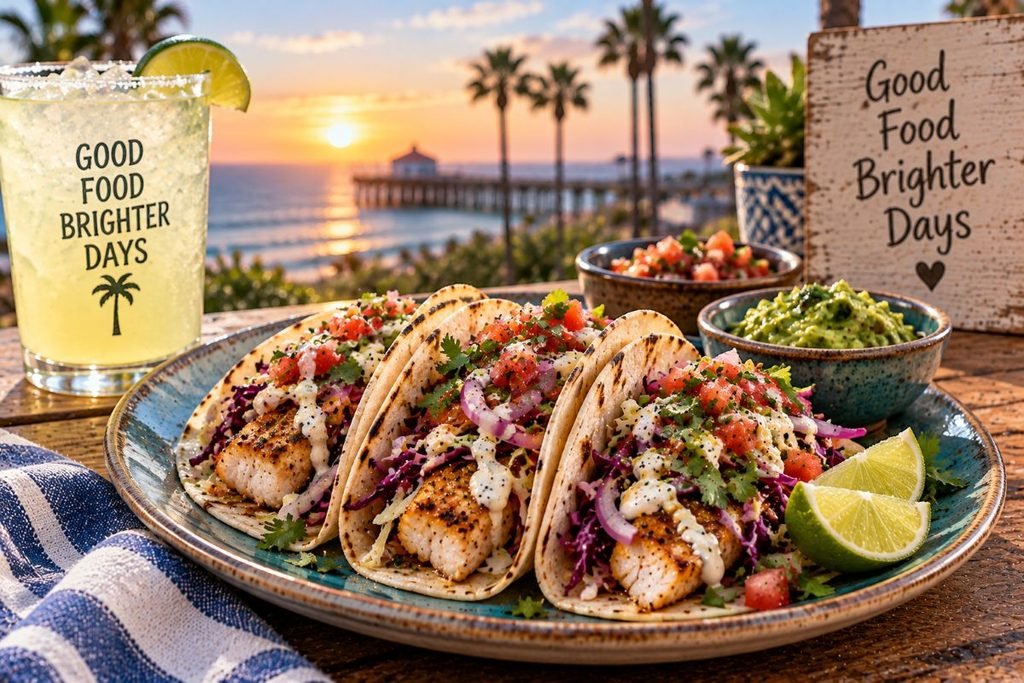
Trying to define Los Angeles with one taco would be foolish. The city’s strength lies in range.
Across taquerias, trucks, stands, and restaurants, you can find al pastor, birria, barbacoa, carne asada, seafood tacos, and regional Mexican specialties that reflect generations of migration and neighborhood food culture. Discover Los Angeles treats tacos not as a novelty but as a central part of the city’s cuisine.
For travelers, the better question is not “Where is the famous taco?” but “What style does this neighborhood do particularly well?”
San Francisco: Cioppino
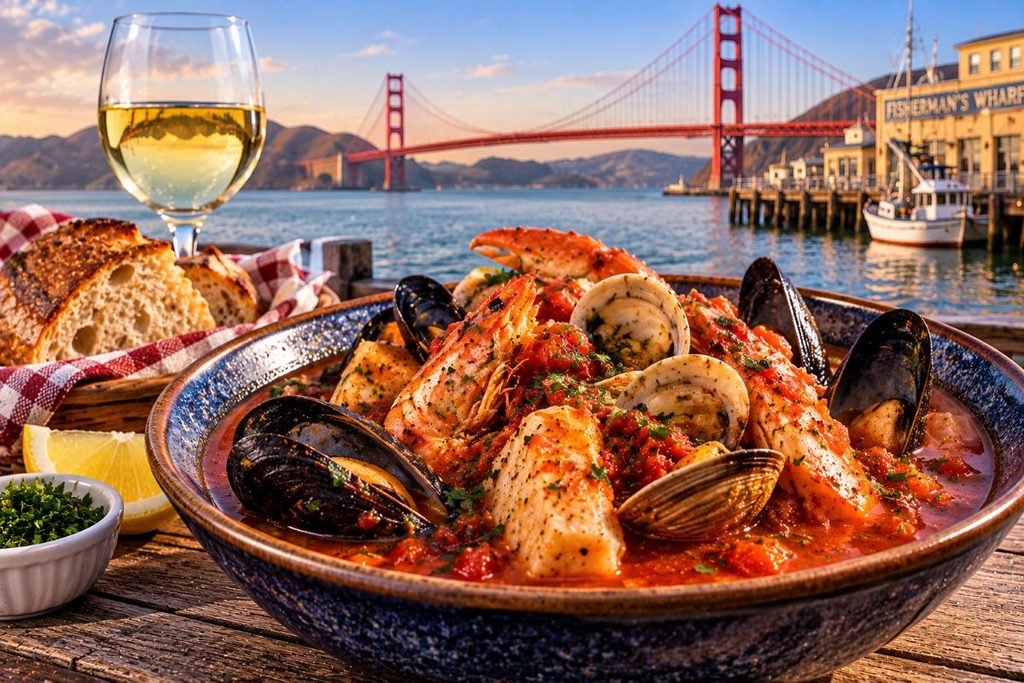
Cioppino combines San Francisco’s Italian immigrant history with the seafood of the Pacific coast.
The tomato-based stew developed among Italian fishing communities and typically contains a changing mixture of crab, clams, mussels, fish, shrimp, or other available seafood. San Francisco Travel lists cioppino among the city’s notable culinary originals.
It is a dish designed around abundance and availability, so exact seafood combinations should vary.
Seattle: Teriyaki
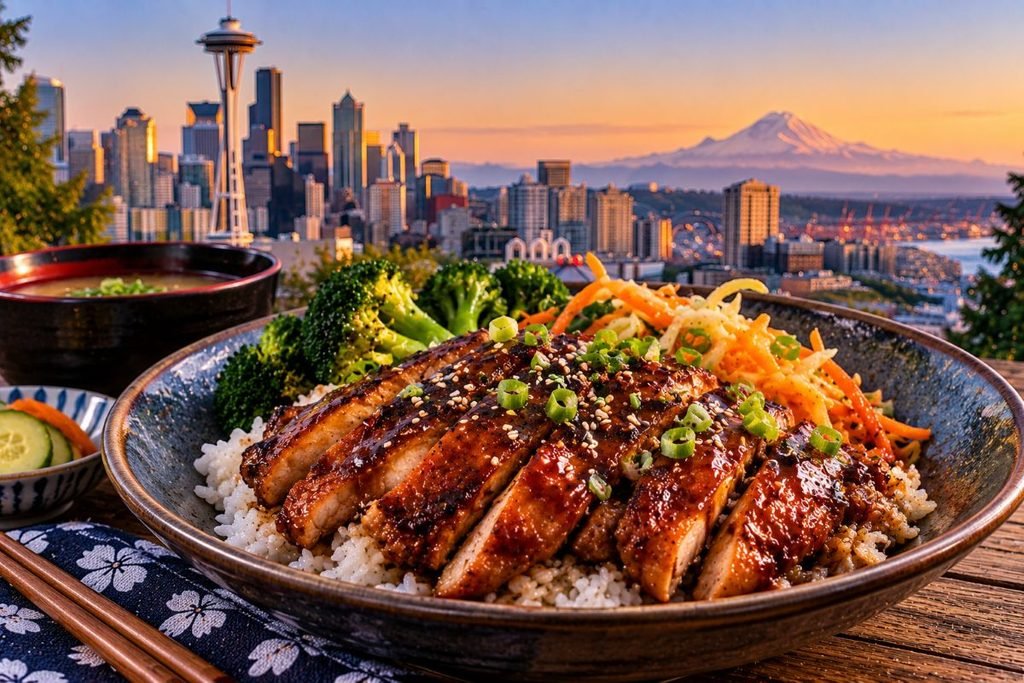
Seattle-style teriyaki is one of America’s great local fast-food traditions, yet it still gets less attention outside the Pacific Northwest than it deserves.
The city’s version grew through Japanese and Korean immigrant entrepreneurship, particularly from the 1970s onward. HistoryLink identifies Toshihiro Kasahara’s 1976 Toshi’s Teriyaki as a key starting point in the development of Seattle’s familiar format: grilled meat, a sweet-savory soy-based glaze, rice, and often salad.
It is everyday food rather than ceremonial food, which may explain why outsiders sometimes overlook how deeply Seattle claims it.
Portland: Eat From a Food Cart Pod
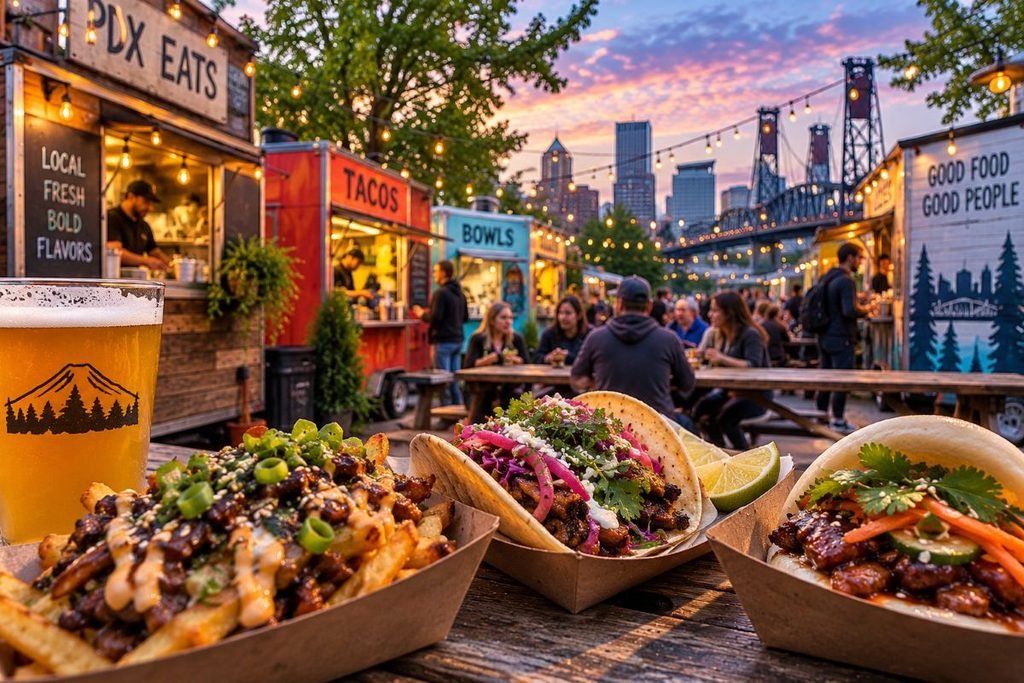
Portland poses a useful problem for a city-food guide: its most characteristic local specialty may be the way people eat rather than a particular dish.
More than 500 food carts operate around the city, according to Travel Portland, often clustered into permanent “pods” where diners can choose from multiple cuisines at shared seating.
Instead of hunting for a single symbolic dish, visit a pod with several people and order from multiple cuisines. Portland is at its best when lunch looks indecisive.
Pittsburgh: The Fries-Belong-Inside-The-Sandwich School
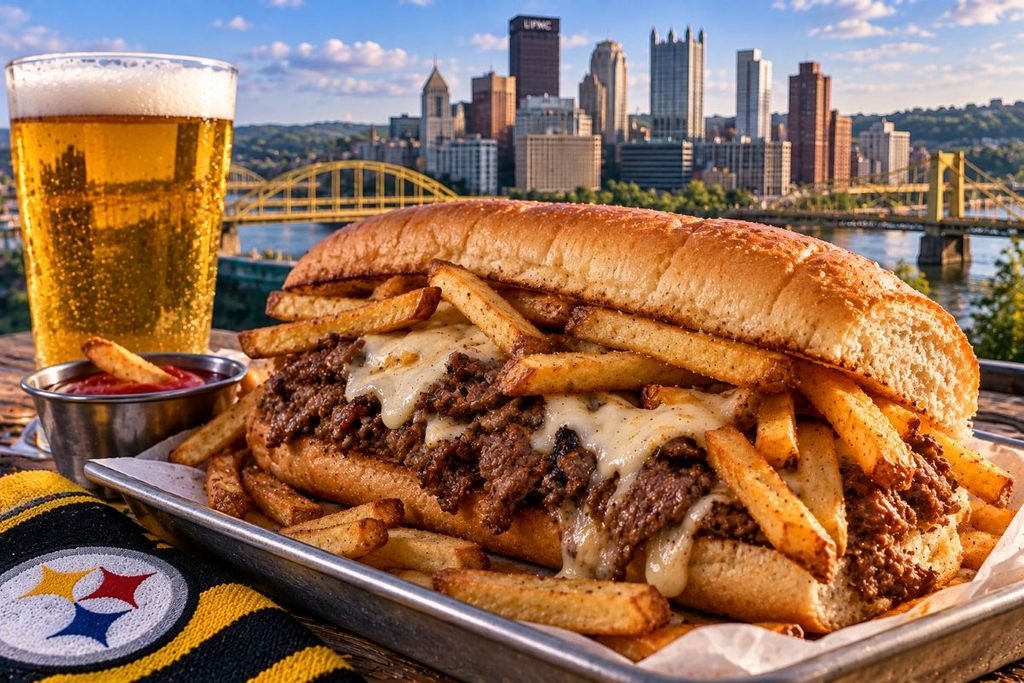
Pittsburgh’s best-known sandwich tradition piles grilled meat, French fries, coleslaw, and tomato between thick pieces of Italian bread. The Primanti Bros. version grew out of the city’s Strip District and became shorthand for Pittsburgh’s working-class food identity.
Spice2Vice already covers the sandwich alongside pierogies, Pittsburgh salad, burnt almond torte and other foods tied to the Steel City, making Pittsburgh one of the strongest examples of a city with an entire recognizable food vocabulary rather than one isolated dish.
Buffalo: Buffalo Wings
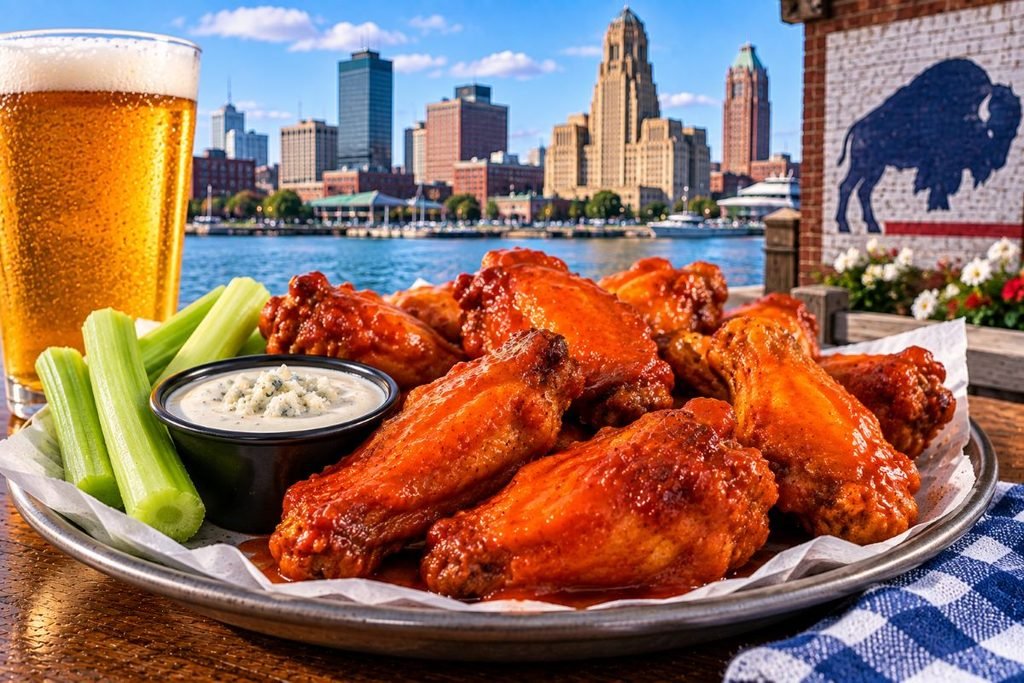
Buffalo wings are now so common that it is easy to forget they are a regional food.
The familiar modern form — separated chicken wings fried and tossed in a hot, buttery sauce, generally served with celery and blue cheese — became associated with Buffalo during the 1960s. Anchor Bar credits Teressa Bellissimo with creating its version in 1964. More recent historical work has also highlighted Black restaurateur John Young, who was selling his own style of wings in Buffalo during the same period.
That more complicated history is worth remembering. Food origins are often messier than the plaque on the wall.
How to Explore Local Foods Without Eating Like a Tourist Checklist
Use signature foods as doors, not destinations.
Try the obvious dish, then ask what locals eat alongside it. Philadelphia has roast pork sandwiches. Chicago has Italian beef and tavern pizza. New Orleans can take you from beignets at breakfast to gumbo at dinner without repeating itself once.
Neighborhood matters, too. Los Angeles tacos, Miami Cuban cooking and Seattle teriyaki make more sense when treated as products of communities and migration rather than food souvenirs.
Finally, do not confuse “iconic” with “best.” A city’s most famous food tells a story, but the dish you remember years later may be the thing you had never heard of before arriving.
That is the pleasure of eating across America: The country’s culinary map refuses to run in a straight line.
FAQ
What are the most famous local foods by US city?
Among the most recognizable are Philadelphia cheesesteaks, Chicago deep-dish pizza, Nashville hot chicken, Buffalo wings, New Orleans beignets, Cincinnati chili and Detroit coney dogs.
Which U.S. cities have the strongest regional food identities?
New Orleans, Chicago, Philadelphia, Detroit, Nashville, Kansas City and San Antonio are particularly strong examples, although nearly every large American city has foods shaped by its local communities.
What city is best for American regional food?
There is no defensible single winner. New Orleans offers remarkable depth in Creole and Cajun-influenced cooking, Chicago has several distinct local styles, and cities such as Los Angeles and Miami show how immigrant communities continue to reshape American food.
Are famous city foods actually eaten by locals?
Usually, yes, but not always in the way tourism advertising implies. Chicagoans eat plenty of pizza that is not deep dish, for example, while many Philadelphia residents have strong opinions about sandwiches besides the cheesesteak.
What is the best way to plan a U.S. food trip?
Choose a few cities within one region, identify two or three local specialties in each and leave several meals unscheduled. The unscheduled meal has an annoying habit of becoming the best one.
Sources
- Visit Philadelphia, cheesesteak history and guide.
- Choose Chicago, guide to Chicago pizza styles.
- Visit Nashville, Nashville Hot Chicken Trail.
- Visit KC, Kansas City barbecue and burnt ends.
- HistoryLink, history of Seattle teriyaki.
- Travel Portland, Portland food carts and pods.
- Visit Detroit, history of Detroit coney dogs.
- History and Anchor Bar sources on the development of Buffalo wings.