 by
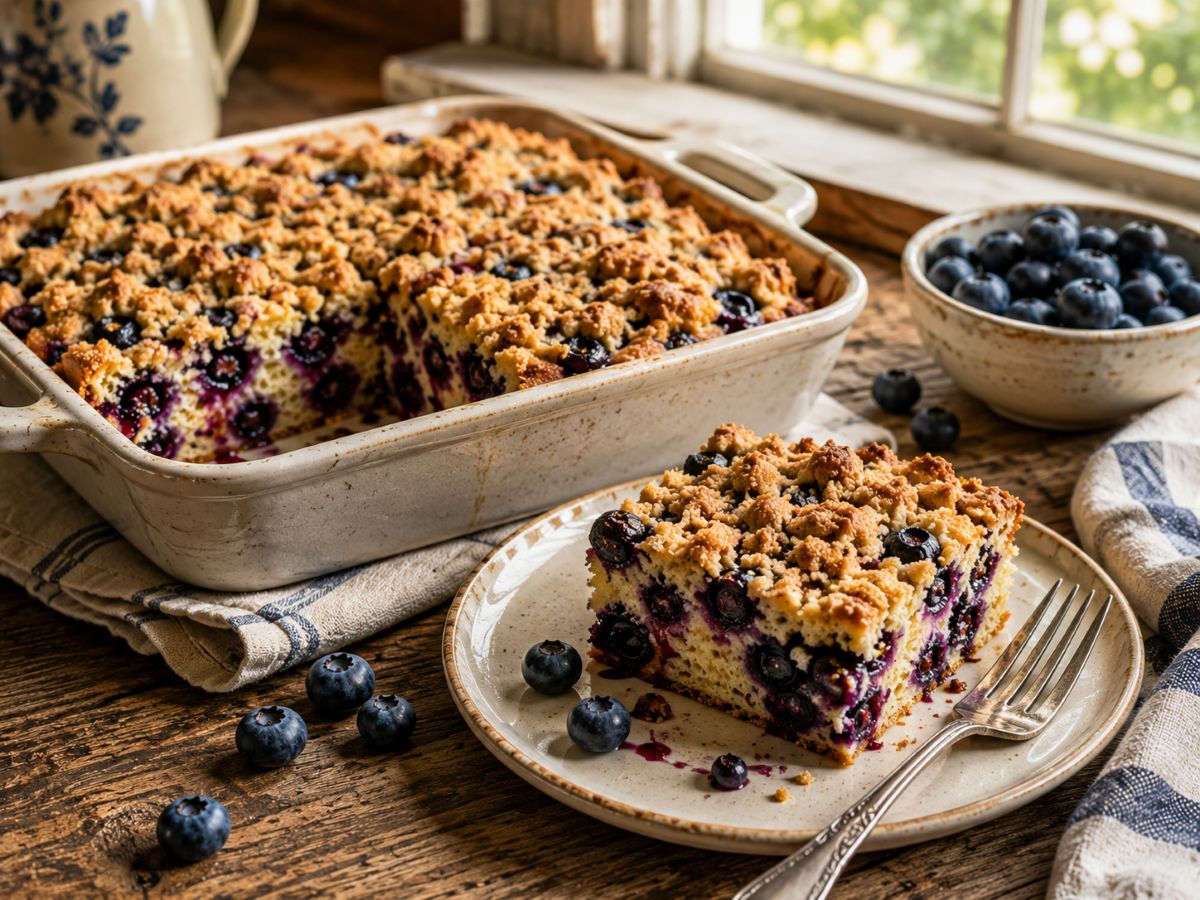
by Blueberry buckle has been a favorite summer dessert across the Upper Great Lakes for generations. Whether made with tiny wild blueberries gathered in the forests of northern Michigan and Minnesota or larger cultivated berries from Southwest Michigan, the cake celebrates one of the region’s most important fruit harvests. The tender cake, sweet berries, and buttery streusel topping have made blueberry buckle a fixture at family reunions, church picnics, and lakeside cottages for more than a century.
Table of Contents – Blueberry Buckle Recipe
The History of Blueberry Buckle in the Upper Great Lakes
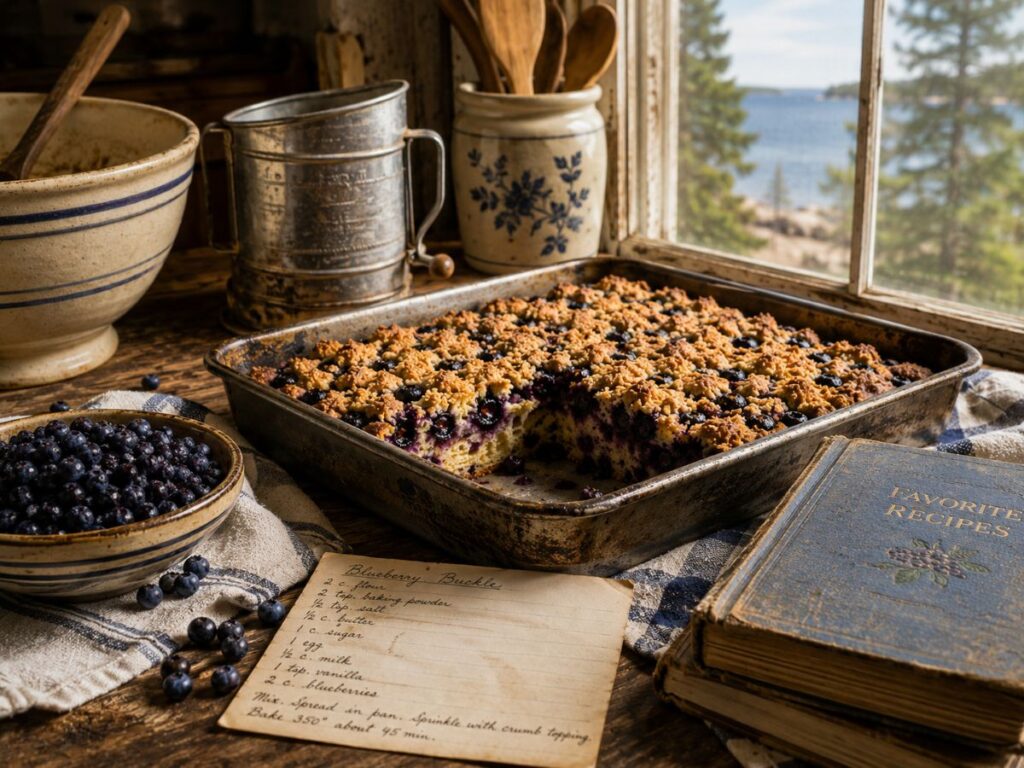
Blueberry buckle did not begin as a distinctly Michigan, Minnesota, or Wisconsin dessert. Its roots lie in a broader American tradition of simple fruit cakes made to use berries at the height of the harvest. A buckle is generally a single-layer cake packed with fruit and finished with a crumb or streusel topping. As it bakes, the fruit and topping weigh down the soft batter, leaving the surface uneven or “buckled.”
That practical style of baking found a natural home in the Upper Great Lakes. Home cooks could turn a bowl of fresh berries, basic pantry staples, and a little butter into a dessert substantial enough for a church supper, family reunion, or cottage breakfast. Unlike a pie, a buckle required no rolled crust. It could be mixed in one bowl, baked in a square pan, and carried without much fuss.
The regional story begins long before the cultivation of blueberry farms. Wild blueberries grew throughout northern forests and were among the native foods used by Indigenous communities before European settlement. In Minnesota, blueberries are still counted among the state’s traditional wild foods, alongside wild rice, raspberries, chokecherries and hazelnuts. These smaller lowbush berries bring an intense flavor and deep color to baked goods, making them especially well suited to a tender coffee cake.
Michigan later developed a major cultivated blueberry industry, centered largely in the western part of the Lower Peninsula. The moderating influence of Lake Michigan helps create favorable conditions for fruit production, including highbush blueberries. Those larger, juicier berries gave Great Lakes bakers a dependable summer supply for pies, muffins, pancakes, and buckles.
Traditional Easy Blueberry Buckle Recipe
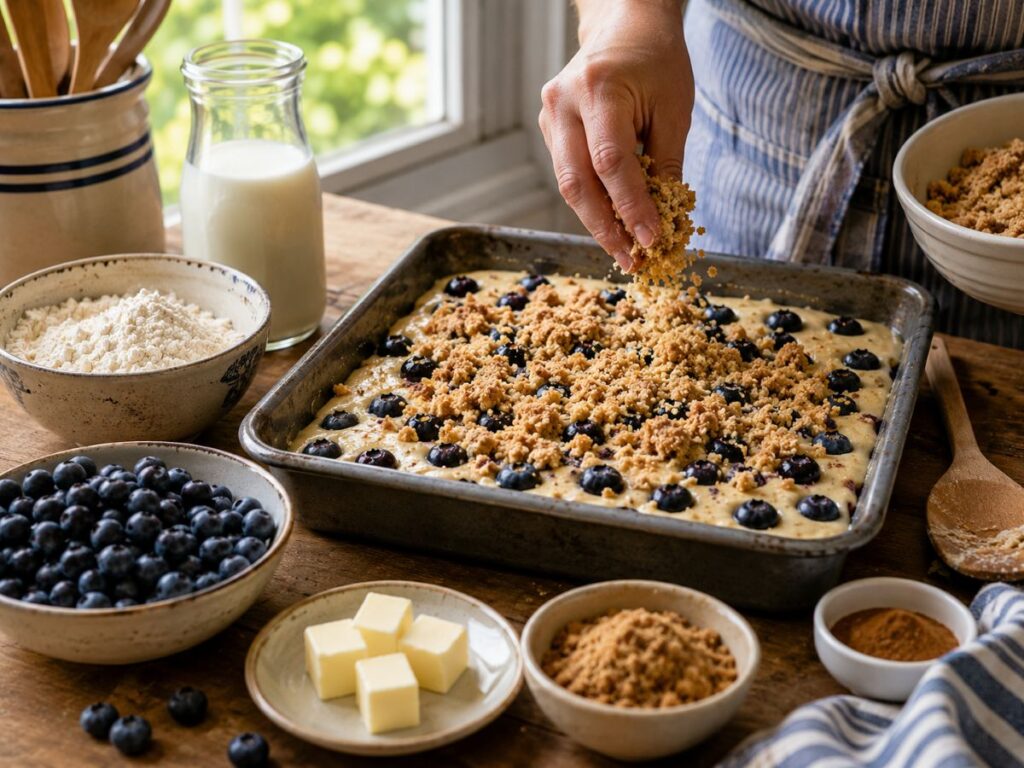
A proper blueberry buckle sits somewhere between a tender butter cake and an old-fashioned coffee cake. The batter should be thick enough to hold the berries in place, while the crumb topping bakes into a crisp, buttery cap. As the blueberries soften and release their juices, the surface settles into the uneven appearance that gives the dessert its memorable name.
Fresh Michigan blueberries are ideal during the summer harvest, but frozen berries make this recipe practical year-round. The buckle is sweet without being heavy, making it equally suited for dessert, brunch or an afternoon break with coffee.
Recipe Summary
Preparation time: 20 minutes
Cooking time: 45 to 50 minutes
Total time: About 1 hour and 10 minutes
Yield: 9 servings
Course: Dessert or coffee cake
Cuisine: American and Upper Great Lakes
Ingredients
For the Blueberry Cake
- 2 cups all-purpose flour
- 2 teaspoons baking powder
- ½ teaspoon salt
- ½ cup unsalted butter, softened
- ¾ cup granulated sugar
- 1 large egg, at room temperature
- 1 teaspoon vanilla extract
- ½ cup whole milk
- 2 cups fresh blueberries
- 1 tablespoon all-purpose flour for coating the berries
For the Crumb Topping
- ½ cup all-purpose flour
- ½ cup packed light brown sugar
- 1 teaspoon ground cinnamon
- ¼ teaspoon salt
- 4 tablespoons cold unsalted butter, cut into small cubes
How to Make Traditional Blueberry Buckle
1. Prepare the Baking Pan
Preheat the oven to 350 degrees. Lightly grease an 8-inch or 9-inch square baking pan with butter or nonstick cooking spray. Line the bottom with parchment paper when easy removal is important.
2. Mix the Dry Ingredients
Whisk together 2 cups of flour, the baking powder, and salt in a medium bowl. Set the mixture aside while preparing the butter and sugar.
3. Cream the Butter and Sugar
Beat the softened butter and granulated sugar in a large bowl until pale and fluffy, about two to three minutes. This step adds air to the batter and helps produce a lighter cake.
Add the egg and vanilla. Beat until the mixture is smooth and evenly combined.
4. Finish the Cake Batter
Add about one-third of the flour mixture to the butter mixture and stir on low speed. Pour in half the milk, then another third of the flour. Repeat with the remaining milk and flour, mixing only until no dry streaks remain.
The finished batter will be thicker than standard cake batter. Avoid adding extra milk unless the mixture is too stiff to spread.
5. Add the Blueberries
Place the blueberries in a separate bowl and toss them with 1 tablespoon of flour. The light coating helps prevent the berries from sinking to the bottom of the cake.
Gently fold the berries into the batter with a rubber spatula. Use a light hand to avoid crushing them and turning the batter purple.
Spread the batter evenly in the prepared pan.
6. Make the Crumb Topping
Combine the flour, brown sugar, cinnamon and salt in a small bowl. Add the cold butter cubes and work them into the dry ingredients with a pastry cutter, fork or fingertips.
Stop when the mixture forms irregular crumbs ranging from fine grains to pea-sized pieces. These uneven pieces create the best crisp texture after baking.
Scatter the crumb topping evenly across the blueberry batter.
7. Bake the Buckle
Bake for 45 to 50 minutes, or until the topping is golden and a toothpick inserted near the center comes out clean or with a few moist crumbs. Avoid testing directly through a blueberry, which can make the cake appear underbaked.
If the topping begins browning too quickly, loosely cover the pan with aluminum foil during the final 10 minutes.
8. Cool Before Serving
Place the pan on a wire rack and allow the buckle to cool for at least 20 minutes. The cake will continue to set as it cools, making it easier to cut into clean squares.
Serve the blueberry buckle warm, at room temperature or lightly chilled. A spoonful of whipped cream or a scoop of vanilla ice cream turns it into a richer dessert, while a plain slice works well with morning coffee.
Fresh or Frozen Blueberries
Fresh berries provide the cleanest flavor and firmest texture, especially when they are in season. Frozen blueberries may be used without thawing, but they can add several minutes to the baking time. Folding frozen berries directly into the batter also reduces bleeding and helps the cake retain its golden color.
Baker’s Notes
Do not overmix the batter after adding the flour. Too much mixing develops gluten and can make the finished buckle tough instead of tender.
The crumb topping should remain cold until the pan goes into the oven. Warm butter can melt into the cake rather than forming a crisp layer.
Blueberries vary in sweetness, so taste a few before baking. Particularly tart berries work well with the full amount of sugar, while very sweet berries may allow the sugar in the cake to be reduced slightly.
Variations and Food Pairings
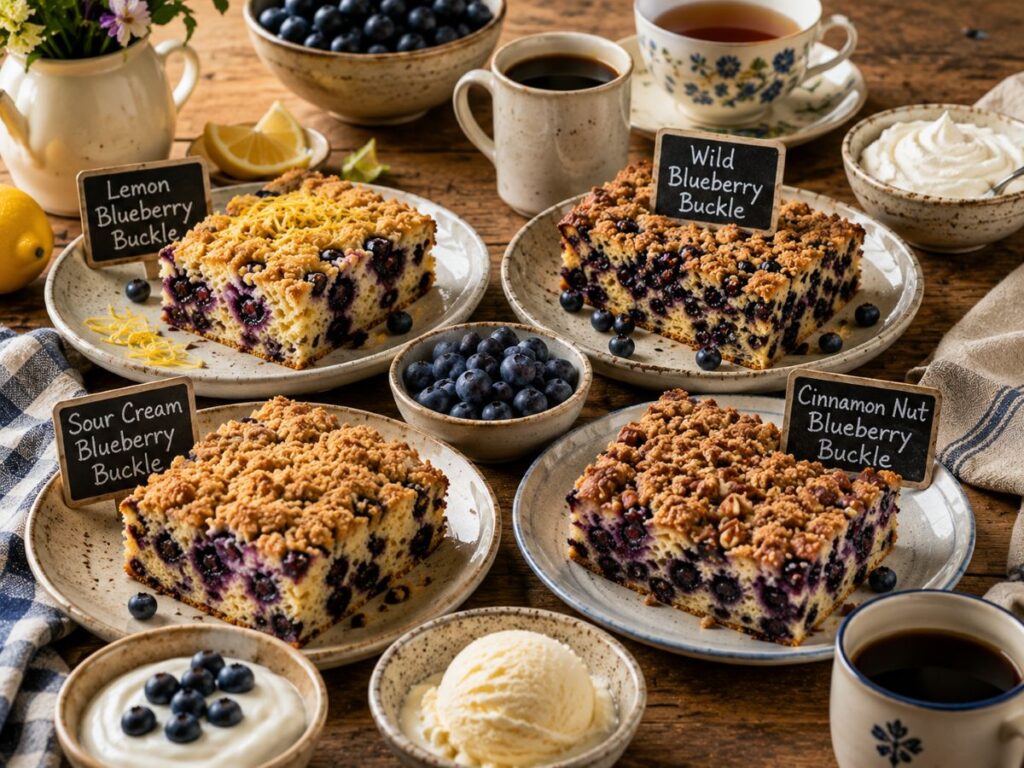
Blueberry buckle is forgiving enough to welcome small changes without losing its old-fashioned character. The basic formula remains the same: tender cake, plenty of berries and a buttery crumb topping. From there, bakers across the Upper Great Lakes have adapted the dessert to match the berries, pantry staples and serving traditions available to them.
Some versions lean brighter with lemon, while others become richer with sour cream or a heavier cinnamon topping. Wild blueberries create a darker, more concentrated fruit flavor, while cultivated berries provide larger pockets of juice throughout the cake. These choices can subtly change the texture and character of the finished buckle.
Popular Blueberry Buckle Variations
Wild Blueberry Buckle
Wild blueberries are smaller than cultivated highbush berries, but their flavor is often more intense. They spread more evenly through the batter and create a deep purple-blue color in each slice.
Use the same quantity called for in the traditional recipe. Frozen wild blueberries may be added directly from the freezer without thawing. Because the berries are small, they usually distribute easily without sinking.
This version is especially fitting for northern Minnesota, Wisconsin and Michigan’s Upper Peninsula, where wild blueberries have long been gathered during midsummer.
Lemon Blueberry Buckle
Lemon brings out the natural brightness of blueberries and keeps the dessert from tasting overly sweet. Add 1 tablespoon of finely grated lemon zest to the cake batter and replace 1 tablespoon of milk with fresh lemon juice.
A simple lemon glaze may also be drizzled across the cooled buckle. Mix powdered sugar with a small amount of lemon juice until it reaches a pourable consistency. Use the glaze lightly so it does not overpower the crumb topping.
Sour Cream Blueberry Buckle
Replacing part of the milk with sour cream produces a denser, moister cake with a mild tang. Use ½ cup of sour cream in place of the ½ cup of milk in the traditional recipe.
The thicker batter helps suspend the berries and creates a texture closer to rich coffee cake. Full-fat Greek yogurt works as a substitute when sour cream is unavailable.
Mixed Berry Buckle
Blueberries pair well with raspberries, blackberries and chopped strawberries. Replace up to half the blueberries with another berry while keeping the total fruit quantity at about 2 cups.
Raspberries soften quickly and can make the cake more delicate. Blackberries should be cut in half when unusually large. Strawberries should be chopped and patted dry before folding them into the batter.
Cinnamon-Nut Buckle
For a heartier crumb topping, add ⅓ cup of chopped pecans or walnuts to the streusel mixture. The nuts provide a toasted flavor and extra crunch that works particularly well when the buckle is served with coffee.
A small pinch of nutmeg may also be added to the topping. Use it sparingly, since too much can cover the flavor of the blueberries.
Cast-Iron Skillet Buckle
Blueberry buckle may be baked in a well-seasoned 10-inch cast-iron skillet for crisp edges and a rustic presentation. Grease the skillet thoroughly before adding the batter.
Begin checking the buckle after about 40 minutes, since cast iron retains heat and may bake the edges more quickly than a standard pan. Let the dessert rest in the skillet before cutting.
Gluten-Free Blueberry Buckle
A dependable cup-for-cup gluten-free flour blend can replace the all-purpose flour in both the cake and crumb topping. Choose a blend that already contains xanthan gum.
The finished cake may be slightly more delicate, so allow it to cool completely before slicing. Coating the blueberries in gluten-free flour remains useful for keeping them suspended in the batter.
Food Pairings With Blueberry Buckle
Blueberry buckle can move easily from breakfast table to dessert plate. Its buttery crumb and tart berries pair best with simple accompaniments that add contrast without burying the fruit.
Coffee and Tea
Fresh coffee is the traditional choice, especially when the buckle is served for breakfast or brunch. A medium-roast coffee balances the sweetness, while a darker roast adds a welcome bitter edge.
Black tea, Earl Grey and lightly spiced chai also pair well. Earl Grey is particularly effective because its citrus notes echo the natural brightness of the blueberries.
Vanilla Ice Cream
Warm blueberry buckle served with vanilla ice cream is the richest presentation. The ice cream softens against the warm cake and settles into the crumb topping.
Choose a simple vanilla rather than one packed with added flavors. The blueberries should remain the focus.
Fresh Whipped Cream
Lightly sweetened whipped cream adds richness without making the dessert feel heavy. A small amount of vanilla or lemon zest may be folded into the cream.
This pairing works well for summer dinners, church gatherings and berry-season celebrations.
Yogurt and Fresh Fruit
For breakfast, serve a modest slice with plain or vanilla Greek yogurt and a handful of fresh berries. The tang of the yogurt balances the sweetness and turns the buckle into a more substantial morning dish.
A spoonful of blueberry preserves may also be added, although the cake already provides plenty of fruit flavor.
Lemonade and Iced Tea
Cold lemonade pairs naturally with blueberry buckle at summer picnics and cottage meals. Its acidity cuts through the butter in the cake and topping.
Unsweetened iced tea is another good choice, particularly when the buckle is served after a large meal. Both drinks keep the presentation casual and seasonal.
Mild Cheeses for Brunch
When blueberry buckle is part of a brunch spread, pair it with mild cheeses such as cream cheese, mascarpone, young cheddar or soft goat cheese. The salty and tangy flavors provide contrast to the sweet cake.
Avoid heavily smoked or strongly aged cheeses, which can overwhelm the fruit.
Serving Blueberry Buckle Through the Day
For breakfast, serve it plain or with yogurt and coffee. At brunch, add fresh fruit, eggs and mild cheese. For dessert, warm the buckle slightly and finish it with whipped cream or vanilla ice cream.
No matter how it is served, blueberry buckle is best when the berries remain the main event. The most successful pairings support the fruit, soften the sweetness and preserve the dessert’s simple Great Lakes character.
How to Store and Freeze Blueberry Buckle
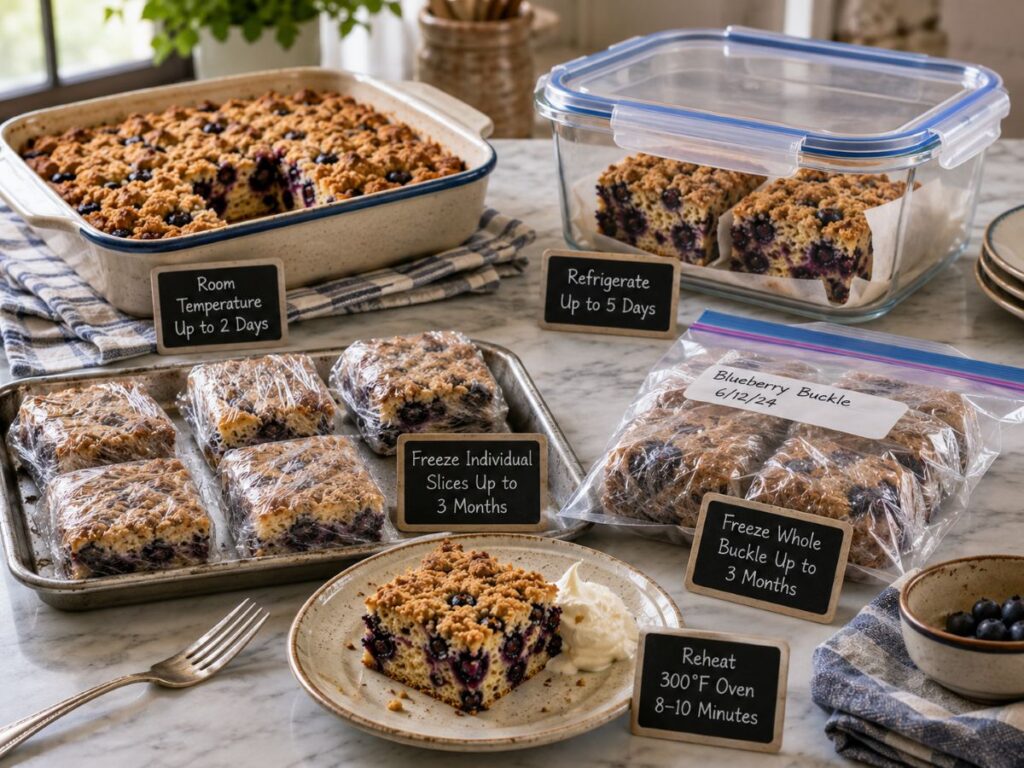
Blueberry buckle keeps well because its sturdy cake crumb protects the fruit from drying out too quickly. The streusel topping is at its best on the day of baking, but careful storage can preserve the cake’s soft center and berry flavor for several days. The main challenge is controlling moisture, since warm cake and juicy blueberries can make the topping soft when sealed too soon.
Let the Buckle Cool Completely
Allow the blueberry buckle to cool to room temperature before covering or storing it. Depending on the baking pan and room temperature, this may take one to two hours.
Covering the buckle while it is still warm traps steam inside the container. That moisture settles on the crumb topping and can turn its crisp texture soft or sticky. Cooling the cake fully also helps the fruit juices set, making each serving easier to cut.
Storing Blueberry Buckle at Room Temperature
Blueberry buckle can be kept at room temperature for up to two days when the kitchen is cool and the cake does not contain a dairy-based glaze or topping. Cover the baking dish tightly with plastic wrap, foil or a fitted lid.
Another option is to place individual slices in an airtight container with parchment paper between the layers. Store the container away from direct sunlight, the stove or other warm areas.
The buckle may soften slightly during storage because the blueberries continue releasing moisture. This is normal and does not mean the cake has spoiled.
Refrigerating Blueberry Buckle
For longer storage, place the buckle in the refrigerator for up to five days. Refrigeration is the safer choice during hot or humid weather, particularly in a warm summer kitchen.
Wrap the baking dish tightly or transfer the cake to an airtight container. Exposed cake can quickly absorb refrigerator odors and lose moisture.
Cold buckle will be firmer than freshly baked cake. Let each serving stand at room temperature for about 20 minutes before eating, or warm it briefly to restore its softer texture.
How to Freeze a Whole Blueberry Buckle
Freezing works best when the buckle is fully baked and completely cooled. Leave off any whipped cream, ice cream or glaze, since those should be added after thawing.
Remove the buckle from its pan when possible. Wrap the entire cake tightly in plastic wrap, followed by a layer of aluminum foil. Place the wrapped cake in a large freezer bag or freezer-safe container for added protection.
Label the package with the name and freezing date. For the best texture and flavor, use it within two to three months.
Freezing Individual Slices
Freezing separate portions is convenient when the buckle will be served over several weeks. Cut the cooled cake into squares and place the pieces on a parchment-lined baking sheet.
Freeze the uncovered slices for about one hour, or until firm. This first step prevents the crumb topping from sticking to the wrapping.
Wrap each slice in plastic wrap and place the wrapped portions in a freezer bag. Remove as much air as possible before sealing. Individual pieces can then be thawed as needed without defrosting the entire cake.
How to Thaw Frozen Blueberry Buckle
For a whole buckle, remove the outer foil but leave the plastic wrap in place while it thaws. Set it in the refrigerator overnight or on the counter for several hours.
Keeping the cake wrapped during thawing allows condensation to collect on the wrapping rather than directly on the crumb topping. Remove the plastic once the buckle has reached room temperature.
Individual slices can be thawed at room temperature for about one hour. They may also be placed in the refrigerator overnight.
How to Reheat Blueberry Buckle
To restore some of the texture of a freshly baked buckle, warm individual slices in a 300-degree oven for about 8 to 10 minutes. A larger portion may need 15 to 20 minutes.
The oven is better than the microwave for reviving the crumb topping. Microwave heating works in a hurry, but it tends to make the streusel soft. Heat one slice for about 15 to 20 seconds and check it before adding more time.
An air fryer can also warm individual slices. Use a low setting near 300 degrees and check after three to five minutes to prevent the topping from becoming too dark.
Can Blueberry Buckle Batter Be Frozen?
Freezing the unbaked batter is not recommended. The baking powder can lose some of its effectiveness during storage, and frozen berries may release excess liquid as the batter thaws.
For make-ahead convenience, prepare the crumb topping separately and refrigerate it for up to three days. The dry ingredients may also be measured in advance. Mix the batter and add the berries shortly before baking.
How to Tell When Blueberry Buckle Should Be Discarded
Discard the buckle if it develops visible mold, an unpleasant fermented smell or an unusually wet and sticky surface. Blueberry stains and dark fruit pockets are normal, but fuzzy growth is not.
When stored properly, the cake should smell of butter, cinnamon and berries. When in doubt, throw it out rather than tasting it.
Best Storage Method
For the best balance of flavor and texture, keep blueberry buckle covered at room temperature and eat it within two days. Refrigerate it when holding it longer or during hot weather. Freeze extra slices soon after baking rather than waiting until the cake begins to dry out.
A brief warming before serving brings back much of the cake’s original tenderness and makes the blueberry aroma more noticeable.
Blueberry Festivals Around the Great Lakes
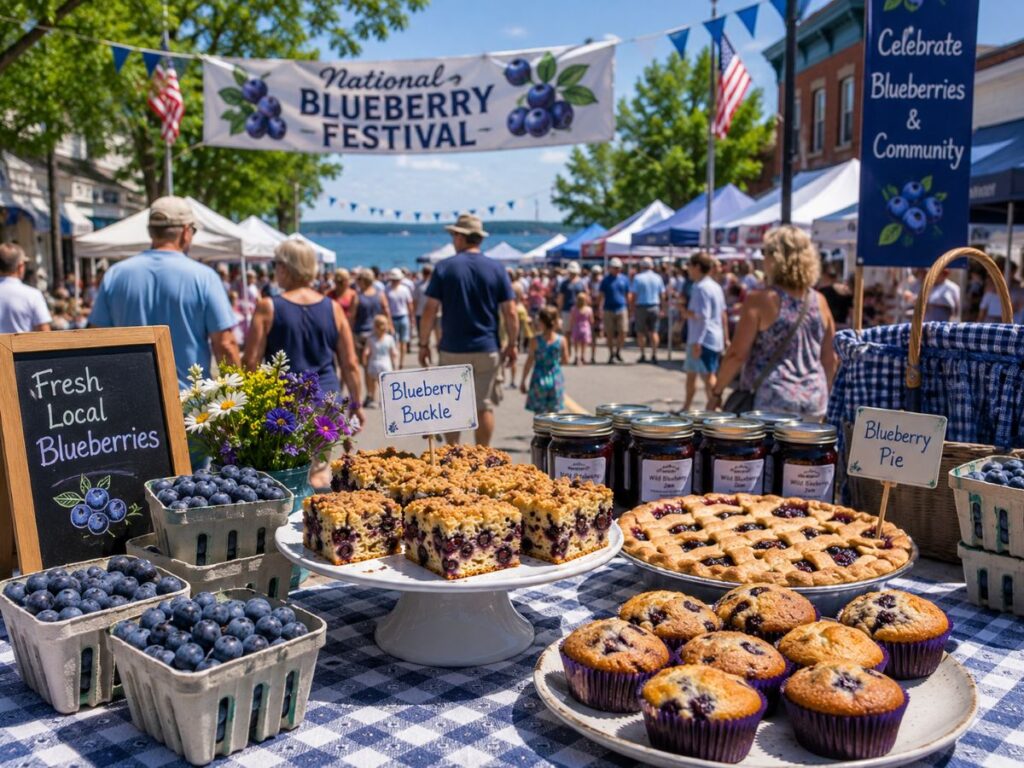
Blueberry season in the Upper Great Lakes is brief enough to feel like an event. By midsummer, farm stands begin stacking pints of deep-blue fruit beside sweet corn and tomatoes, while small towns turn the harvest into parades, pie socials and community dinners. These festivals are less about creating a new food tradition than marking a short window when local blueberries are at their best.
National Blueberry Festival in South Haven, Michigan
The best-known celebration is the National Blueberry Festival in South Haven, on the Lake Michigan shore. The annual event has been held since the 1960s in one of Michigan’s major blueberry-growing areas. The 2026 festival is scheduled for Aug. 6-9 and includes live music, vendors, a parade, a 5K and activities tied directly to nearby farms.
One of the festival’s strongest features is its connection to working farms rather than blueberries in name only. Farm Day directs attention toward local growers, while the Blueberry Pie Social puts the fruit where many visitors expect to find it: inside a flaky crust or beneath a scoop of ice cream. The official 2026 program lists products from DeGrandchamp’s and Crane’s Pie Pantry among the featured offerings.
For home bakers, South Haven provides a useful reminder that blueberry desserts begin with the quality of the fruit. Berries bought during the local harvest tend to be firm, fresh and flavorful enough to stand out in a simple cake such as blueberry buckle.
Wild Blueberry Traditions in Michigan’s Upper Peninsula
Blueberry gatherings in the Upper Peninsula tend to reflect a different harvest. Rather than centering only on cultivated highbush berries, northern celebrations often recognize wild blueberries gathered from sandy openings, forest edges and former burn areas.
These smaller berries carry a concentrated flavor that works particularly well in pancakes, muffins, pies and buckles. Their season can vary with weather, rainfall and location, which gives northern blueberry events a more local and less predictable character.
Communities such as Paradise have long associated summer events with wild berries and regional foods. However, dates, names and programming may change from year to year, so travelers should confirm details with local tourism offices before planning a trip.
Lake George Blueberry Festival in Minnesota
Lake George, a small community near Itasca State Park in northern Minnesota, has also maintained a long-running blueberry celebration. The town marked its 40th annual Blueberry Festival in July 2024, showing how strongly the fruit remains tied to summer life in Minnesota’s lake country.
A festival in a community of this size carries a different feeling from a large destination event. It resembles a town reunion built around food, crafts and summer traditions. Blueberries provide the theme, but the gathering also reflects the social side of the northern harvest: neighbors returning, families visiting and recipes being shared.
Wisconsin’s Berry Season Is Often Celebrated Locally
Wisconsin has fewer widely known blueberry festivals than Michigan, but blueberries remain part of summer farm-market culture across the northern half of the state. Small farms, U-pick operations and community markets often hold berry weekends, picking days and seasonal sales rather than large formal festivals.
For cooks, these quieter events may be just as useful as a major celebration. They offer access to freshly picked fruit and a chance to speak directly with growers about variety, sweetness and the timing of the harvest.
Because local berry events can change quickly with crop conditions, visitors should check farm websites or regional tourism calendars before traveling.
What Visitors Usually Find at a Blueberry Festival
The details vary, but blueberry festivals commonly combine food with the familiar structure of a Great Lakes summer gathering. Visitors may find fresh berries, pies, muffins, pancakes, preserves, ice cream, baking contests, craft vendors, music and children’s activities.
The food often moves beyond traditional desserts. Vendors may serve blueberry barbecue sauce, vinaigrettes, lemonade, sausage glazes, or savory dishes made with fruit. Some combinations work better than others, but the experimentation shows how far blueberries have moved beyond the pie plate.
A festival is also a good place to compare wild and cultivated fruit. Wild blueberries tend to be smaller and more intense, while cultivated berries are larger, milder, and easier to use in recipes requiring substantial quantities.
Bringing the Festival Home
A trip to a blueberry festival often ends with more fruit than a household can eat fresh. Blueberry buckle is one of the easiest ways to handle that surplus because it uses a generous quantity of berries without requiring pie dough, canning equipment or complicated preparation.
Fresh berries can be baked the same day, while the rest can be frozen in a single layer and transferred to freezer bags. Those frozen berries can later go directly into buckle batter without thawing.
That may be the best reason blueberry festivals continue to matter. They turn a short agricultural season into a community occasion, but they also send people home with fruit, recipes, and a reason to bake.
Final Thought about Blueberry Buckle Recipe
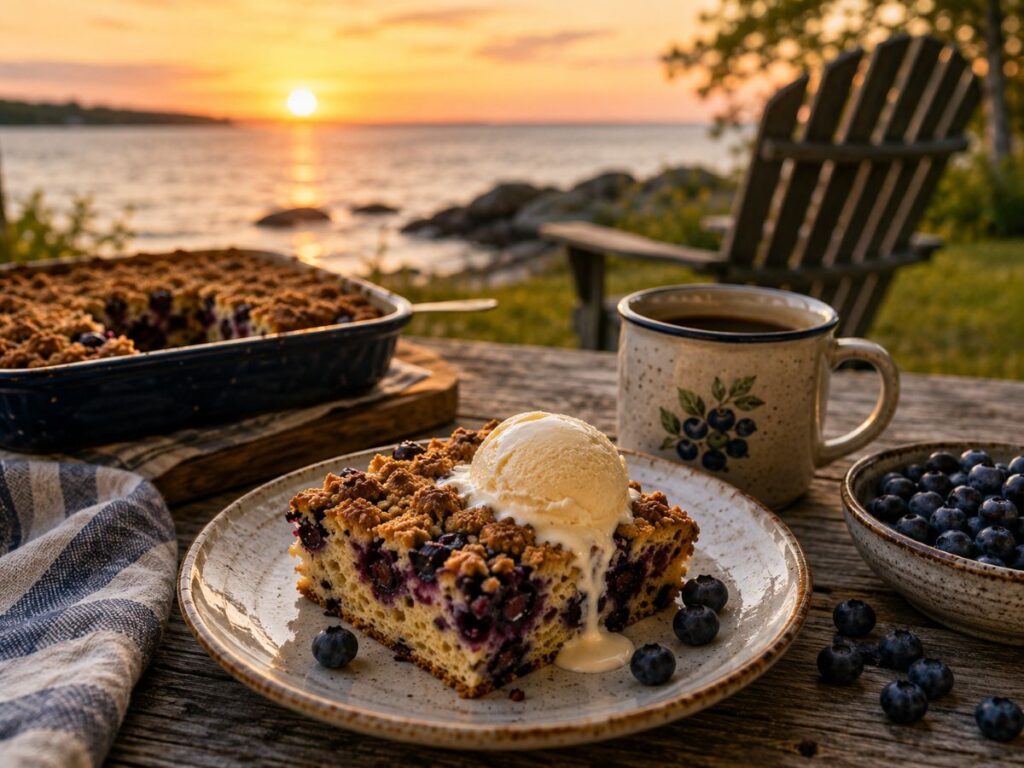
Blueberry buckle has earned its place as one of the classic summer desserts of the Upper Great Lakes. From family kitchens in Michigan to cabins in northern Wisconsin and Minnesota, it brings together the region’s blueberry harvest and generations of home baking traditions. Whether you use hand-picked wild berries or fresh highbush blueberries from a local farm, each slice is a reminder that some of the best recipes are also the simplest.