 by
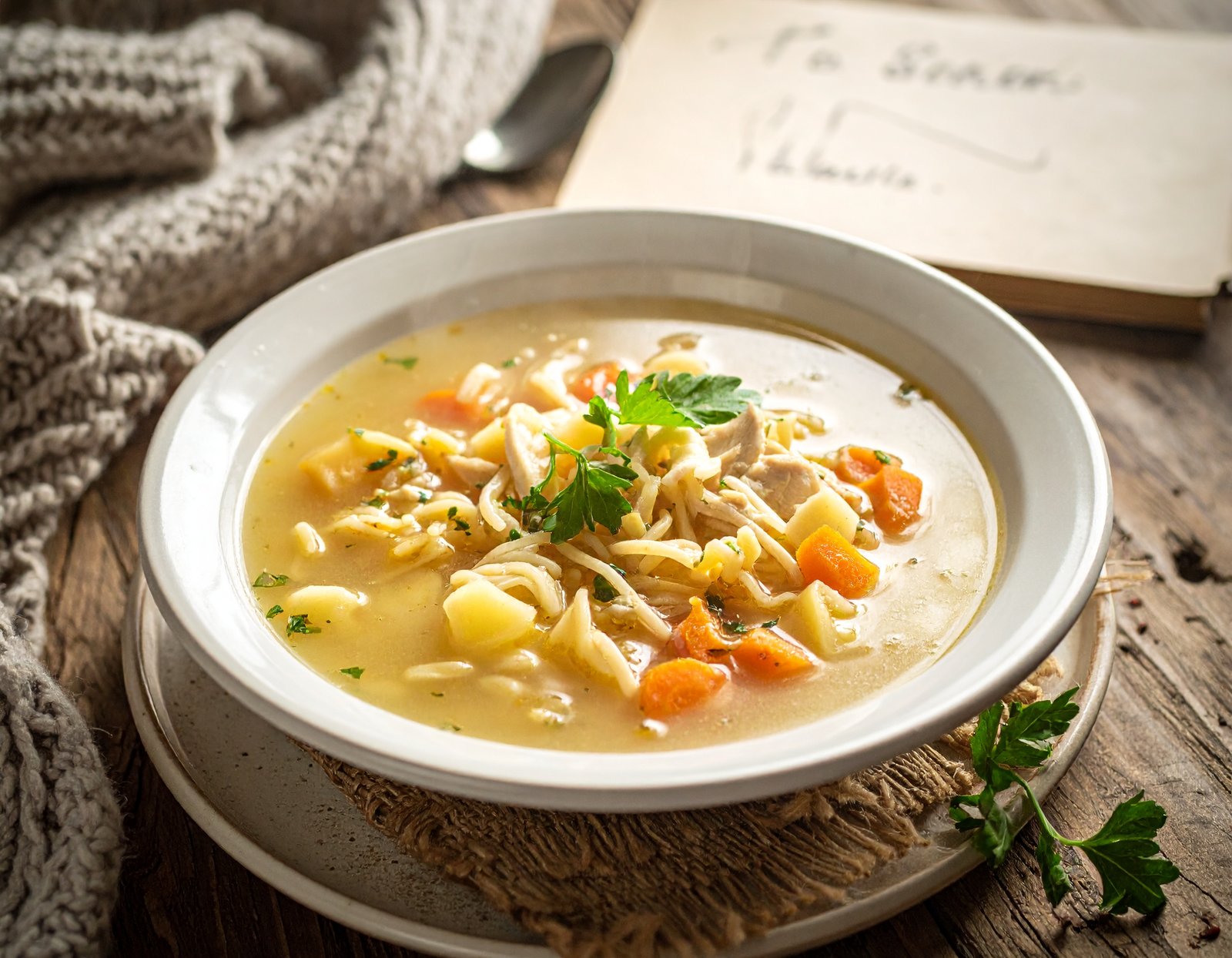
by Every winter in the Upper Midwest brings the same pattern. Schools report absences. Pharmacies post flu shot reminders. Clinics fill with patients complaining of fever, cough, and fatigue. Yet long before antivirals, urgent care centers, or even reliable thermometers, families relied on something closer to home: the kitchen. This chicken noodle soup recipe reflects how families once used food as care, long before clinics and pharmacies became part of daily life.
Why This Chicken Noodle Soup Recipe Became a Winter Staple
For much of the late 19th and early 20th centuries, food functioned as first-line care during illness. It was not viewed as a cure, but as support—warmth, fluids, calories, and comfort delivered in a bowl. Across cultures, this approach developed independently. In India, household cooking traditions used everyday spices to soothe cold symptoms. In the American Midwest, especially among farm and mill families, chicken noodle soup filled the same role.
The idea was simple. When someone was sick, you fed them what they could tolerate, what the body could use, and what the household could afford. That thinking still shapes winter kitchens today.
Food as Medicine: What Indian Kitchens and Midwestern Homes Shared
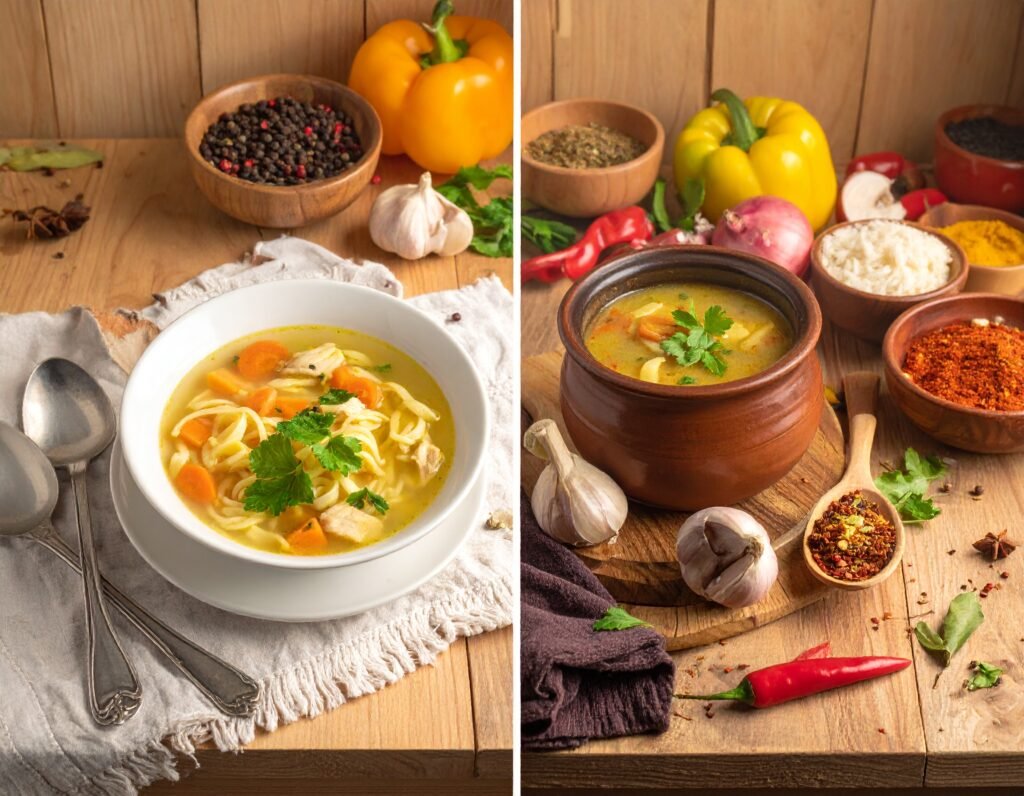
In many Indian homes, especially those shaped by Ayurvedic practice, illness management begins with food rather than medication. This does not mean replacing medical care. It means supporting the body while it recovers.
Warm liquids are central. Ginger is commonly used for sore throat and nausea. Turmeric is added for its long-standing association with inflammation. Peppermint and licorice appear in teas meant to ease coughs. These are not exotic remedies. They are ordinary pantry items, used in small amounts, prepared at home.
Modern research treats these practices cautiously. Laboratory and early clinical studies suggest some spices may influence inflammatory pathways, but evidence remains limited and inconsistent. What is clear is that warm, lightly seasoned foods help maintain hydration and calorie intake when appetite is low. That alone can make illness more tolerable.
Across cultures, similar ideas developed. In India, home cooking emphasized warm liquids and mild spices during illness. In the Midwest, homemade chicken soup filled the same role. This chicken noodle soup recipe became a reliable flu season food because it delivered warmth, hydration, and steady calories when appetite was low.
The key point is cultural rather than clinical: food is seen as care, not as medicine in the pharmaceutical sense.
What Science Says About This Chicken Noodle Soup Recipe
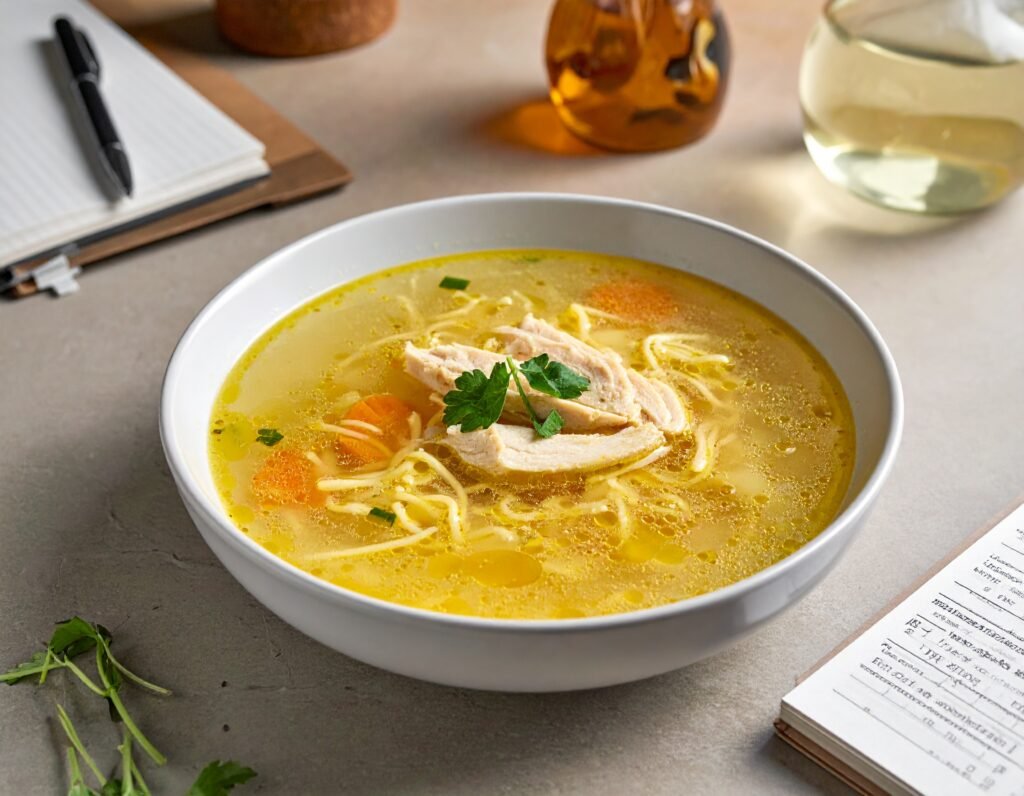
Chicken soup occupies a similar place in American households. It is not prescribed, but it is expected.
A frequently cited 2000 laboratory study found that chicken soup inhibited neutrophil migration in vitro, a process linked to inflammation. Researchers suggested this could explain why some people report reduced congestion or throat irritation after eating soup. The study did not claim chicken soup treats viral illness, only that it may have mild anti-inflammatory effects.
More recent reviews have reached modest conclusions. A 2025 systematic review examining soups and broths for acute respiratory infections found some evidence of reduced symptom severity and shorter illness duration, but emphasized that studies were small and varied widely in design. The authors concluded soup may help, but should not be overstated.
What is consistent across studies is the practical benefit. Soup delivers fluid, salt, protein, and warmth in a form that is easy to consume. Steam may help loosen nasal mucus. Sodium supports hydration. Protein aids recovery. None of this requires a laboratory explanation to be useful. The value of this traditional soup remedy lies in hydration, sodium, and ease of digestion—especially during peak flu season.
How Great-Grandma Used This Chicken Noodle Soup Recipe in the Early 1900s
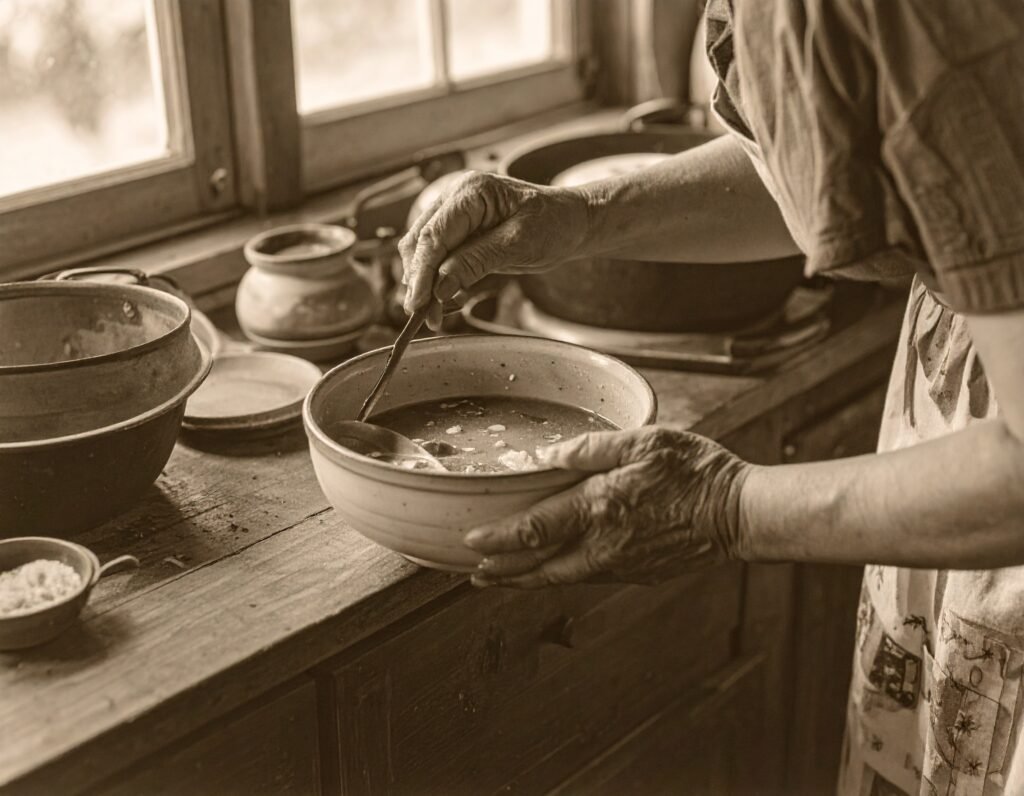
In the early 1900s, especially in rural and small-town Midwestern households, professional medical care was limited and often expensive. Physicians made house calls, but many families delayed calling one unless symptoms became severe.
Great-grandmothers managed most winter illnesses themselves. This chicken noodle soup recipe follows early 1900s Midwestern practice: bone-in chicken, long simmering, simple vegetables, and restraint. It was designed to nourish, not impress, and to serve a household over several winter days.
Chicken noodle soup fit the moment. Older hens past their egg-laying prime were converted into broth. Carrots, onions, and celery stored well in root cellars. Noodles stretched meals and made soup filling. One pot could feed a family for days.
Care followed a routine:
- The patient rested in a warm room.
- Soup was served in small portions, often several times a day.
- Fluids were encouraged, even when solid food was refused.
- Noise was kept low. Curtains were drawn. Recovery was unhurried.
The counterintuitive part is this: the soup mattered, but the routine may have mattered just as much. By forcing rest, slowing activity, and providing regular nourishment, families created conditions that supported recovery. The kitchen was not curing disease. It was managing it.
Great-Grandma’s Chicken Noodle Soup Recipe for Sick Days
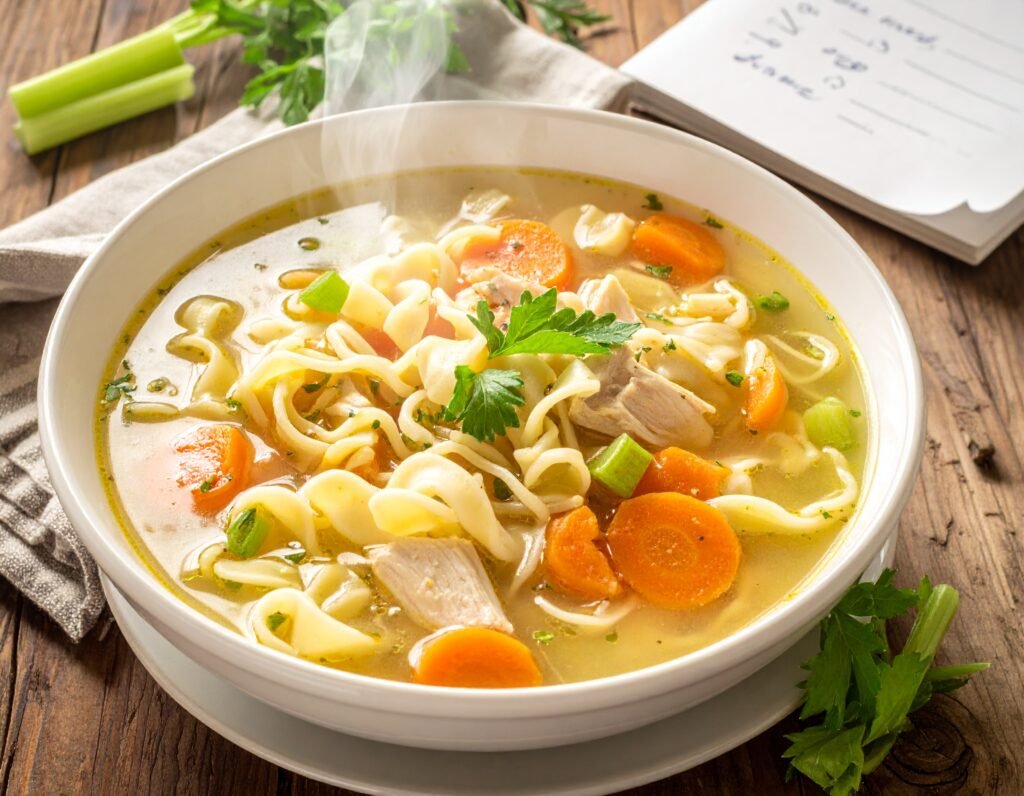
A traditional, no-shortcut recipe built for sick days
This recipe reflects how many Upper Midwest families prepared soup in the early 20th century: simple ingredients, long simmer, no cream, no thickeners.
Ingredients (8–10 servings)
- 2 to 2½ pounds bone-in chicken (thighs, drumsticks, or a whole cut-up chicken)
- 10–12 cups water (or half water, half low-sodium chicken stock)
- 1½ teaspoons kosher salt, plus more to taste
- 1 large onion, diced
- 3 carrots, sliced
- 3 celery ribs, sliced
- 4 garlic cloves, smashed (optional but common)
- 2 bay leaves
- 1 teaspoon dried thyme (or 1 tablespoon fresh)
- ½ teaspoon black pepper
- 2½ to 3 cups egg noodles
- 2 tablespoons chopped parsley (optional)
- 1 tablespoon lemon juice (optional, added at the end)
Instructions
- Start the broth: Place chicken and water in a large pot. Add 1 teaspoon salt. Bring to a gentle boil, then reduce to a steady simmer. Skim foam during the first 10 minutes.
- Cook the chicken: Simmer 35–45 minutes, until meat is tender and cooked through.
- Shred: Remove chicken. When cool enough to handle, shred the meat. Discard skin.
- Build the soup: Add onion, carrots, celery, garlic, bay leaves, thyme, and pepper to the pot. Simmer 20–25 minutes, until vegetables soften.
- Add noodles: Stir in noodles and cook until just tender, usually 6–10 minutes.
- Finish: Return chicken to the pot. Adjust salt. Remove bay leaves. Add parsley and lemon juice if using.
Sick-day note: If planning leftovers, cook noodles separately and add them per bowl. Early cooks knew noodles swell and turn soup thick overnight.
Optional variation inspired by Indian home cooking
Some families today add gentle spice elements without changing the character of the soup.
- Add 1–2 inches of fresh ginger, sliced, during the broth simmer.
- Add ¼ teaspoon turmeric with a pinch of black pepper near the end.
- Keep seasoning restrained. The goal is warmth and aroma, not heat.
This mirrors Indian household practice: small amounts, familiar ingredients, supportive intent.
What soup can—and cannot—do
Chicken soup does not prevent influenza. It does not replace vaccines, antiviral medication, or medical evaluation when symptoms worsen.
What it does offer is reliable support:
- Hydration when appetite is poor
- Calories without heavy chewing
- Sodium to maintain fluid balance
- Warmth and comfort that encourage rest
Those benefits explain why soup persists across cultures and centuries. Not because it is a miracle, but because it works well enough to matter.
When to seek medical care
Food-based care is appropriate for mild illness. Medical evaluation is recommended for:
- Shortness of breath or chest pain
- Persistent high fever
- Confusion or severe weakness
- Dehydration
- Symptoms that worsen after initial improvement
Older adults, pregnant individuals, and those with chronic conditions should seek care sooner.
Final Thought About This Chicken Noodle Soup Recipe
Every winter brings new viruses, new headlines, and new treatments. Yet the quiet work of care still begins at the stove. For generations, great-grandmothers understood something modern medicine agrees with: recovery requires rest, nourishment, and time.
Sometimes that care comes in a bowl.
Works Cited
- Rennard, B. O., et al. “Chicken Soup Inhibits Neutrophil Chemotaxis In Vitro.” Chest, vol. 118, no. 4, 2000, pp. 1150–1157. https://pubmed.ncbi.nlm.nih.gov/11035691/
- Smith, J., et al. “Soup Interventions for Acute Respiratory Tract Infections: A Systematic Review.” Nutrients, vol. 17, no. 13, 2025. https://www.mdpi.com/2072-6643/17/13/2247
- Jain, S., et al. “Traditional Use of Culinary Herbs in the Management of Common Cold.” Journal of Ayurveda and Integrative Medicine, 2023. https://pmc.ncbi.nlm.nih.gov/articles/PMC10278442/
- McCarthy, N. “Take One Chicken Soup and Call Me in the Morning.” National Geographic, 2020. https://www.nationalgeographic.com/culture/article/take-one-chicken-soup-and-call-me-in-the-morning
- Healthline Editorial Team. “Turmeric and Ginger: Benefits, Uses, and Evidence.” Healthline, 2022. https://www.healthline.com/nutrition/turmeric-and-ginger