
 by
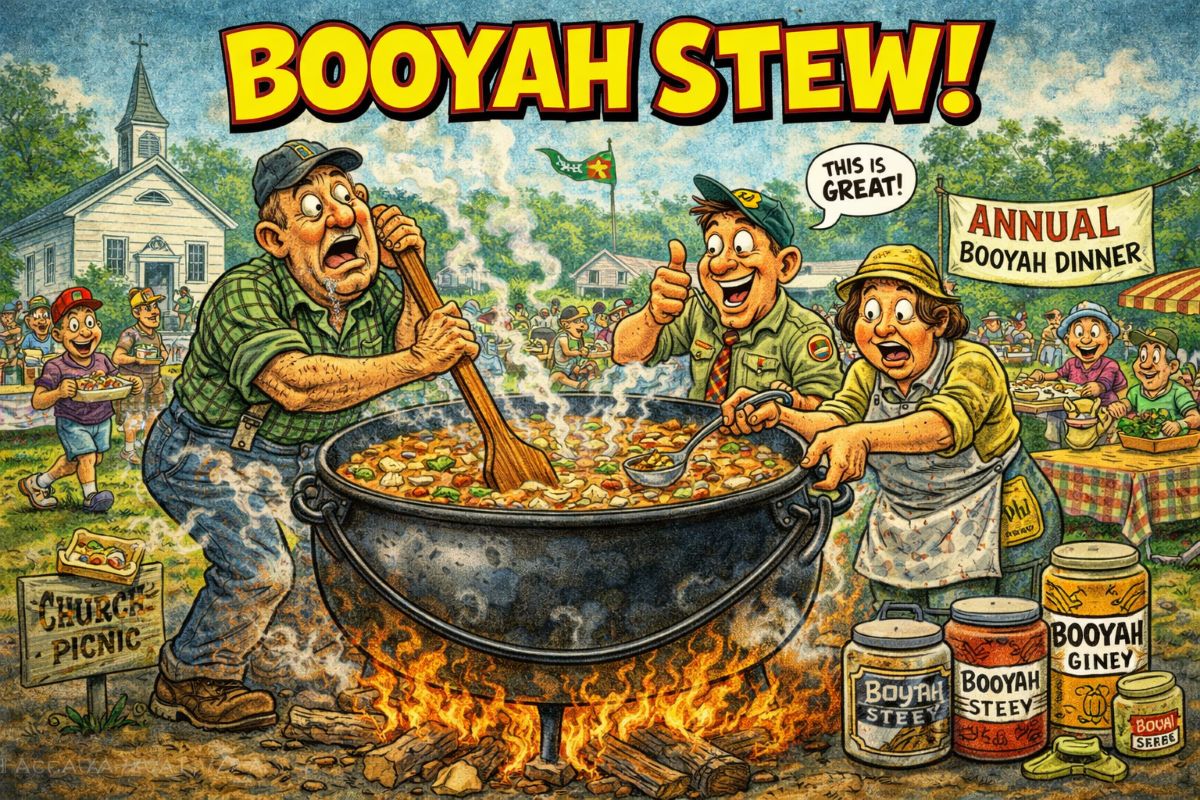
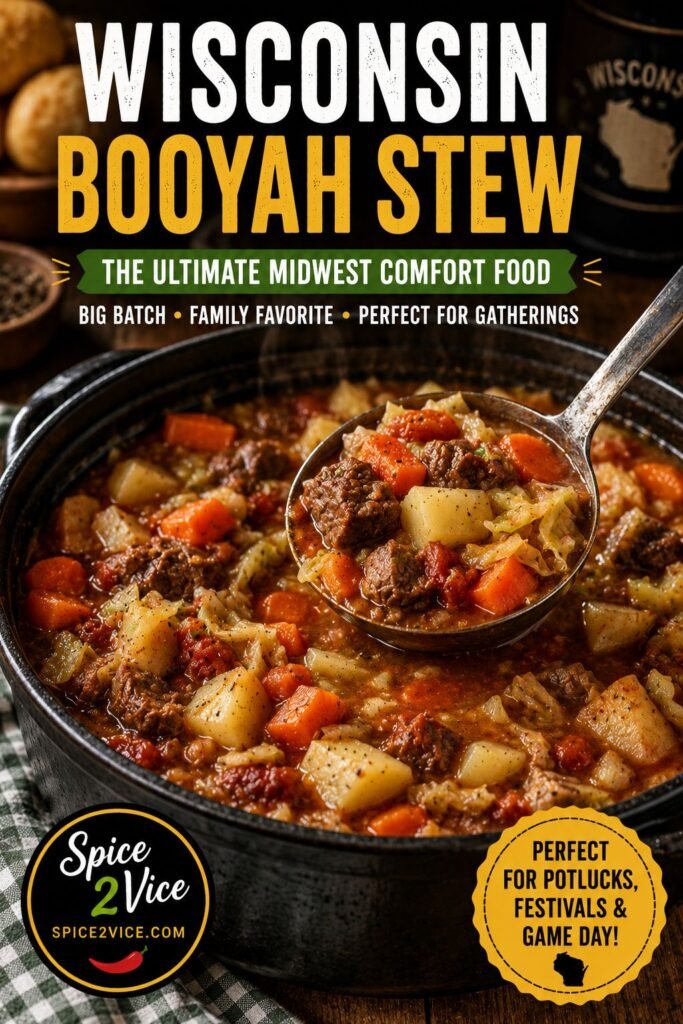
by Booyah stew is one of the most recognizable community foods in northeastern Wisconsin and Michigan’s Upper Peninsula. The stew is traditionally cooked in large outdoor kettles, often stirred with wooden paddles, and served at church picnics, fire department fundraisers, and community festivals.
Background and History in the Upper Great Lakes
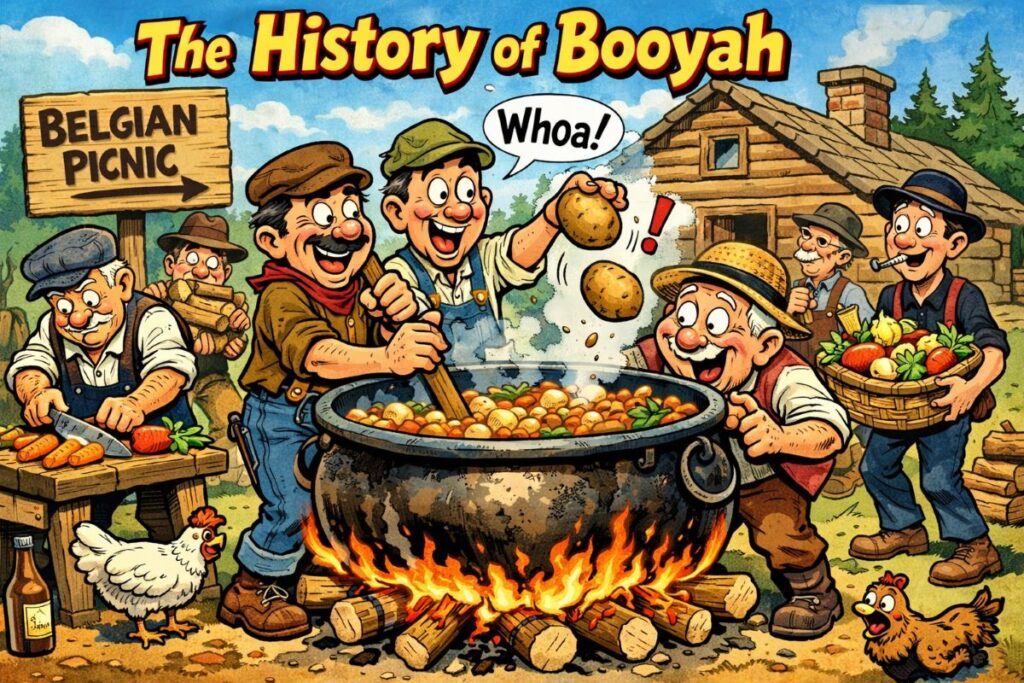
The dish is believed to have been introduced by Belgian immigrants who settled heavily in Wisconsin’s Door County and Green Bay region in the late 1800s. The name “booyah” is thought to be a mispronunciation of the French word bouillon, meaning broth. Over time, the stew became a staple at large gatherings because it could feed hundreds of people using inexpensive ingredients like chicken, beef, and vegetables.
Today, booyah is still a major tradition in Wisconsin and parts of the Upper Peninsula, where it is cooked in large batches for community events, much like a fish fry or potluck dinner.
Booyah Stew Recipe
Ingredients
- 2 lbs chicken (bone-in pieces work best)
- 1 lb beef stew meat
- 1 lb pork stew meat (optional)
- 1 onion, chopped
- 3 carrots, sliced
- 3 potatoes, diced
- 2 celery stalks, sliced
- 1 cup cabbage, chopped
- 1 can corn
- 1 can green beans
- 1 can diced tomatoes
- 8 cups beef or chicken broth
- 2 teaspoons salt
- 1 teaspoon black pepper
- 1 teaspoon garlic powder
- 1 teaspoon paprika
- 2 bay leaves
Instructions
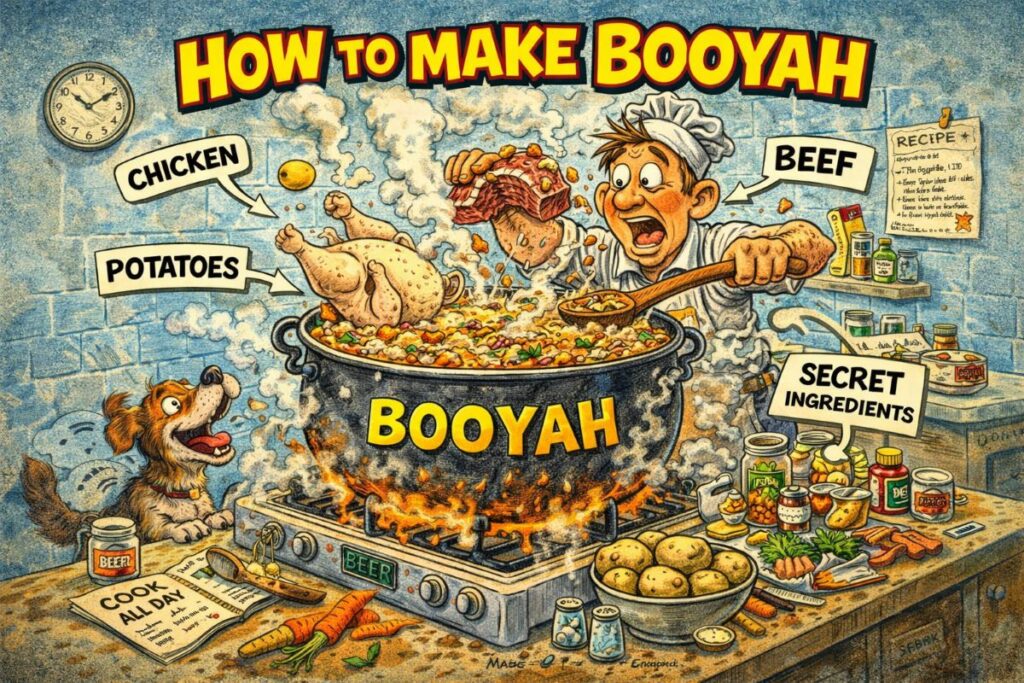
- In a large pot, add chicken, beef, pork, onion, and broth.
- Bring to a boil, then reduce heat and simmer for 1–2 hours.
- Remove chicken, shred meat, and return to pot.
- Add vegetables, tomatoes, and spices.
- Simmer another 1–2 hours, stirring occasionally.
- Remove bay leaves and serve hot.
Cooking time: 3–4 hours
Serves: 8–10 people
Tip: Booyah is better the next day after flavors blend.
Booyah Variations

Booyah is known for having no single official recipe, and that is part of its tradition in Wisconsin and the Upper Peninsula. Each church group, fire department, or family often has its own version depending on what meats and vegetables are available. Some batches are heavy on chicken, while others include beef, pork, or extra vegetables to make a thicker stew. No matter the recipe, booyah is usually served with simple side foods and eaten as a full meal at community gatherings.
Booyah recipes vary widely depending on who is cooking and what ingredients are available.
Common variations include:
- All chicken booyah
- Chicken and beef booyah
- Adding pork for a richer flavor
- Adding barley or rice
- Adding rutabaga or turnips
- Spicy booyah with hot sauce
Some cooks simmer booyah for an entire day, especially when cooking in large kettles for festivals.
What Goes Well With Booyah – Food Pairings
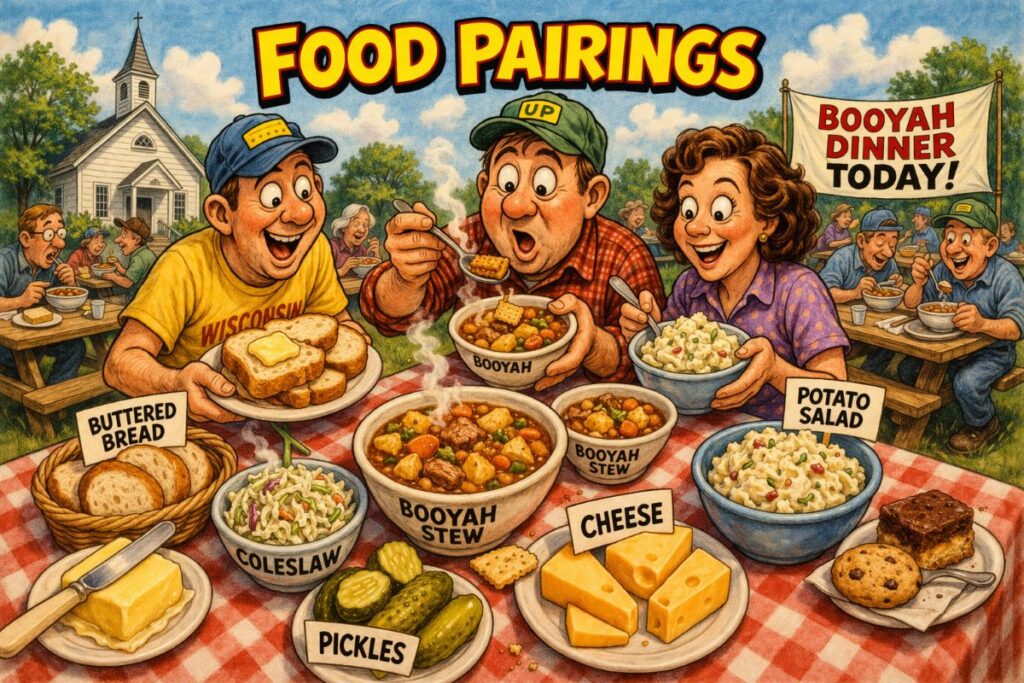
Booyah is usually served as a full meal, but in the Upper Great Lakes, it is rarely served alone. The stew is typically paired with simple, inexpensive side dishes that can feed a crowd at church dinners and community events. Bread and butter are the most common sides, but potato salad, coleslaw, pickles, and cheese are often served alongside them. At many Wisconsin and Upper Peninsula gatherings, a bowl of booyah and a slice of buttered bread is considered a complete meal.
Booyah is usually served with simple side foods such as:
- Buttered bread
- Dinner rolls
- Crackers
- Coleslaw
- Potato salad
- Pickles
- Cheese
- Beer
At church picnics and festivals, booyah is often served in a bowl with bread and butter and eaten as a full meal.
Commercially Available Booyah Products in Michigan and Wisconsin
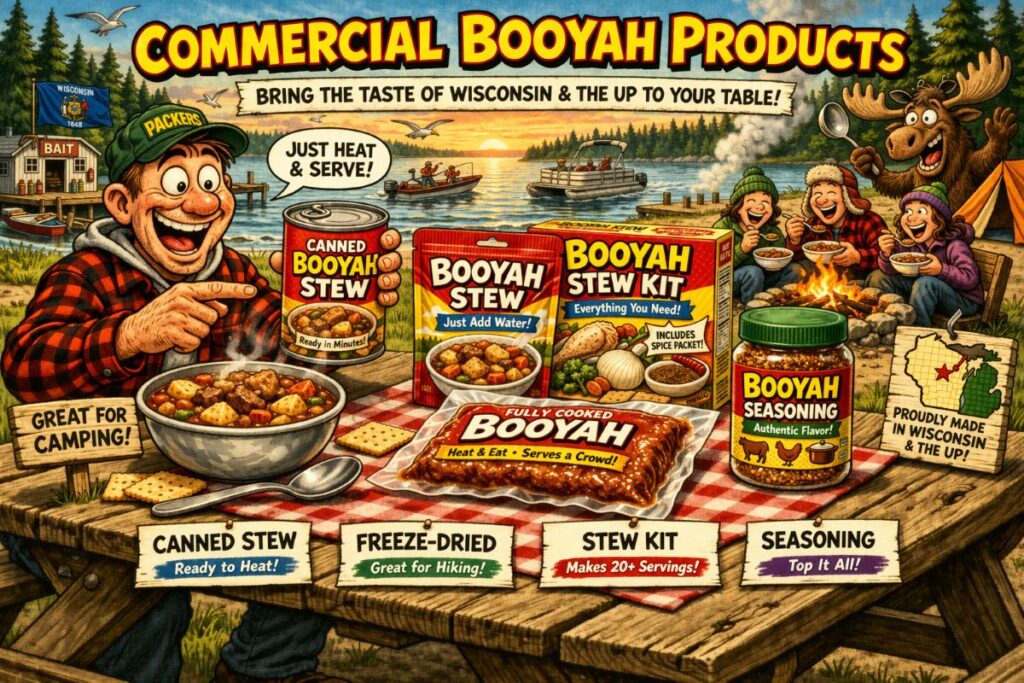
While booyah is usually homemade, several commercially available products are sold in the Upper Great Lakes region.
Common Store Products
You can often find these in Michigan, Wisconsin, and online:
- Booyah seasoning mix packets
- Booyah soup base
- Canned booyah stew
- Frozen booyah
- Local deli-made booyah
These products are commonly sold at:
- Meat markets
- Farm markets
- Church fundraisers
- Small-town grocery stores
- Wisconsin specialty food shops
Many Wisconsin communities still hold annual booyah sales where residents can buy the stew by the quart or gallon.
Why Booyah Matters in Upper Great Lakes Food Culture
Booyah is more than just a stew. It is a community meal tied to church events, local fundraisers, and small-town gatherings. In many parts of Wisconsin and the Upper Peninsula, families have their own booyah recipes that have been passed down for generations.
Like pasties, fish boils, and pickled eggs, booyah is a food that reflects the history of immigrants, church communities, and rural life in the Upper Great Lakes.




One thought on “#1 Wisconsin Booyah Stew Recipe for Church Festivals”
Comments are closed.